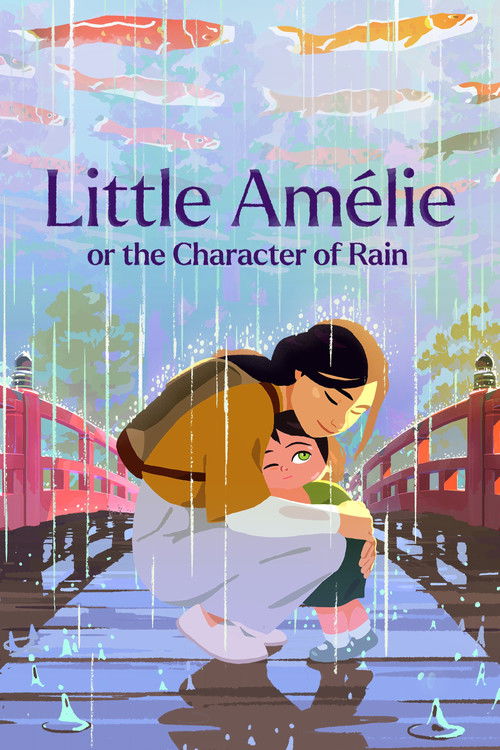
At age two and a half, Amélie snaps out of her vegetative state due to an earthquake and her grandmother Claude’s Belgian white chocolate. Suddenly active, Amélie forms a deep emotional bond with housekeeper Nishio-san, who introduces her to Japanese nature, yokai stories, and the kanji for rain (ame).
Tragedy begins to enter her life. Nishio-san reveals that her entire family died during WWII bombing raids. Shortly after returning to Belgium, Grandmother Claude dies. Distraught and confused by death, Amélie becomes preoccupied with loss. During a family beach outing, Amélie attempts to collect sea creatures in a jar as a gift for Nishio-san. Overcome by waves, she nearly drowns, but is saved by her older brother André, earning her lasting respect and resolving their sibling conflict.
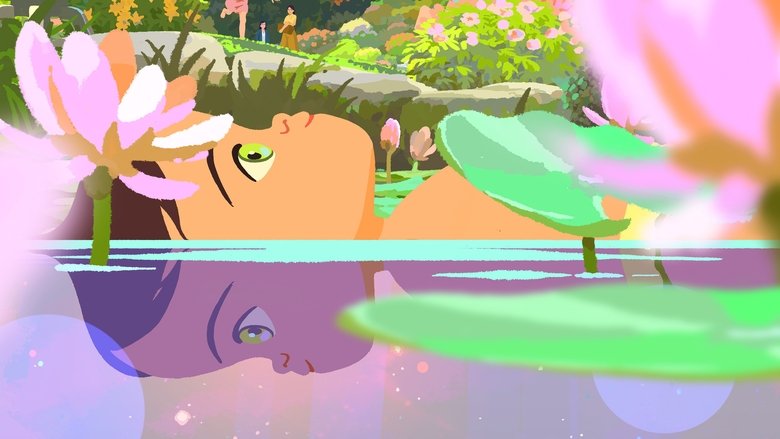
The emotional climax occurs in the family garden. Still haunted by her phobia of ugly koi carp, Amélie leans over the carp pond to feed them and falls in. As she sinks under water, she experiences a near-death vision. In this otherworldly space, she meets the spirit of her late grandmother Claude, who tells Amélie that her time on Earth is not over yet. She then hears Nishio-san’s voice calling her back to reality.
Amélie is pulled from the water by Nishio-san and Kashima-san and wakes up in a hospital. Recovering in winter, Amélie fully surrenders her belief that she is an omnipotent god. She accepts that she is a mortal, fragile human girl—and that because her time with Nishio-san and her family is finite, every moment of life is infinitely precious.