Skip to content
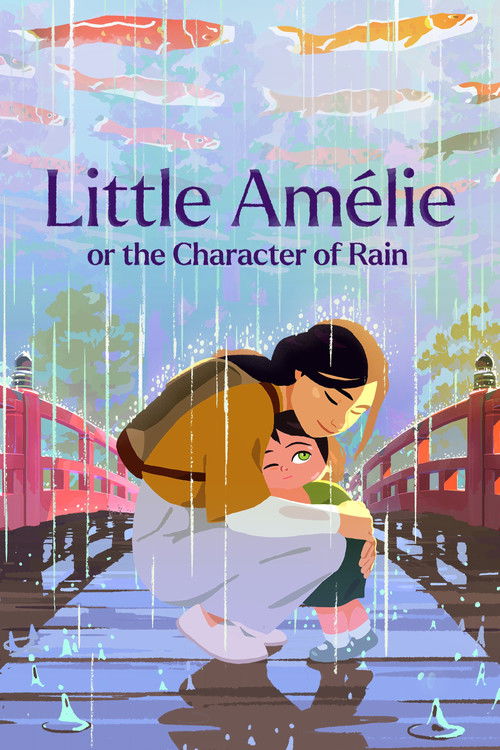
Little Amélie or the Character of Rain
A whimsical hand-drawn animated drama brimming with childlike wonder and existential poignancy, where pastel brushstrokes and lush Japanese gardens frame a toddler’s awakening to love, mortality, and the delicate beauty of human connection.
Little Amélie or the Character of Rain

Little Amélie or the Character of Rain

Amélie et la métaphysique des tubes

"When you're three years old, you see everything and understand nothing."

25 June 2025 France 77 min 7.9 (207)

Director: Maïlys Vallade, Liane-cho Han

Cast: Loïse Charpentier, Victoria Grobois, Yumi Fujimori, Cathy Cerda, Marc Arnaud

Drama Animation Family Childhood Awakening & Sensory Consciousness Intercultural Bonding & Nurturing Love Solipsism vs. Mortality & Humanity Historical Memory, Post-War Trauma & Grief Sibling Dynamics & Family Reconciliation
Budget: $11,100,000
Box Office: $1,530,750

Overview

Set in late-1960s Kobe, Japan, Little Amélie or the Character of Rain (Amélie et la métaphysique des tubes) follows Amélie, the youngest daughter of a Belgian diplomatic family. For the first two years of her life, Amélie remains in an inert, vegetative state, completely silent and motionless. In her vivid internal monologue, she views herself not as an ordinary baby, but as a divine, god-like "tube"—a peaceful, self-contained cylinder that exists solely to absorb and digest the world around her.

Her tranquil solipsism shatters when an earthquake shakes her home and her visiting Belgian grandmother feeds her a piece of white chocolate. The taste ignites an explosive sensory epiphany, snapping Amélie out of her stupor and launching her into the vibrant realm of active childhood. She quickly learns to speak, explore, and throw passionate tantrums, eager to make sense of the strange reality she now inhabits.

To help manage the household, Amélie’s parents hire a gentle young Japanese nanny, Nishio-san. Through their tender bond, Amélie discovers the natural world, Japanese language and folklore, and the subtle emotional currents of post-war Japan. As seasons turn, Amélie’s playful journey of discovery gradually leads her to confront deeper truths about family, grief, and what it truly means to be human.


Core Meaning

Adapted from Amélie Nothomb's autobiographical novel Métaphysique des tubes (The Character of Rain), directors Maïlys Vallade and Liane-Cho Han explore the philosophical transition from infant solipsism to mortal humanity. The film suggests that early childhood is a sacred, metaphysical threshold—a brief window where a child moves from the detached, god-like illusion of self-sufficiency into the vulnerable, sensory experience of living.

By framing the story through a toddler's eyes, the directors illustrate how sensory joy (symbolized by chocolate) awakens consciousness, while love and grief tether us to reality. The film highlights that accepting mortality and human frailty is not a tragic loss of divine innocence, but the essential prerequisite for genuine connection, empathy, and joy.

Thematic DNA

Childhood Awakening & Sensory Consciousness 30%
Intercultural Bonding & Nurturing Love 25%
Solipsism vs. Mortality & Humanity 20%
Historical Memory, Post-War Trauma & Grief 15%
Sibling Dynamics & Family Reconciliation 10%

Childhood Awakening & Sensory Consciousness

Amélie’s transformation from an unfeeling, passive "tube" into an enthusiastic explorer demonstrates how physical senses (taste, sight, sound) spark human consciousness and identity.

Intercultural Bonding & Nurturing Love

The soulmate-like affection between young Amélie and her Japanese housekeeper, Nishio-san, transcends cultural boundaries, illustrating the profound power of quiet, cross-cultural empathy.

Solipsism vs. Mortality & Humanity

Amélie begins life believing she is an omnipotent deity. Her gradual encounter with loss, danger, and nature forces her to surrender her godhood and embrace her fragile mortal existence.

Historical Memory, Post-War Trauma & Grief

Beneath the idyllic domestic setting lies the quiet shadow of World War II. Nishio-san’s loss of her family during wartime bombing raids and landlady Kashima-san’s lingering anti-Western resentment reveal how historical trauma ripples through everyday relationships.

Sibling Dynamics & Family Reconciliation

Amélie’s initially tense, distant relationship with her older brother André reflects childhood jealousy and misunderstanding, which resolves into mutual respect through shared danger.

Character Analysis

Amélie

Loïse Charpentier (French) / Lily Gilliam (English)

Archetype: Precocious Child / Protagonist Key Trait: Striking turquoise eyes, fierce curiosity, and an articulate inner voice

Motivation

Craves sensory exploration and emotional closeness with Nishio-san.

Character Arc

Evolves from a silent, vegetative baby who believes she is God into a passionate, mortal child who accepts her humanity.

Nishio-San

Victoria Grobois (French) / Francesca Calo (English)

Archetype: Nurturing Mentor / Surrogate Mother Key Trait: Soft, radiant demeanor, patience, and profound empathy

Motivation

To protect Amélie and share the beauty of Japanese culture and nature with her.

Character Arc

Manages her own post-war grief by channeling unconditional warmth and cultural appreciation into raising Amélie.

All 5 characters and cast

Symbols & Motifs

Belgian White Chocolate

Meaning:

Symbolizes sensory awakening and the catalyst of human pleasure.

Context:

Serves as the physical key that unlocks Amélie’s mind, pulling her out of her vegetative divinity into mortal enjoyment.

Rain (雨 - Ame)

Meaning:

Symbolizes Amélie’s identity and emotional fluidness.

Context:

Nishio-san teaches Amélie that the first part of her name corresponds to the Japanese word for rain (ame), cementing her deep cultural bond with Japan.

The Koi / Carp Pond

Meaning:

Symbolizes fear, hostility, and the threshold of mortality.

Context:

Amélie harbors an intense aversion to the ugly, gaping carp, making the pond the literal site of her existential confrontation with death.

Paper Lanterns (Obon Festival)

Meaning:

Symbolize memory, mourning, and the bridge between the living and the dead.

Context:

When Nishio-san takes Amélie to float lanterns on the river, it introduces Amélie to honoring lost souls.

The Tube / Cylinder

Meaning:

Symbolizes the egocentric, unfeeling state of infancy.

Context:

Represents pure consumption without active thought, emotional reciprocity, or self-awareness.

Memorable Quotes

Au commencement, il n'y avait rien. Rien, à part... un tube.
— Amélie (voiceover)

Context

Opening scene of the film.

Meaning

Establishes Amélie’s philosophical self-image as a passive, unfeeling infant cylinder before her sensory awakening.

Votre enfant est un légume.
— The Pediatrician

Context

Said to Amélie's parents during a medical checkup when she shows zero response to her environment.

Meaning

Captures the adult medical diagnosis contrasting sharply with Amélie’s rich internal belief that she is a god.

All 5 quotes

Philosophical Questions

What constitutes the beginning of human self-awareness?

The film asks whether consciousness begins at birth or at the moment a person actively engages with sensory pleasure and emotional attachment.

Is divine isolation preferable to mortal vulnerability?

Amélie enjoys absolute peace while living as an unfeeling "god-tube," but trades that tranquility for physical pain, grief, and joy, concluding that mortal life is vastly superior.

How does collective historical trauma affect individual relationships?

Explored through Kashima-san’s prejudice toward Western expats and Nishio-san’s gentle effort to bridge wartime wounds through quiet love.

Alternative Interpretations

The film offers multiple interpretive angles:

Full ending explanation

Cultural Impact

Little Amélie or the Character of Rain is set in late-1960s Japan—a period when the country was rapidly modernizing while still bearing the invisible scars of World War II. The film presents a nuanced look at post-war cross-cultural encounters. While Amélie’s family lives an idyllic expat life, the native Japanese characters carry deep historical memory. Landlady Kashima-san represents the older generation's grief and anti-Western bitterness after losing loved ones in the war, while Nishio-san embodies a younger generation seeking healing through kindness and quiet understanding.

Critics praised the film for avoiding orientalist tropes, offering instead a delicate exploration of a "third culture kid" who feels more connected to her adopted Japanese home than her Belgian heritage.

Audience Reception

Audience and critical reception summarized:

  • Praised Aspects: Critics and audiences overwhelmingly praised the visual artistry, comparing the soft pastel backgrounds and expressive 2D animation to animated masterworks. Mari Fukuhara’s soundtrack, the vocal performance of Loïse Charpentier, and the tender representation of early childhood were widely celebrated.
  • Main Points of Criticism: A few reviewers noted that the opening third—focusing on Amélie’s internal monologue while she sits motionlessly as a "tube"—can feel slightly abstract or slow-paced before her sensory awakening.
  • Controversial Details: A minor point of debate among international reviewers was the decision in the French audio version to have Japanese characters speak flawless, accent-free French to one another, sacrificing linguistic realism for domestic narrative ease.
  • Overall Verdict: Regarded as one of the standout animated films of 2025, holding high critical ratings (97% on Rotten Tomatoes / 7.6 IMDb) and celebrated as an instant classic of French animation.

Interesting Facts

  • Author Amélie Nothomb gave the directors complete freedom to adapt her autobiographical novel, stating her role was like a grandmother and calling it the best film adaptation ever made of her books.
  • The film marks the feature directorial debut of both Maïlys Vallade and Liane-Cho Han.
  • The 2D hand-drawn animation, light, and shadow processes were crafted over 15 months, primarily produced by studios Maybe Movies and Ikki Films, with 2 Minutes in Angoulême handling major animation sequences.
  • The film premiered in the Special Screenings section at the 2025 Cannes Film Festival and won the Audience Award at the 2025 Annecy International Animation Film Festival.
  • The movie earned major awards recognition globally, including nominations for Best Animated Feature at the 98th Academy Awards (Oscars 2026), Golden Globes, and BAFTAs.
  • The original soundtrack was composed by Japanese pianist Mari Fukuhara, combining gentle piano, ambient acoustic textures, and 1960s pop motifs to mirror Amélie's interior world.
  • Visual director Eddine Noël assigned warm sunny yellows for Nishio-san to convey safety, and rigid, gloomy violets for Kashima-san to mirror post-war melancholy.

Easter Eggs

Homage to Studio Ghibli

The visual staging of lush Japanese nature, spirit-like yokai, and quiet domestic magic explicitly references Studio Ghibli aesthetics. The sinister visual framing of the carp pond serves as a subtle nod to Hayao Miyazaki's The Boy and the Heron.

Nothomb Literary Prequel

The story acts as an implicit prequel to Amélie Nothomb’s later autobiographical novels Stupeur et Tremblements (Fear and Trembling) and Tokyo Fiancée, which document her adult return to Japan.

Frameless Gouache Animation

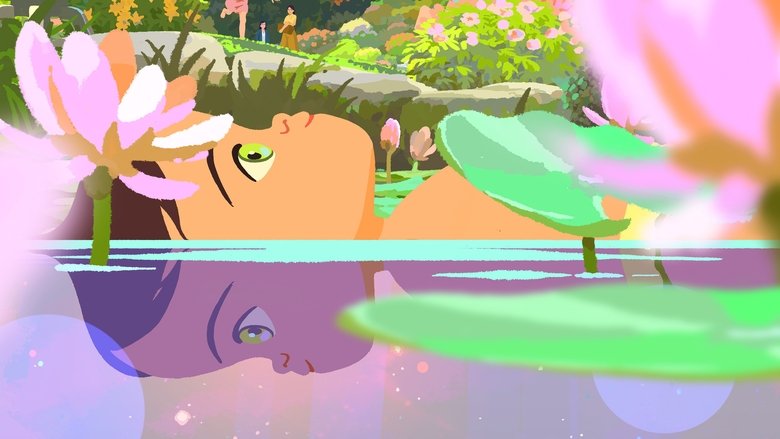
The artistic style deliberately omits hard black outlines, utilizing soft gouache and watercolor textures directly influenced by Rémi Chayé’s French animation style (Long Way North, Calamity).

Traditional Japanese Cultural Artifacts

Backgrounds feature authentic detail from 1960s Japan, including Kusari Doi (rain chains on roofs), Fūrin (wind chimes), Koinobori (carp streamers for Children's Day), and Hanami cherry blossom gatherings.

Frequently Asked Questions

Explore More About This Movie

Dive deeper into specific aspects of the movie with our detailed analysis pages

Comments (0)

Leave a comment

No comments yet. Be the first to share your thoughts!

Similar Movies