Skip to content
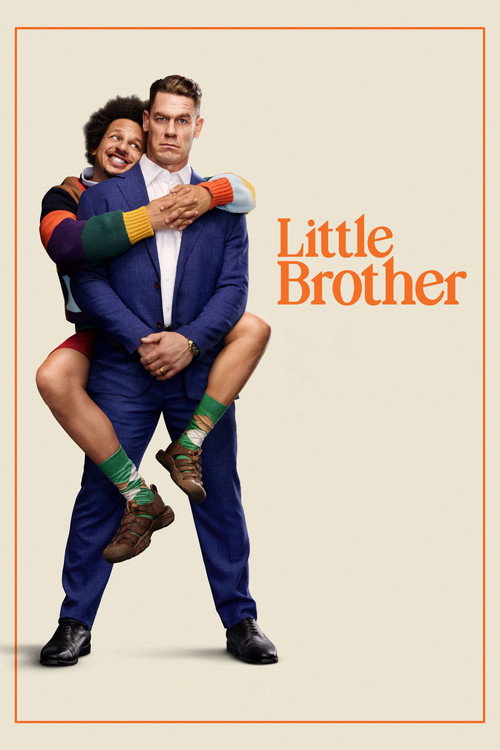
Little Brother
A sun-drenched, chaotic cringe-comedy pulsing with frantic desperation and unspoken loneliness, where a polished glass penthouse fractures under the irrepressible hurricane of an uninvited past.
Little Brother

Little Brother

"An uncomfortably touching comedy."

18 June 2026 United States of America 101 min 6.4 (338)

Director: Matt Spicer

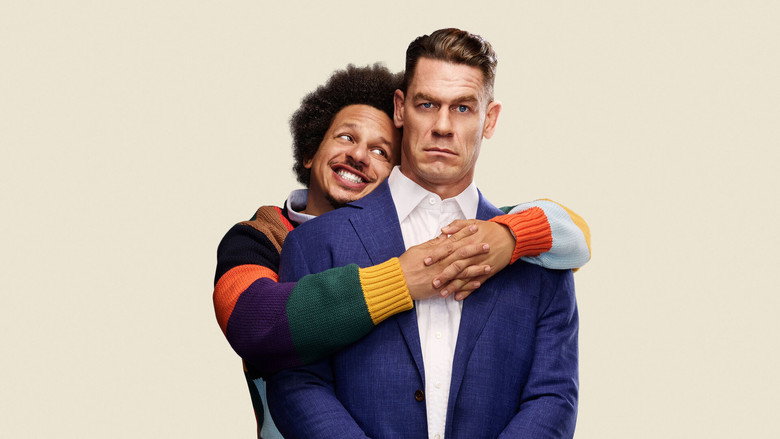
Cast: John Cena, Eric André, Michelle Monaghan, Christopher Meloni, Sherry Cola

Comedy Performative Success vs. Authentic Reality The Complexity of Mentorship and Obligation Sibling Rivalry and Inadequacy Loneliness and the Search for Belonging

Overview

Little Brother is a 2026 comedy directed by Matt Spicer from a screenplay by Jarrad Paul and Andrew Mogel. The film stars John Cena as Rudd Landy, a hyper-disciplined, relentlessly self-optimizing luxury real estate broker on the verge of landing his breakout television platform on the competitive reality show NYC Hustlers. To the outside world, Rudd’s life is meticulously manicured—complete with a luxurious suburban lifestyle, an accommodating wife, Deirdre (Michelle Monaghan), and an image of utter self-sufficiency.

However, beneath Rudd's gym-sculpted exterior lies an obsessive need for status and sibling validation. His pristine, controlled world is thrown into absolute disarray when Marcus Pinchel (Eric André) suddenly re-enters his life. Years earlier, Rudd briefly mentored Marcus through a volunteer youth mentorship program, but Marcus interpreted their bond as an eternal, sacred brotherhood.

Fresh from escaping a psychiatric facility, Marcus arrives on Rudd’s doorstep with unrestrained energy, unyielding affection, and zero boundaries. As Marcus aggressively embeds himself into Rudd’s household and high-stakes business pitches, Rudd must scramble to protect his fragile facade of perfection before his career and sanity completely unravel.
Core Meaning

Director Matt Spicer explores the hollow pursuit of curated self-presentation versus the raw, uncomfortable necessity of genuine human connection. The film argues that modern ambition and social performance often serve as shields against emotional vulnerability. By contrasting Rudd’s sanitized, transactional view of relationships with Marcus’s boundaryless, unconditional affection, the film asserts that family and true brotherhood cannot be neatly managed on a balance sheet—they require messy, honest acceptance.

Thematic DNA

Performative Success vs. Authentic Reality 30%
The Complexity of Mentorship and Obligation 25%
Sibling Rivalry and Inadequacy 25%
Loneliness and the Search for Belonging 20%

Performative Success vs. Authentic Reality

Rudd’s entire existence revolves around optics—his reality TV aspirations, designer suits, and rigid morning routines. Marcus’s intrusion strips away this artificial gloss, exposing the anxiety and fragility underneath Rudd's curated life.

The Complexity of Mentorship and Obligation

The film deconstructs performative altruism. Rudd treated his time in the Big Brother program as a superficial resume-builder, whereas Marcus took the concept of 'brother' literally and eternally, showing how casual charity can leave lasting emotional footprints on vulnerable individuals.

Sibling Rivalry and Inadequacy

Rudd’s fixation on upward mobility is driven by his deep-seated inferiority complex regarding his actual biological brother, a billionaire whom Rudd can never seem to impress or outdo.

Loneliness and the Search for Belonging

Beneath Marcus’s manic antics lies acute isolation and abandonment trauma, highlighting how both the chaotic outcast and the successful professional are driven by the same fundamental yearning: to be chosen and loved unconditionally.

Character Analysis

Rudd Landy

John Cena

Archetype: The Uptight Achiever / Reluctant Straight Man Key Trait: Hyper-controlled, neurotic, and physically imposing yet emotionally insecure

Motivation

To secure fame on NYC Hustlers and prove his worth to his biological brother.

Character Arc

Moves from calculating self-interest and image obsession to embracing vulnerability and genuine empathy for Marcus.

Marcus Pinchel

Eric André

Archetype: The Chaotic Innocent / Disruptive Trickster Key Trait: Boundlessly energetic, uninhibited, emotionally honest, and completely devoid of social filters

Motivation

To reclaim the only meaningful family bond he ever experienced.

Character Arc

Transitions from destructive codependency and abandonment terror to gaining self-worth and genuine mutual respect.

All 4 characters and cast

Symbols & Motifs

The Reality TV Camera Crew (NYC Hustlers)

Meaning:

Symbolizes surveillance, modern vanity, and the pressure to maintain an unblemished facade.

Context:

The cameras capture Rudd's unraveling when Marcus disrupts filming.

The Luxury Sports Car / Porsche

Meaning:

Represents Rudd’s material success and fragile control.

Context:

Its destruction during Marcus’s slapstick escapades serves as a visual metaphor for the inevitable collapse of Rudd's materialist armor.

The Eye Mask on the Golf Course

Meaning:

Symbolizes Marcus's refusal to forfeit dignity or optimism despite systemic marginalization and homelessness.

Context:

Seen when Marcus sleeps in a car or bathes under golf course sprinklers while wearing an eye mask.

The Googly-Eyed Pet Rock

Meaning:

Reflects the human mind’s extreme measures to construct companionship out of emptiness.

Context:

Introduced in the psychiatric ward where Marcus’s roommate treats a rock as a spouse.

Hoobastank Music Cue

Meaning:

Highlights mid-2000s nostalgia, arrested emotional development, and earnest melodrama.

Context:

Used throughout the film as a comedic and emotional motif.

Memorable Quotes

Go ahead, you can play through!
— Marcus Pinchel

Context

Marcus shouts this nonchalantly to stunned, wealthy golfers while taking a makeshift bath in the fairway sprinkler mist.

Meaning

Illustrates his unflappable optimism and absolute disregard for elite social norms.

The term 'brother' is being used rather loosely here.
— Rudd Landy

Context

Rudd frantically attempts to explain Marcus’s sudden presence to colleagues and cameras.

Meaning

Reveals his anxiety over class perception and his desperation to keep Marcus at arm's length.

All 3 quotes

Philosophical Questions

What creates true kinship?

The film asks whether family is strictly defined by biology and legality, or forged by shared history, loyalty, and mutual support.

Where does moral responsibility in voluntary charity end?

It questions whether initiating a mentoring bond with a vulnerable child creates a lifetime moral contract that cannot simply be terminated when convenient.

Can self-worth exist independent of comparison?

Through Rudd’s torment over his biological brother, the film examines whether material success can ever heal deep-rooted feelings of inadequacy.

Alternative Interpretations

The Projection Reading: Some critics interpret Marcus not just as a literal nuisance, but as the physical manifestation of Rudd’s repressed id and childhood shame. Marcus embodies everything Rudd spent decades attempting to sanitize—vulnerability, unrefined emotion, and lack of status.

Full ending explanation

Cultural Impact

Little Brother emerged amid the 2020s revival of mid-budget, high-concept studio comedies produced directly for streaming platforms. The film received a mixed-to-positive critical reception upon its June 26, 2026 release on Netflix, holding Rotten Tomatoes and Metacritic scores hovering in the low-to-mid 50s. Critics like Matt Zoller Seitz praised John Cena’s disciplined comedic timing and the pairing's natural chemistry, while other reviewers criticized the formulaic, predictable narrative beats and gross-out gags. Audiences widely embraced Cena’s deadpan physical commitment and André’s unhinged energy, making it a prominent streaming performer upon launch.

Audience Reception

Audience and critical reception highlighted several key areas:

  • Praises: The comedic chemistry between John Cena’s rigid straight man and Eric André’s chaotic energy, Cena’s continued growth as a top-tier comedic actor with pitch-perfect deadpan delivery, and occasional poignant emotional beats that humanize Marcus's loneliness.
  • Criticisms: Over-reliance on generic studio comedy tropes, familiar What About Bob? narrative formulas, and uneven tonal shifts between raunchy slapstick/gross-out jokes and sentimental family drama.
  • Overall Verdict: A light, entertaining, and breezy summer mismatch comedy elevated by the sheer charisma and commitment of its two leads, even if it sticks close to established genre conventions.

Interesting Facts

  • This film marked Matt Spicer’s first feature directorial effort since his critically acclaimed 2017 indie dark comedy Ingrid Goes West.
  • Director Matt Spicer noted that while the screenplay by Jarrad Paul and Andrew Mogel had precise joke construction, scenes with Eric André and John Cena heavily integrated spontaneous improvisation.
  • The elaborate sequence involving the accidental destruction of a luxury car required days of stunt choreography, practical rigs, and visual effects coordination to nail the timing of the physical comedy.
  • Production designer Alexandra Schaller built full soundstage interiors for the Landy residence, treating the upscale real-estate world with naturalistic, dramatic prestige to make the broad comedy land harder.
  • Renowned electronic and avant-garde composer Dan Deacon composed the original score, infusing the manic narrative with dynamic, kinetic energy.

Easter Eggs

Homage to Classic Mismatch Buddy Comedies

Spicer openly cited 1980s and 1990s character-driven comedy classics such as What About Bob?, Planes, Trains and Automobiles, and Tommy Boy as direct structural blueprints.

Reality TV Cameos

The production brought in real-world reality television personalities to cameo during the NYC Hustlers shoot, satirizing high-end real estate programming like Million Dollar Listing.

Ben Ahlers and Caleb Hearon Appearances

Notable comic appearances by rising comedic performers Ben Ahlers and Caleb Hearon provided background subplots involving awkward office politics and digital mishaps.

Frequently Asked Questions

Explore More About This Movie

Dive deeper into specific aspects of the movie with our detailed analysis pages

Comments (0)

Leave a comment

No comments yet. Be the first to share your thoughts!

Similar Movies