Skip to content
Send Help
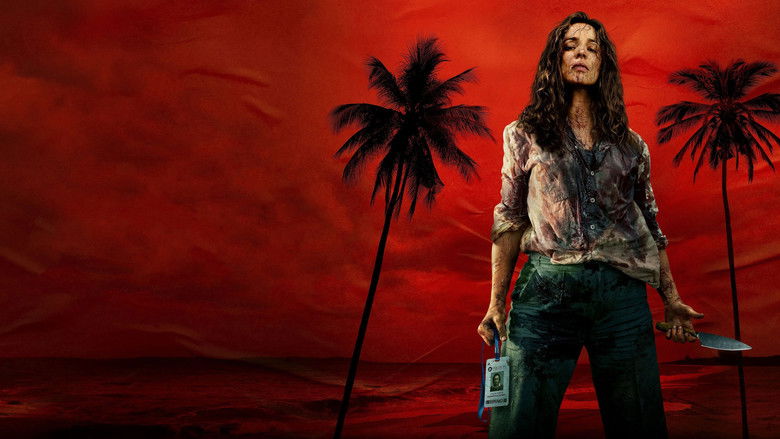
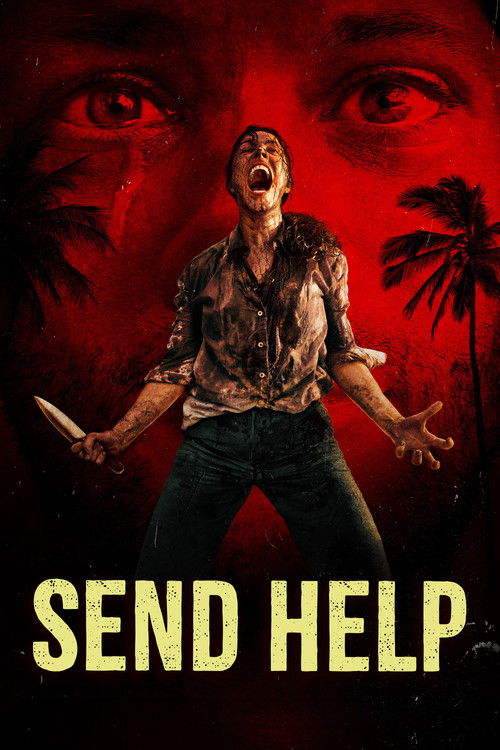
A drenched nightmare of corporate resentment, where tropical sunshine turns to blood-splattered madness as a subjugated woman transforms a sun-bleached island into her own sadistic corporate empire.
Send Help

Send Help

"Meet Linda Liddle... She's from strategy and planning. She's the boss now."

22 January 2026 United States of America 113 min 7.1 (2,050)

Director: Sam Raimi

Cast: Rachel McAdams, Dylan O'Brien, Edyll Ismail, Dennis Haysbert, Xavier Samuel

Thriller Comedy Horror Workplace Power Dynamics & Corporate Misogyny Toxic Entitlement vs. Survivalist Self-Reliance Corruption Through Control & The Cycle of Abuse Illusion of Meritocracy & Class Privilege
Budget: $40,000,000
Box Office: $94,041,481

Overview

Send Help (2026), directed by legendary filmmaker Sam Raimi, is a darkly comedic psychological survival horror thriller written by Damian Shannon and Mark Swift. The story centers on Linda Liddle (Rachel McAdams), an intensely hardworking yet socially awkward corporate strategist at Preston Strategic Solutions. Having spent seven years suffering disrespect, uncredited labour, and condescension, Linda anticipates a long-promised promotion to Vice President upon the death of the firm's founder. Instead, the founder’s arrogant, privileged son and new CEO, Bradley Preston (Dylan O'Brien), passes her over to give the executive position to his fraternity brother, citing Linda’s lack of charisma and presence.

When Linda demands an explanation, Bradley placates her by inviting her on a private jet trip to Bangkok to seal a high-stakes corporate merger. However, mid-flight catastrophe strikes: a violent oceanic storm tears the aircraft apart, killing the crew and fellow executives. Washing ashore on a remote, uninhabited tropical island in the Gulf of Thailand, Linda and Bradley emerge as the sole survivors.

Stranded far from modern amenities and with Bradley severely injured, the traditional corporate hierarchy collapses instantly. Linda—a lifelong survivalism enthusiast and avid Survivor fan—possesses the precise skills necessary to keep them alive, while the pampered, golf-obsessed Bradley is completely helpless. As day turns to week, what begins as an uneasy alliance for survival quickly devolves into an escalating, visceral battle of wills, wits, and shifting power dynamics where workplace grievances manifest in bloody, unhinged ways.


Core Meaning

At its core, Send Help explores how systemic workplace oppression, corporate misogyny, and toxic entitlement corrupt the human psyche. Director Sam Raimi uses the classic "deserted island" survival subgenre not to tell a triumphant story of overcoming adversity, but as an arena where corporate hierarchies are dismantled and inverted.

The director illustrates that power dynamics are rarely defined by true merit or capability, but rather by environment and leverage. When stripped of societal guardrails and financial privilege, the victimized worker does not necessarily choose liberation or moral high ground; instead, given absolute control, they can absorb the very sociopathy of their oppressors. The film serves as a biting satire on the "villain era" mentality, demonstrating that revenge and power hoarding, once tasted, can transform a mistreated underdog into a ruthless predator.

Thematic DNA

Workplace Power Dynamics & Corporate Misogyny 30%
Toxic Entitlement vs. Survivalist Self-Reliance 25%
Corruption Through Control & The Cycle of Abuse 25%
Illusion of Meritocracy & Class Privilege 20%

Workplace Power Dynamics & Corporate Misogyny

The film meticulously breaks down how structural corporate bias operates. In the office, Bradley marginalizes Linda due to her looks, lack of social gloss, and gender, claiming she lacks "executive material". On the island, the power dynamic flips completely: Linda holds total leverage through her survival skills, forcing Bradley to experience the helplessness of dependent subordination.

Toxic Entitlement vs. Survivalist Self-Reliance

Bradley represents the unearned authority of inherited class privilege and "nepo-baby" entitlement. Deprived of money and subordinates, he collapses emotionally and physically. Linda, conversely, represents unappreciated competency and self-reliance, utilizing her accumulated knowledge to manipulate and dominate her former superior.

Corruption Through Control & The Cycle of Abuse

Rather than restoring balance, power acts as a corrupting force. Linda’s taste of absolute authority over Bradley transforms her from an abused, sympathetic employee into a cold, controlling tyrant who prefers isolation and domination over returning to a world where she is subservient.

Illusion of Meritocracy & Class Privilege

The narrative satirizes the corporate lie that hard work guarantees advancement. It further subverts the survival genre by revealing that Linda’s survival superiority on the island is not purely earned, but also tied to her secret hoarding of unearned resources.

Character Analysis

Linda Liddle

Rachel McAdams

Archetype: Victim-turned-Villainous Protagonist / Antihero Key Trait: Relentless preparation, hyper-competency, and hidden ruthlessness

Motivation

Autonomy, absolute control, and vengeance for years of marginalization.

Character Arc

Begins as a socially inept, downtrodden corporate strategist desperate for validation; evolves into a calculating, lethal, and sociopathic survivalist who usurps power.

Bradley Preston

Dylan O'Brien

Archetype: Entitled Antagonist / Falling Tyrant Key Trait: Superficial charm masking shallow competence and unearned privilege

Motivation

Physical self-preservation and escaping the island.

Character Arc

Starts as an arrogant, condescending "nepo-baby" CEO; collapses into a pathetic, desperate survivor forced to beg his former employee for food and medical care.

All 5 characters and cast

Symbols & Motifs

The Caged Bird (Sweetie)

Meaning:

At the beginning, Linda's pet bird in a small cage represents her trapped, lonely, and domesticated corporate existence. In the final frame of the film, a caged bird reappears as a trophy, symbolizing that Linda has shifted from being the trapped creature to the master holding others in cages.

Context:

Appears initially in Linda's domestic/office life and reappears as a trophy in the film's final shot.

The Golf Club

Meaning:

In the corporate world, golf represents Bradley's elite boys'-club network that excluded Linda from advancement. On the island, it becomes the physical weapon Linda uses to eliminate Bradley, symbolic of using the master's own tools of privilege to destroy him.

Context:

Represents elite corporate networking early on and serves as the murder weapon during the climax inside the mansion.

The Tuna Sandwich & Residue

Meaning:

Food cleanliness/messiness remains a recurring motif on the island, signaling who holds dignity and who is reduced to slovenly scavenging.

Context:

During their early office interaction, Linda eats a tuna sandwich and forgets to wipe food residue off her face, giving Bradley an excuse to dismiss her as "repulsive".

"Survivor" Audition Tape

Meaning:

Initially represents humiliation and social vulnerability, but transforms into her operational blueprint for survival and domination.

Context:

Linda's embarrassing VHS audition tape for the reality show Survivor is initially used by male colleagues to mock her in the office.

The X-Shaped Rocks

Meaning:

Symbolizes the hoarding of resources and deliberate withholding of truth.

Context:

A rock formation marking a taboo zone on the far side of the island that Linda lies about to prevent Bradley from discovering the hidden mansion.

Memorable Quotes

This isn't the office, Bradley.
— Linda Liddle

Context

Spoken on the beach when Bradley attempts to command Linda to find him food using his executive authority.

Meaning

Marks the explicit turning point in the film where workplace dynamics are officially severed and island authority begins.

No help is coming. This is the way things are now, and you need to just accept that. You are stuck. No power, low end of the totem pole... with some asshole boss.
— Linda Liddle

Context

Linda delivering a chilling monologue to an injured Bradley after destroying a potential signal raft.

Meaning

Captures Linda’s desire to keep Bradley trapped in an inverted dynamic mirroring her own years of corporate powerlessness.

All 5 quotes

Philosophical Questions

Does prolonged structural oppression justify extreme violence when power shifts?

The film tests audience empathy by pushing Linda from a sympathetic victim to an uncompromising killer.

Is human morality inherent, or merely an illusion enforced by social legal structures?

Explored through how rapidly both characters shed moral conduct once isolated from societal laws.

Can an individual dismantle an oppressive system without becoming an oppressor themselves?

Shown by Linda replacing Bradley’s corporate dictatorship with her own dictatorship on the island and in the boardroom.

Alternative Interpretations

The Anti-Corporate Satire Reading: Linda is viewed as a tragic antihero whose violence is a direct, logical response to systemic misogyny and corporate exploitation. Her actions represent the ultimate refusal to be subjugated again.

Full ending explanation

Cultural Impact

Released in late January 2026, Send Help arrived at a moment in pop culture dominated by workplace disillusionment, conversations around "quiet quitting," and the rise of "villain era" memes. It sits alongside modern "eat-the-rich" class satires such as Triangle of Sadness, The Menu, and White Lotus, but distinguishes itself through Sam Raimi’s R-rated B-movie sensibilities, visceral splatterstick comedy, and psychological thriller tropes.

Critics praised the film universally (91% on Rotten Tomatoes), highlighting Rachel McAdams’ career-best transformational performance and Raimi's kinetic directorial style.

Audience Reception

Praised:

  • Rachel McAdams' tour-de-force performance, balancing awkward vulnerability with unhinged malice.
  • Dylan O'Brien's sharp comedic timing playing an insufferable yet pathetic executive.
  • Raimi’s signature direction, blending dark comedy, body horror, and kinetic camera work.
  • Danny Elfman's score and Bill Pope's atmospheric cinematography.

Criticisms:

  • Mid-budget CGI work during broad-daylight plane crash and ocean sequences.
  • A polarizing, deeply mean-spirited final act that refuses to offer moral absolution to the audience.

Overall Verdict: A wildly entertaining, darkly hilarious, and viciously sharp survival thriller that stands among Sam Raimi's best late-career work.

Interesting Facts

  • Send Help marks Sam Raimi's first original, non-franchise feature directing role in the survival horror space since 2009's Drag Me to Hell.
  • Written by Damian Shannon and Mark Swift (the screenwriting duo behind Freddy vs. Jason and the 2009 Friday the 13th reboot), who developed the concept as a dark corporate thriller.
  • Principal photography took place between February and April 2025 across Sydney (Australia), Los Angeles, and Thailand.
  • The film reunited Raimi with cinematographer Bill Pope (Spider-Man 2, The Matrix), editor Bob Murawski, and composer Danny Elfman.
  • Rachel McAdams underwent intensive wilderness survival training, including learning real spear-throwing and boar-skinning techniques, to portray Linda's survivalist competency convincingly.
  • Produced on a $40 million budget by Raimi Productions and distributed by 20th Century Studios, the film grossed $94 million worldwide.

Easter Eggs

Bruce Campbell Portrait Cameo

Raimi's longtime friend and collaborator Bruce Campbell appears in a photographic portrait on the office wall playing Bradley's late CEO father.

The 1973 Oldsmobile Delta 88 ("The Classic")

Raimi’s famous trademark car appears in an early scene parked inside the corporate office garage. Because shipping his personal car to Australia was impractical, the production hired and dressed an Australian collector's 1973 Delta 88.

Jeff Probst / Survivor Reference

Linda's background includes an audition tape for CBS's Survivor featuring official audio clips. Show host Jeff Probst was written in for a cameo, but had to decline due to filming conflicts with Survivor 50.

Rachel McAdams' Airplane Thriller Homage

Film critics noted a clever meta-nod to McAdams' previous high-altitude thriller roles (Red Eye and Game Night) during the chaotic airplane crash sequence.

Classic Raimi Gore Homages

Includes signature Raimi visual gags, such as projectile vomiting during CPR, eye-gouging, and wild sea-creature venom paralysis.

Frequently Asked Questions

Explore More About This Movie

Dive deeper into specific aspects of the movie with our detailed analysis pages

Comments (0)

Leave a comment

No comments yet. Be the first to share your thoughts!

Similar Movies