Skip to content
Love in the Moonlight
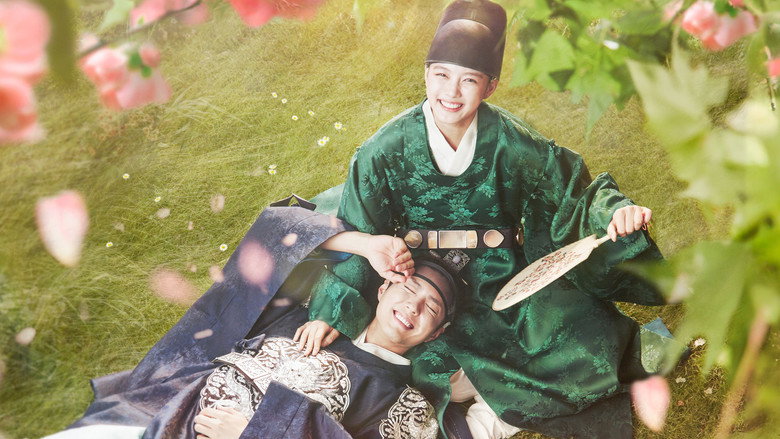
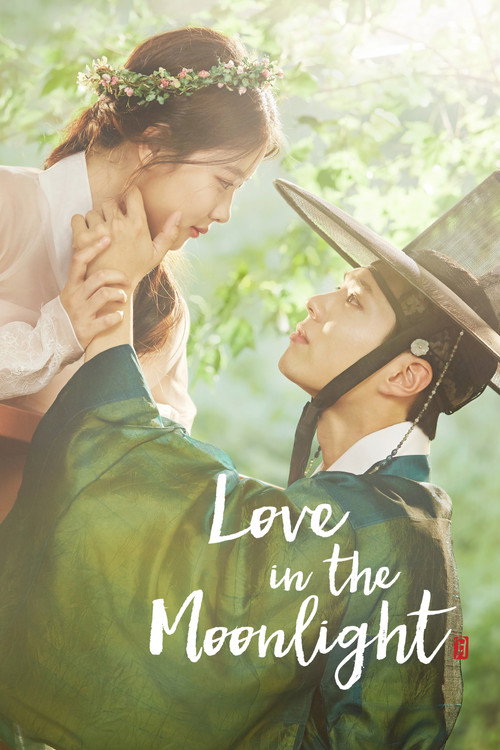
A luminous coming-of-age Joseon romance bathed in pastel hues, where sovereign isolation dissolves into tender yearning as a forbidden royal connection flickers against the stormy shadows of palace intrigue.
Love in the Moonlight

Love in the Moonlight

구르미 그린 달빛

"The unlikely love story between a crown prince and his eunuch."

22 August 2016 — 18 October 2016 South Korea 1 season 18 episode Ended 7.0 (107)

Cast: Park Bo-gum, Kim You-jung, Jung Jinyoung, Chae Soo-bin, Kwak Dong-yeon

Drama Comedy War & Politics Identity, Concealment, and Authenticity Sovereign Duty vs. Personal Freedom and Love Social Hierarchy, Class Mobility, and Political Reform Loyalty, Brotherhood, and the Cost of Sacrifice

Overview

Love in the Moonlight (also known as Moonlight Drawn by Clouds) is an 18-episode historical youth drama set in 19th-century Joseon. The story centers on Crown Prince Lee Yeong, an ostensibly capricious royal heir concealing a sharp political intellect behind a mask of indifference, and Hong Ra-on, a resourceful young woman raised as a boy under the pseudonym Hong Sam-nom who works as an anonymous love counselor and ghostwriter. Following unpaid debts and misunderstandings, Ra-on is sold to the Royal Eunuch Academy and forced into the inner palace.

Inside the royal court, Ra-on and Prince Yeong cross paths again. Unaware of her true gender, the Prince is captivated by her candor, wit, and emotional vulnerability. As Ra-on navigates the hazards of life as a court eunuch, a deep bond forms between them, blooming from tentative camaraderie into profound devotion while Yeong confronts high-stakes statecraft against Premier Kim Heon and the entrenched Andong Kim clan.

The narrative expands from a lighthearted gender-swap romantic comedy into a politically charged coming-of-age saga. Alongside nobleman-scholar Kim Yoon-sung and loyal bodyguard Kim Byung-yeon, the protagonists confront dangerous political factions, underground civil rebellions, and the painful burdens of hidden lineage to test whether genuine love, friendship, and moral leadership can reshape a rigid dynastic hierarchy.
Core Meaning

The central thesis of Love in the Moonlight is that true leadership and human connection require the courage to strip away social pretenses, class hierarchies, and dynastic expectations. Metaphorically, if the people are the radiant moonlight, the monarch and state must act as supportive clouds that protect, illuminate, and give shape to that light rather than obscuring it. The series asserts that empathy and emotional authenticity are not political weaknesses, but foundational prerequisites for moral reform and visionary sovereignty.

Thematic DNA

Identity, Concealment, and Authenticity 40%
Sovereign Duty vs. Personal Freedom and Love 25%
Social Hierarchy, Class Mobility, and Political Reform 20%
Loyalty, Brotherhood, and the Cost of Sacrifice 15%

Identity, Concealment, and Authenticity

The series investigates existing behind forced personas. Ra-on conceals her womanhood to survive poverty and persecution, while Prince Yeong feigns incompetence to avoid assassination by corrupt ministers. True transformation begins only when both strip away these protective facades and accept one another fully.

Sovereign Duty vs. Personal Freedom and Love

The friction between royal obligation and personal desire runs throughout the narrative. Yeong is forced to choose between a strategic royal marriage to consolidate power and his devotion to a woman society views as a common eunuch—and later, the daughter of a traitor.

Social Hierarchy, Class Mobility, and Political Reform

The drama critiques Joseon's caste system, contrasting the lived suffering of the common populace with the sterile political maneuvering of corrupt nobles while advocating for an egalitarian spirit where people are valued by character rather than bloodline.

Loyalty, Brotherhood, and the Cost of Sacrifice

The dynamic between Yeong, Yoon-sung, and Byung-yeon showcases childhood bonds torn apart by clan allegiances, political revolution, and unrequited love, showing how true loyalty often demands the ultimate personal sacrifice.

Character Analysis

Lee Yeong (Crown Prince)

Park Bo-gum

Archetype: Transformative Sovereign / Hero Key Trait: Brilliant, empathetic, playful, unyieldingly principled

Motivation

To survive court assassinations, protect those he loves, and build a Joseon where the monarch serves the people.

Character Arc

Begins as a seemingly volatile, insolent prince masking deep grief over his mother's death and frustration with royal powerlessness. Through his bond with Ra-on, he evolves into an assertive regent and enlightened ruler who dismantles corrupt patronage networks.

Hong Ra-on (Hong Sam-nom)

Kim You-jung

Archetype: Disguised Trickster / Pure-Heart Hero Key Trait: Resilient, perceptive, warm, emotionally generous

Motivation

To survive, locate her long-lost mother, and live authentically alongside Prince Yeong.

Character Arc

Raised on the run without knowing her father's revolutionary identity, she starts out focused solely on day-to-day survival. In the palace, her empathy moves royalty, leading her to eventually embrace her true identity as a woman and celebrated author.

All 5 characters and cast

Symbols & Motifs

The Moon and the Clouds

Meaning:

Represents the relationship between the people and their ruler. While kings are traditionally associated with the Sun, Yeong is associated with the Moon—reflecting upon ordinary people—while the clouds nurture and frame the people's brilliance.

Context:

Serves as the ultimate framing motif of the entire series and provides the philosophical foundation for the title.

The Infinity / Jade Couple Bracelets

Meaning:

Symbolizes an unbroken celestial bond promising reunion regardless of separation, physical distance, or social boundaries.

Context:

A pair of matching turquoise and red beaded bracelets gifted by Prince Yeong to Ra-on as a pledge of their enduring connection.

The Court Eunuch Hat and Robe

Meaning:

Represents confinement and social invisibility. While initially acting as protective armor against external threats, it gradually turns into a stifling cage preventing Ra-on from living truthfully as a woman.

Context:

Worn by Ra-on throughout her daily duties and trials inside the royal palace.

Lanterns and Rain

Meaning:

Lanterns embody whispered hopes, individual prayers, and fragile wishes, while rain acts as a recurring threshold for revelation, emotional breakthrough, and identity shifts.

Context:

Used prominently during festival gatherings, intimate conversations, and pivotal turning points throughout the narrative.

The White Veil and Traditional Female Hanbok

Meaning:

Transforms Ra-on into a vision of pure artistic grace, serving as the catalyst for Yeong's intuitive recognition of her true self.

Context:

Worn by Ra-on when she secretly steps in to perform the pivotal celebratory solo court dance at the Qing envoy banquet.

Memorable Quotes

불허한다. 내 사람이다.
— Lee Yeong

Context

Spoken to Kim Yoon-sung in Episode 5 when Yoon-sung attempts to escort Eunuch Hong away during the lantern festival.

Meaning

Marks Yeong's first public declaration of proprietary attachment and protective devotion toward Ra-on.

이영이다. 내 이름.
— Lee Yeong

Context

Delivered to Ra-on in the royal library in Episode 3 when Yeong reveals his true royal identity.

Meaning

Signifies the transition of their relationship from deceit and formality to genuine vulnerability and intimacy.

All 5 quotes

Episode Highlights

Fate in the Moonlight

S1E1

Establishes the central dynamic between the leads through high-energy comedy, ending with Ra-on trapped in the palace eunuch examination.

Significance:

Sets the narrative in motion by bringing Ra-on into the inner palace and initiating her fateful encounters with the Crown Prince.

After the Play Ends

S1E4

Ra-on secretly performs a solo royal court dance in place of an absent gisaeng during the Qing envoy banquet, saving Yeong's political initiative.

Significance:

Leaves Prince Yeong deeply captivated by the mysterious dancer, sparking his intuitive emotional recognition of Ra-on.

Tell Me Your Wish

S1E5

Yeong delivers his iconic declaration claiming Ra-on as 'my person' during the lantern festival.

Significance:

Cements the central romantic triangle between Prince Yeong, Ra-on, and Kim Yoon-sung.

Confession

S1E7

Prince Yeong openly confesses his feelings and kisses Ra-on in the royal garden.

Significance:

Proves Yeong's love transcends dynastic codes and social boundaries, choosing affection over court expectations.

You Do Not Know Very Well

S1E8

Ra-on appears in traditional women's attire before Yeong, who reveals he has already discovered her true gender.

Significance:

Eliminates the barrier of false identity between the lovers, allowing their relationship to progress authentically.

Faith Becomes Fate

S1E12

Assassins attack the Prince's quarters, leading Yeong and Byung-yeon to fight back-to-back while Yeong is critically injured protecting Ra-on.

Significance:

Shifts the drama from lighthearted romance into high-stakes political danger and physical vulnerability.

The World That You Dream Of

S1E16

The return of rebel leader Hong Gyeong-nae triggers a court crisis, forcing Byung-yeon to hold a blade to Yeong's throat to protect Ra-on and her father.

Significance:

Pushes the central brotherhood and political tensions to their absolute breaking point.

Moonlight Drawn by Clouds

S1E18

Corrupt ministers are overthrown, Yoon-sung sacrifices his life, Yeong ascends the throne to build an enlightened Joseon, and Ra-on thrives freely as an author.

Significance:

Resolves the dynastic conflict, fulfills the core philosophy of benevolent governance, and unites the lovers in freedom.

Philosophical Questions

Can sovereign power remain morally pure while dismantling entrenched systemic corruption?

Explored through Prince Yeong's struggle to outmaneuver Premier Kim Heon's faction without resorting to the same ruthless, deceitful tactics that corrupt the court.

Is personal love an impediment to political leadership, or is empathetic intimacy the cornerstone of ethical governance?

Examined through Yeong's evolving leadership, demonstrating that his deep empathy for Ra-on expands into a broader compassion for ordinary Joseon citizens.

How much of personal identity is an authentic internal essence versus an externally enforced social role?

Addressed through Ra-on's life disguised as a male eunuch and Yeong's hidden intellect behind a facade of incompetence, questioning what remains when survival masks are discarded.

Alternative Interpretations

Critics and viewers have explored several subtextual layers within the series:

Full ending explanation

Cultural Impact

The series triggered a widespread cultural craze dubbed Moonlight Syndrome (구르미 신드롬) by South Korean media. It dominated content power indexes and consumer brand rankings while sparking a nationwide surge in youth hanbok rentals across Seoul's historic palaces. The production cemented Park Bo-gum as an A-list Hallyu superstar and marked Kim You-jung's transition into an award-winning romantic lead.

Following Sungkyunkwan Scandal, it redefined the modern fusion youth sageuk by blending contemporary romantic-comedy sensibilities with traditional dynastic history. The drama won Best Drama Series at the 22nd Asian Television Awards, dominated the 30th KBS Drama Awards, and earned major accolades at the 53rd Baeksang Arts Awards.

Audience Reception

Audiences and critics widely praised Love in the Moonlight for the magnetic on-screen chemistry and expressive performances of Park Bo-gum and Kim You-jung, lush cinematography, pastel costume design, and its chart-topping orchestral soundtrack. The series was also lauded for its crisp comedic timing in early episodes transitioning smoothly into high-stakes drama.

Minor criticisms focused on the third act's reliance on standard sageuk tropes such as poisonings, kidnappings, and noble idiocy, as well as a slight reduction in Ra-on's agency once the palace romance took center stage. Overall, it remains regarded as one of the most charming, visually exquisite, and emotionally satisfying historical youth romances in Korean television history.

Interesting Facts

  • Adapted from Yoon Yi-soo's acclaimed 2013 Naver web novel Moonlight Drawn by Clouds, which garnered over 50 million views.
  • The series experienced tremendous ratings growth, opening at 8.3% for Episode 1 and surging to a nationwide peak of 23.3%.
  • A viral pre-broadcast promotional teaser featured Park Bo-gum dancing in full crown prince regalia to the modern French electro-pop song 'Boombastic' at Gwanghwamun.
  • The cast fulfilled a ratings promise by holding a fan signing in traditional hanbok at Gyeongbokgung Palace's Heungnyemun Square after viewership surpassed 20%.
  • Park Bo-gum recorded the official soundtrack ballad 'My Person', which achieved an 'all-kill' atop major South Korean real-time music charts upon release.
  • Renowned hanbok designer Lee Jin-hee personally crafted Park Bo-gum's bespoke royal silks, reinterpreting 19th-century royal attire with contemporary pastel aesthetics.

Easter Eggs

Cha Tae-hyun and Cho Yeo-jeong Cameo in Episode 1

Cha Tae-hyun (Park Bo-gum's agency senior at Blossom Entertainment) and Cho Yeo-jeong appear as a servant and a noblewoman whose forbidden romance is orchestrated by Ra-on.

Romantic Drama Parodies

The opening dating-advice sequences playfully parody classic romantic K-drama tropes, including melodramatic rain confessions and back-hugs.

Dasan Jeong Yak-yong Historical Figure

The real-life Joseon polymath and philosopher Dasan Jeong Yak-yong appears as a mentor figure, grounding the story's reformist politics in historical Silhak (Practical Learning) philosophy.

Reversal of Crown Prince Hyomyeong's Historical Fate

The drama deliberately alters historical tragedy—the real Crown Prince Hyomyeong died at age 20—by granting Yeong survival, health, and romantic fulfillment in an alternate fictional Joseon.

Frequently Asked Questions

Explore More About This Movie

Dive deeper into specific aspects of the movie with our detailed analysis pages

Comments (0)

Leave a comment

No comments yet. Be the first to share your thoughts!

Similar Movies