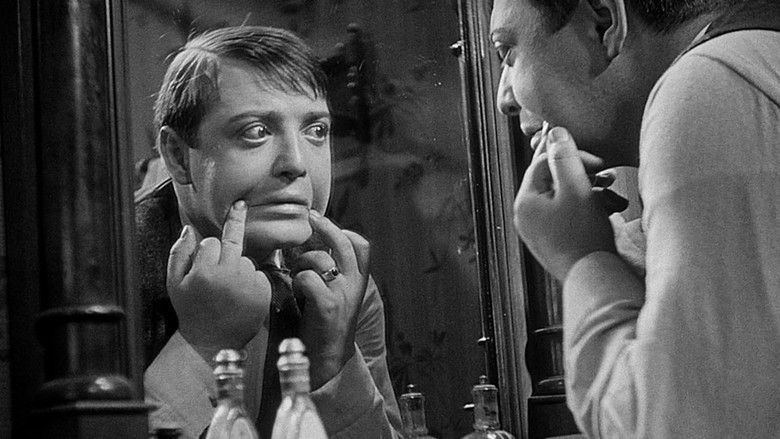
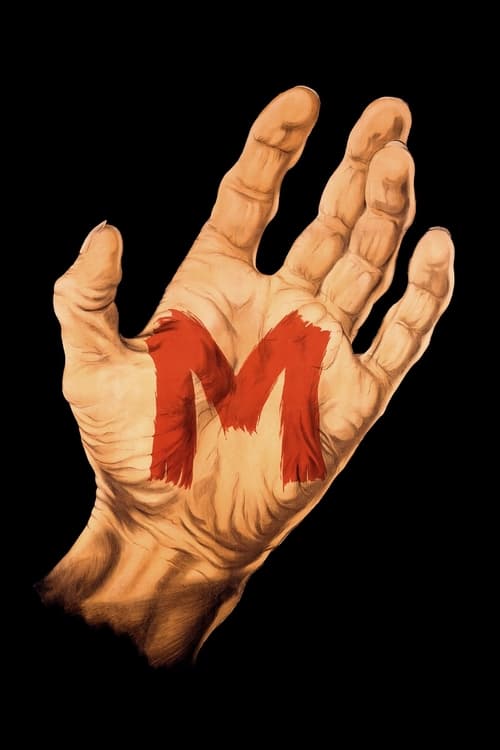
The central twist of "M" is not a "whodunit," as the audience is made aware of the killer's identity, Hans Beckert, relatively early on. The true narrative engine is the dual manhunt and the escalating societal paranoia. The film's major revelation comes in its final act, after Beckert is captured by the city's criminal underworld. He is taken to a deserted distillery and put on a 'trial' by a kangaroo court of criminals, led by Schränker.
The climax is Beckert's famous, desperate monologue. Here, the shadowy monster is fully revealed as a pathetic, sweating, and terrified man. He confesses that he is driven by an uncontrollable compulsion, a dark force inside him that he cannot escape. He screams that he is constantly pursuing himself and that he commits his acts in a state he cannot later recall. This raw confession reframes the entire narrative. The pursuit is not just for a monster, but for a deeply disturbed, mentally ill individual. This revelation doesn't excuse his horrific crimes, but it complicates the audience's understanding of his evil, shifting the central conflict from a simple hunt for a killer to a profound philosophical debate on responsibility, madness, and the nature of justice.
The criminals, acting out of self-interest because the police raids are hurting their business, become a chilling parody of a legitimate court. Their verdict is a foregone conclusion: death. Just as they are about to kill him, the real police, led by Inspector Lohmann, burst in to arrest everyone. The film then cuts to a formal courtroom, where state judges are about to deliver their verdict on Beckert. However, we never hear the sentence. Instead, the film ends with Elsie Beckmann's mother and other grieving mothers. Frau Beckmann delivers the film's final lines, stating that no verdict will bring their children back and that society must keep a closer watch on its children. This ambiguous ending denies the audience the catharsis of a clear resolution, suggesting that true justice is unattainable and that the societal sickness that allowed these tragedies to occur remains uncured.