Skip to content
Mantis
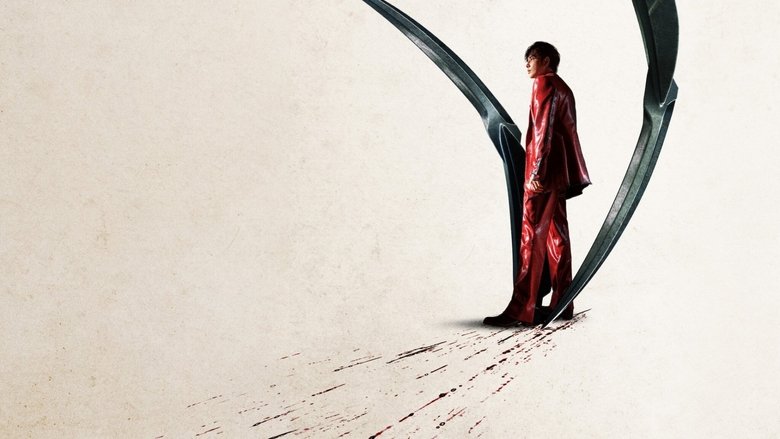
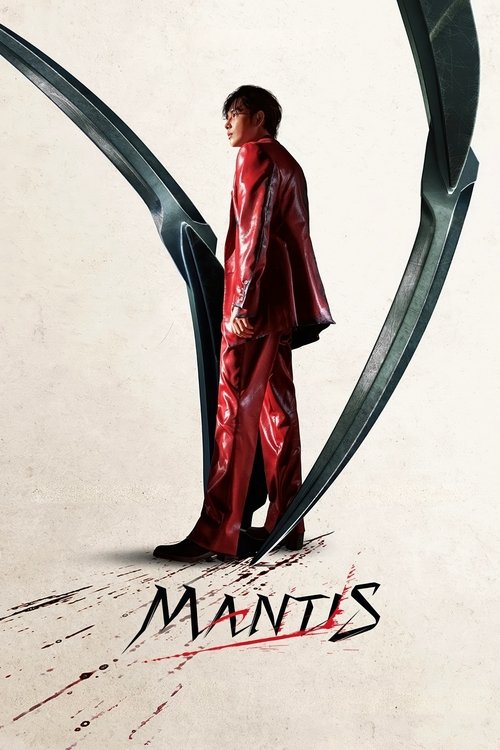
A slick, neon-drenched action thriller steeped in bittersweet rivalry and razor-sharp betrayal, where blood-stained dual sickles slice through corporate shadows to ignite a tragic clash of untethered ambition.
Mantis

Mantis

사마귀

"A new generation of rising killers."

25 September 2025 South Korea 113 min 6.5 (180)

Director: Lee Tae-sung

Cast: Yim Si-wan, Park Gyu-young, Choi Hyun-wook, Bae Gang-hee, Hwang Sung-bin

Crime Action Thriller Generational Shift & Institutional Breakdown The Shadow of Genius & Inferiority Complex Autonomy vs. Codependency in Ambiguous Relationships The Legacy and Toxicity of Mentorship Capitalist Commodification of Violence

Overview

Mantis (사마귀) is a 2025 South Korean crime action thriller directed by Lee Tae-sung in his feature directorial debut. Set in the same lethal universe as the 2023 Netflix film Kill Boksoon, the story expands upon the high-stakes world of corporate contract killers after the collapse of its governing entity, MK Enterprise.

The film follows Lee Han-ul, an legendary A-grade assassin codenamed "Mantis". After taking an extended vacation, Han-ul returns to South Korea only to discover that MK Enterprise's charismatic leader, Cha Min-kyu, has been killed, throwing the entire hitman industry into lawless chaos. Eager to break away from corporate control and chart his own path, Han-ul decides to launch an independent startup agency—Mantis Company—alongside his long-time friend and fierce training partner, Shin Jae-i.

However, starting a business in a bloody power vacuum proves volatile. Dok-go, a retired legendary killer and one of MK Enterprise's original founders, returns from retirement determined to rebuild the company and re-establish rule over the market. As ambitious tech investors, rival killers, and conflicting emotional loyalties collide, Han-ul, Jae-i, and Dok-go find themselves on an inevitable crash course where personal pride and survival eclipse all professional rules.
Core Meaning

The core message of Mantis explores the collapse of traditional patriarchal corporate structures and the anxieties of a younger generation navigating freelancing and autonomy. While Kill Boksoon focused on motherhood and parental legacy, Mantis shifts the lens to workplace dynamics, professional jealousy, and generational transition. The film criticizes how capital and institutional power exploit human connections, showing that when structural rules break down, personal rivalries and long-suppressed inferiority complexes inevitably tear friendships apart.

Thematic DNA

Generational Shift & Institutional Breakdown 30%
The Shadow of Genius & Inferiority Complex 25%
Autonomy vs. Codependency in Ambiguous Relationships 20%
The Legacy and Toxicity of Mentorship 15%
Capitalist Commodification of Violence 10%

Generational Shift & Institutional Breakdown

The film contrasts old-school corporate assassins (represented by Dok-go and the ghost of Cha Min-kyu) with younger "Gen Z" killers who prefer gig-economy agency and startups. The fall of MK Enterprise serves as a backdrop for how power vacuums transform established order into brutal lawlessness.

The Shadow of Genius & Inferiority Complex

Revealed primarily through Shin Jae-i, who possesses top-tier physical skills but constantly feels overshadowed by Han-ul’s innate genius. Her struggle is not merely about surviving fights, but escaping the stifling position of being an "eternal second".

Autonomy vs. Codependency in Ambiguous Relationships

The relationship between Han-ul and Jae-i balances between romantic affection, business partnership, and toxic competition. Han-ul’s protective instincts towards Jae-i are misinterpreted as patronizing control, pushing her toward dangerous rebellion.

The Legacy and Toxicity of Mentorship

Dok-go represents the paternal yet manipulative mentor. While he trained both Han-ul and Jae-i, he views them as instruments to rebuild his empire rather than independent individuals, warning Han-ul that Jae-i shares his own ruthless nature.

Capitalist Commodification of Violence

Represented by Benjamin Jo, a young tech entrepreneur who tries to treat assassination like a gamified software venture, proving that modern capital seeks to sanitize and monetize even lethal force.

Character Analysis

Lee Han-ul ("Mantis")

Yim Si-wan

Archetype: Ace Antihero / Genius Key Trait: Natural lethal talent paired with understated emotional attachment.

Motivation

To protect Jae-i and build a clean business on his own terms.

Character Arc

Transitions from a laid-back contract killer into an independent leader forced to fight his own master and friend.

Shin Jae-i

Park Gyu-young

Archetype: Ambitious Rival / Tragic Antiheroine Key Trait: Intense pride and hidden unrequited feelings masked by aggression.

Motivation

To break out of Han-ul’s shadow and prove her supreme worth.

Character Arc

Evolves from an underappreciated killer into an autonomous leader who claims control at the cost of her emotional bonds.

All 5 characters and cast

Symbols & Motifs

Dual Sickles (쌍낫)

Meaning:

Mimicking the forelegs of a praying mantis, they symbolize hyper-precise, predatory talent and Han-ul's unique identity outside standard assassin weaponry.

Context:

Used as Han-ul's signature weapons in high-speed, close-quarters combat.

The Longsword (장검)

Meaning:

It symbolizes her direct, unyielding pride and her drive to reach higher ground, contrasting with Han-ul’s close-quarters blades.

Context:

Serves as Jae-i’s primary weapon throughout her martial arts fights.

The Bloodied Knife (핏빛 칼)

Meaning:

In the film's world, sending a blood-stained blade is the official formal invitation to a fight to the death. It symbolizes forced duels and manipulate provocation.

Context:

Used by Benjamin Jo to frame Jae-i and provoke Dok-go into a deadly confrontation.

Vacation / Hiatus

Meaning:

Represents a temporary escape from the lethal corporate rat race—an illusion of peace that vanishes the moment one re-enters society.

Context:

Framing Han-ul's initial absence and return to South Korea.

Meta Software / Tech Platform

Meaning:

Symbolizes the modern tech-bro intrusion into legacy criminal industries, turning human violence into algorithmic enterprise.

Context:

Utilized by Benjamin Jo as he attempts to gamify and monetize the hitman ecosystem.

Memorable Quotes

내가 네 사장이니까, 네 위에.
— Lee Han-ul (Mantis)

Context

Spoken during a tense business discussion inside Mantis Company.

Meaning

Demonstrates Han-ul's attempt to assert authority, which accidentally stokes Jae-i's underlying resentment.

내가 너한테 일일이 다 보고해야 되냐?
— Shin Jae-i

Context

Jae-i resisting Han-ul’s protective, managerial oversight as she tries to handle assignments on her own.

Meaning

Highlights Jae-i resisting Han-ul's oversight as she seeks independence.

All 4 quotes

Philosophical Questions

Can true autonomy exist in an industry defined by transactional violence?

The film explores whether Han-ul and Jae-i can ever be genuinely "free" when their entire skillset belongs to an ecosystem governed by blood money.

Is codependency inherently destructive when paired with unequal talent?

Through Han-ul's innate genius and Jae-i's hard-earned skill, the movie asks if love and rivalry can peacefully coexist without one crushing the other's ego.

Alternative Interpretations

The film offers multiple interpretive layers:

Full ending explanation

Cultural Impact

Mantis reflects Netflix Korea's strategy of creating expanded cinematic universes from standalone hits. Beyond action aesthetics, the film mirrors contemporary Korean social issues—specifically youth unemployment, corporate restructuring, the rise of startup culture, and the intense pressure of performance comparison in competitive workplaces. Upon its worldwide Netflix release on September 26, 2025, the film generated strong viewership across Asia and Europe.

Audience Reception

Audience and critical reception highlighted several aspects of the film:

  • Praised: Critics praised the stylish action choreography—particularly Yim Si-wan's dual-sickle combat and Park Gyu-young's longsword routines. The soundtrack by Dalpalan and the energetic chemistry between the young leads were widely commended.
  • Criticisms: Some viewers felt the middle act suffered from excessive business negotiation and investor dialogues, diluting the adrenaline. Others noted that it lacked the deeper emotional weight of Kill Boksoon.
  • Verdict: A visually inventive and fun action spin-off that succeeds as a stylish genre exercise, even if it trades emotional gravity for workplace action-comedy elements.

Interesting Facts

  • Mantis is the feature directorial debut of Lee Tae-sung, who previously worked for 20 years as an assistant director, including on Kill Boksoon.
  • Kill Boksoon director Byun Sung-hyun co-wrote the screenplay alongside Lee Tae-sung to guarantee universe continuity.
  • Yim Si-wan revealed that during the production of Kill Boksoon, director Byun Sung-hyun originally asked him to provide a voice cameo for "Mantis" (who was mentioned off-screen as being on vacation). That early connection evolved into starring in this spin-off.
  • Actress Park Gyu-young dropped her body fat percentage to 14% and spent months at action school mastering longsword martial arts to realistically portray an elite assassin.
  • Principal photography took place over five months, from August 1, 2024, to December 20, 2024.
  • Actors Yim Si-wan and Park Gyu-young both starred in Squid Game Seasons 2 & 3. Additionally, Choi Hyun-wook, Yoo Su-bin, and Jeon Bae-soo previously worked together on Weak Hero Class 2.

Easter Eggs

Direct Spin-off Connection

The story begins right after the climax of Kill Boksoon, referencing Gil Bok-soon killing MK Enterprise Chairman Cha Min-kyu and his sister Cha Min-hee.

Sul Kyung-gu & Jeon Do-yeon Cameos

Sul Kyung-gu reprises his role as Cha Min-kyu in prologue/flashback scenes, while Jeon Do-yeon appears as Gil Bok-soon, linking the two films directly.

Flashback Cameos

Brief archival/flashback appearances include Koo Kyo-hwan (Han Hee-sung) and Esom (Cha Min-hee) from Kill Boksoon.

Dual Weapons Homage

Dok-go uses dual tonfas while Mantis uses dual sickles, establishing a visual motif where mentors and star students wield dual-weapon styles.

Frequently Asked Questions

Explore More About This Movie

Dive deeper into specific aspects of the movie with our detailed analysis pages

Comments (0)

Leave a comment

No comments yet. Be the first to share your thoughts!

Similar Movies