Skip to content
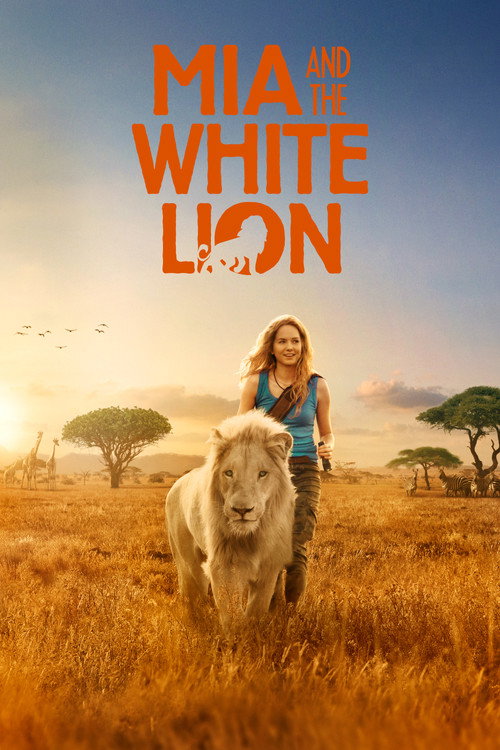
Mia and the White Lion
Sun-drenched savanna adventure yields to fierce adolescent heartache and radical empathy, as a girl's gentle touch upon a wild beast's mane becomes a shield against human cruelty.
Mia and the White Lion

Mia and the White Lion

Mia et le lion blanc

"Friendship is the wildest adventure of all"

02 August 2018 South Africa 98 min 7.2 (930)

Director: Gilles de Maistre

Cast: Daniah De Villiers, Mélanie Laurent, Langley Kirkwood, Ryan Mac Lennan, Lionel Newton

Drama Family Adventure Wildlife Exploitation vs. Conservation Cross-Species Kinship and Trust Loss of Innocence and Disillusionment with Adults Family Healing and Overcoming Trauma
Budget: $9,600,000
Box Office: $35,487,190

Overview

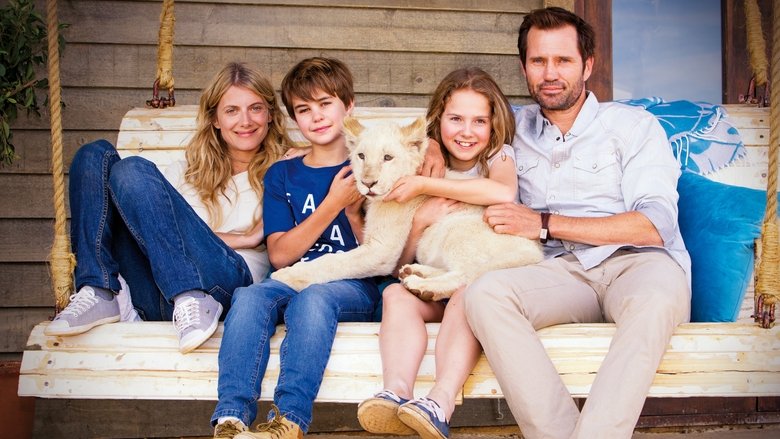
Mia and the White Lion (Mia et le lion blanc), directed by French filmmaker Gilles de Maistre, centers on ten-year-old Mia Owen, whose life is upended when her family relocates from suburban London to a rural lion-breeding farm in South Africa inherited from her grandfather. Resentful and homesick, Mia resists adjusting to her new surroundings until the miraculous Christmas-day birth of Charlie, a rare white lion cub. Charlie quickly forms a deep bond with the sullen girl, drawing her out of her emotional shell and sparking an intense, protective friendship.

As three years pass, Charlie grows from an affectionate cub into a massive, 300-pound apex predator. Mia's parents, John and Alice, become increasingly alarmed by the physical danger Charlie poses to the family and begin restricting their contact. Tension escalates as financial strain mounts on the farm. When Mia stumbles upon a disturbing secret regarding the true nature of her father's business dealings and Charlie's imminent fate, she is forced to confront adult hypocrisy and make a perilous choice to save her lifelong companion.

Mia embarks on a high-stakes trek across the South African wilderness, determined to guide Charlie to a distant wildlife sanctuary where he can roam free from human exploitation. Blending intimate family drama with expansive natural adventure, the film explores the boundaries of cross-species connection and the urgency of wildlife conservation.

Core Meaning

Director Gilles de Maistre and screenwriters Prune de Maistre and William Davies crafted the film as a rallying cry against the commercial exploitation of wild animals—specifically the practice of "canned lion hunting," where captive-bred predators are shot within enclosed spaces for sport. The film's central message asserts that true reverence for nature requires standing up against exploitative economic systems, challenging the notion of human dominion over animals, and replacing commodification with genuine stewardship and respect.

Thematic DNA

Wildlife Exploitation vs. Conservation 40%
Cross-Species Kinship and Trust 25%
Loss of Innocence and Disillusionment with Adults 20%
Family Healing and Overcoming Trauma 15%

Wildlife Exploitation vs. Conservation

The film sharply critiques commercial wildlife breeding, exposing how pseudo-sanctuaries can masquerade as conservation efforts while secretly feeding the lucrative canned hunting industry.

Cross-Species Kinship and Trust

Rather than portraying lions merely as dangerous beasts or domesticated pets, the narrative depicts an authentic bond rooted in mutual recognition, patience, and reciprocal trust.

Loss of Innocence and Disillusionment with Adults

Mia's transition from childhood to adolescence is marked by the painful realization that parental authority figures can compromise moral principles for financial security and convenience.

Family Healing and Overcoming Trauma

Through Mia's brother Mick's psychological recovery and Mia's own journey from alienation to purpose, the savanna landscape acts as a testing ground where the family must heal internal fractures.

Character Analysis

Mia Owen

Daniah De Villiers

Archetype: The Hero / Protector Key Trait: Fierce determination and deep animal empathy.

Motivation

To protect Charlie from harm and secure his ultimate freedom.

Character Arc

Moves from a bitter, alienated transplant into a fearless, principled activist willing to risk her life for justice.

John Owen

Langley Kirkwood

Archetype: The Compromised Patriarch / Antagonist-turned-Ally Key Trait: Pragmatic, conflicted, and burdened by economic stress.

Motivation

To keep his family financially solvent and shield his children from physical danger.

Character Arc

Evolves from a well-meaning father who rationalizes unethical compromises into a man forced to confront his failures and redeem himself.

All 4 characters and cast

Symbols & Motifs

The White Lion (Charlie)

Meaning:

A symbol of pristine, unblemished nature and spiritual rarity. Charlie represents both the beauty of the natural world and its vulnerability to human greed.

Context:

Serves as the central animal figure and emotional core across the multi-year narrative.

The Wire Enclosure / Fences

Meaning:

Symbolizes confinement, commercial control, and moral imprisonment.

Context:

Utilized as a recurring visual framing showing characters and animals behind chain-link fences.

The Soccer Ball

Meaning:

Represents Mia's longing for London and ordinary childhood, which transforms into the playful bridge that first establishes Charlie's connection with her.

Context:

Used early in the film as a toy and connection point between Mia and the cub.

The Bakkie (Pickup Truck)

Meaning:

Symbolizes commercial transport, containment, and the delivery of wildlife to execution sites, later reclaimed by Mia as a tool of liberation.

Context:

Used by the farm for operations and later stolen by Mia for Charlie's escape across the country.

The Timbavati Reserve Border

Meaning:

The ultimate physical and thematic threshold separating captive slaughter from true natural autonomy.

Context:

The destination and final boundary line crossed during the climax of the trek.

Memorable Quotes

It's the way South Africa works. It's the way it has always worked.
— John Owen

Context

Spoken when John tries to justify selling lions to wealthy hunting clients.

Meaning

It encapsulates the moral compromise and institutional cynicism that Mia refuses to accept.

He is not a pet, Mia. He's a wild predator.
— Alice Owen

Context

Uttered as Charlie enters maturity.

Meaning

Highlights the central tension between biological instinct and the emotional bond formed between human and animal.

All 3 quotes

Philosophical Questions

Can wild nature truly coexist with human economic systems?

The film explores whether commercial wildlife farming inevitably leads to moral corruption and commodification of living beings.

Where does the ethical line lie between domestication, affection, and wild sovereignty?

It examines whether loving an animal requires allowing it to be completely free and wild, rather than possessing it.

Is civil disobedience justified when state-sanctioned laws permit animal exploitation?

Mia's theft of the truck and armed standoff challenge the presumption that legal practices are inherently ethical.

Alternative Interpretations

Different ways to interpret the narrative include:

Full ending explanation

Cultural Impact

The film directly addresses South Africa's legal canned hunting and lion-farming industry, where thousands of lions remain in commercial captivity for cub-petting tourism and subsequent trophy hunting.

Achieving international success, the film grossed over $36 million globally against an €8.7 million budget, becoming one of the most widely exported French productions of 2019. In addition, the production partnered with conservation foundations—including the Prince Albert II of Monaco Foundation and Kevin Richardson Foundation—to lobby international bodies against captive breeding and canned hunting exports.

Audience Reception

Holding an 88% approval rating on Rotten Tomatoes, the film is widely regarded as a unique technical and emotional achievement that succeeds through sheer practical authenticity.

Audiences and critics specifically praised:

  • The unprecedented, non-CGI physical chemistry between Daniah De Villiers and the adult lion.
  • Brendan Barnes' cinematography capturing the expansive South African veld.
  • The clear educational and anti-canned-hunting message that engages younger audiences.

Conversely, points of criticism focused on predictable family-adventure storytelling tropes, melodramatic plot conventions, and supporting adult characters perceived as thinly developed compared to the central human-lion relationship.

Interesting Facts

  • Director Gilles de Maistre insisted on avoiding CGI or animatronics, opting to capture authentic physical interactions between the actors and the animals.
  • Filming was conducted in four distinct phases over three years (2015–2018) to allow Daniah De Villiers, Ryan Mac Lennan, and the lion cub Thor to grow up together organically on screen (reminiscent of Richard Linklater's Boyhood).
  • Wildlife conservationist Kevin Richardson directed all animal interactions and safety protocols, spending hundreds of hours desensitizing the lion to Daniah and the filming crew.
  • Daniah De Villiers was selected from over 300 young South African actors primarily because of her calm demeanor and intuitive connection during test sessions with lion cubs.
  • To maintain daily safety and bonding sessions (two hours, three times a week), Daniah’s family relocated from Cape Town to live near the sanctuary outside Johannesburg.
  • The main white lion who played Charlie, named Thor, along with five other lions involved in the production, was transferred to the Kevin Richardson Wildlife Sanctuary at Welgedacht Reserve to live out his natural life protected from the commercial hunting market.

Easter Eggs

Kevin Richardson's Real Reserve

The film was shot on location at the Welgedacht Reserve, which serves as Richardson's real-world conservation center.

Homage to Born Free (1966)

The thematic structure deliberately mirrors Joy and George Adamson's classic narrative of raising a lion and fighting to return it safely to the wild.

Wayne Rooney and Manchester United

Mia's London roots are signaled through Skype calls and Manchester United references, which serve as character markers before her lifestyle pivots entirely to conservation.

Jacques Perrin Production

The film was produced in part by Jacques Perrin's Galatée Films (Winged Migration, Seasons), continuing the company's legacy of pioneering non-invasive, long-term wildlife cinematography.

Frequently Asked Questions

Explore More About This Movie

Dive deeper into specific aspects of the movie with our detailed analysis pages

Comments (0)

Leave a comment

No comments yet. Be the first to share your thoughts!

Similar Movies