Remi, Nobody's Boy
A sweeping, heartfelt adventure painting the hardships of 19th-century France through the eyes of a wandering orphan whose voice becomes his only guide home.
Remi, Nobody's Boy

Remi, Nobody's Boy

Rémi sans famille

12 December 2018 Belgium 109 min ⭐ 7.9 (445)
Director: Antoine Blossier
Cast: Maleaume Paquin, Daniel Auteuil, Virginie Ledoyen, Ludivine Sagnier, Jonathan Zaccaï
Drama Family Adventure
The Search for Identity and Origins Found Family and Mentorship Survival and Resilience in a Cruel World The Power of Art and Music
Box Office: $7,434,840

Overview

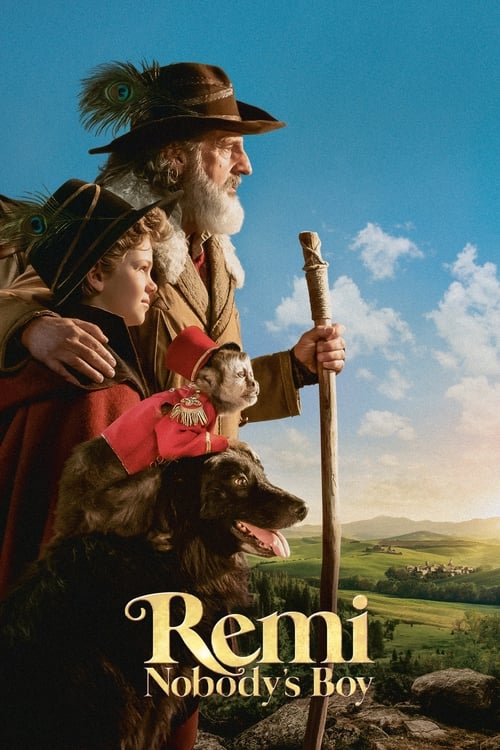
Based on Hector Malot's classic 1878 novel, Remi, Nobody's Boy tells the story of Rémi (Maleaume Paquin), a young orphan raised by the gentle Madame Barberin (Ludivine Sagnier). At the age of 10, his life is upended when his adoptive father (Jonathan Zaccaï) returns and sells him to a mysterious traveling musician named Vitalis (Daniel Auteuil).

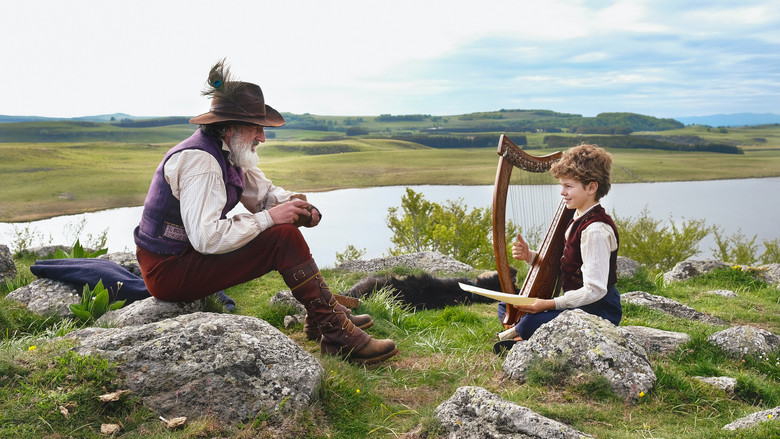
Forced into the harsh life of a street performer, Rémi journeys across France with Vitalis, his faithful dog Capi, and the mischievous monkey Joli-Cœur. Under Vitalis's tutelage, Rémi learns not only how to survive but also discovers his own extraordinary singing talent. Their travels are a series of adventures and misfortunes that test Rémi's spirit, but also lead to profound friendships and life lessons, forging a father-son bond between the boy and his master.

As they journey, clues from his infancy—the fine clothes he was found in and a half-remembered lullaby—begin to point toward the secret of his origins, setting Rémi on a path to uncover the truth about the family he never knew.


Core Meaning

At its heart, Remi, Nobody's Boy is an exploration of the search for identity and the meaning of family. Director Antoine Blossier frames the classic story as a journey of resilience, suggesting that family is not solely defined by blood, but by the bonds of love, mentorship, and loyalty forged through shared hardship. The film conveys the message that even in the face of profound loss and social injustice, one's innate talents and kindness can be a guiding light. Vitalis teaches Rémi that art, specifically his voice, is not just a means of survival but a way to connect with humanity and find one's place in the world. The narrative champions the triumph of selflessness and compassion in a world often marked by cruelty.

Thematic DNA

The Search for Identity and Origins 35%
Found Family and Mentorship 30%
Survival and Resilience in a Cruel World 20%
The Power of Art and Music 15%

The Search for Identity and Origins

The central pillar of the narrative is Rémi's quest to discover who he is. As a foundling, his entire journey is driven by the mystery of his birth parents. This theme is explored through his attachment to the baby clothes he was found in and a lullaby from his past. The film posits that knowing one's origins is fundamental to understanding oneself, a journey that ultimately leads him from being 'Nobody's Boy' to finding his true name and family.

Found Family and Mentorship

While Rémi is separated from his adoptive mother and searches for his biological one, the film emphasizes the concept of a 'found family.' The most significant relationship is with his mentor, Vitalis. Initially a master who 'rents' the boy, Vitalis evolves into a protective father figure, teaching Rémi literacy, music, and morality. This bond, forged on the road, becomes more formative for Rémi than any biological tie he has yet known.

Survival and Resilience in a Cruel World

The film does not shy away from the harsh realities of 19th-century France. Rémi faces hunger, cold, injustice, and the loss of his companions. His life as a traveling performer is one of constant precarity. However, the story is ultimately one of resilience. Rémi endures immense suffering but never loses his inherent goodness and hope, demonstrating the strength of the human spirit to persevere through adversity.

The Power of Art and Music

Rémi's exceptional singing voice is central to the plot. Music is portrayed as more than just a way to earn a meal; it is a transcendent force. It's the key to his self-discovery, a way to express his profound emotions, and the very thing that allows him to connect with others and ultimately provides a clue to his identity. Vitalis, a once-great violinist, imparts to Rémi the importance of art as a source of dignity and hope.

Character Analysis

Rémi

Maleaume Paquin

Archetype: The Innocent Hero
Key Trait: Resilient Empathy

Motivation

Rémi's primary motivation is the deep-seated desire to belong and find his true family. He clings to the hope of being reunited with his birth mother and seeks the love and security that was taken from him. This quest for his origins drives his entire journey across France.

Character Arc

Rémi begins as a sheltered, naive boy living a simple life with his adoptive mother. After being sold to Vitalis, he is thrust into a world of hardship and forced to grow up quickly. His journey is a classic coming-of-age arc; he transforms from a passive child, subject to the whims of others, into a resilient and determined young man who actively seeks his own destiny. He learns to channel his emotions into his art and finds the strength to persevere through profound grief, ultimately discovering his identity and a new definition of family.

Vitalis

Daniel Auteuil

Archetype: The Mentor with a Secret Past
Key Trait: Dignified

Motivation

Vitalis is motivated by a desire to survive and a deep, often hidden, love for his art. His past failures haunt him, and he sees in Rémi's raw talent a chance to nurture the gift he once possessed. His motivation shifts from self-preservation to a selfless dedication to protecting and guiding the boy.

Character Arc

Vitalis is introduced as a mysterious and stern street musician who buys Rémi. Initially, his relationship with the boy is transactional. However, he gradually reveals a softer, paternal side, becoming Rémi's teacher, protector, and surrogate father. His arc is one of redemption. We learn he was once a world-famous violinist who fell from grace. In teaching and caring for Rémi, he rediscovers his own humanity and purpose, finding a measure of peace before his tragic death.

Madame Barberin

Ludivine Sagnier

Archetype: The Nurturing Mother
Key Trait: Loving

Motivation

Her motivation is simple and powerful: a mother's unconditional love for her child. She defies her husband to protect Rémi and her grief at his departure underscores the cruelty of their separation.

Character Arc

Madame Barberin represents the warmth and security of Rémi's early childhood. She is his loving adoptive mother who is devastated when her husband sells him. Her role in the film is primarily at the beginning, establishing the emotional anchor that Rémi longs to return to. While she does not have a significant development arc herself, her unwavering love is the foundation of Rémi's capacity for hope.

Symbols & Motifs

The Open Road

Meaning:

The road symbolizes Rémi's life journey, a path of uncertainty, hardship, and endless possibility. It represents his status as an outsider, constantly moving and belonging nowhere. However, it is also the space where he learns his most important lessons, forges his most meaningful relationships, and inches closer to his destiny.

Context:

The majority of the film is set on the roads and in the villages of rural France. The changing landscapes, shot expansively by cinematographer Romain Lacourbas, reflect the emotional ups and downs of Rémi's journey with Vitalis and his troupe.

Rémi's Singing Voice

Meaning:

Rémi's voice is the symbol of his unique identity and inner spirit. It is an innate gift that cannot be taken from him, representing his pure heart and resilience. It is the key that unlocks opportunities, connects him with kind strangers, and ultimately links him to his past.

Context:

Vitalis discovers Rémi's talent early on and nurtures it. His singing is a recurring motif, often performed in moments of both desperation and joy. His voice captivates audiences, from poor villagers to the wealthy Madame Harper, and is the primary tool through which he navigates the world.

The Animal Troupe (Capi the dog, Joli-Cœur the monkey)

Meaning:

The animals symbolize loyalty, innocence, and the unconventional 'found family.' They are Rémi's constant companions in a world of fickle and often cruel humans. Their fates are intertwined with his, and their suffering mirrors his own, highlighting the vulnerability of the innocent in a harsh society.

Context:

Capi and Joli-Cœur are integral members of Vitalis's act and Rémi's traveling family. They perform alongside him, share his hardships, and provide comfort. The tragic death of Joli-Cœur during a harsh winter is a pivotal moment of loss for Rémi, hardening his understanding of the world's cruelty.

Philosophical Questions

Is family defined by blood or by bond?

The film consistently challenges the primacy of biological ties. Rémi's adoptive father sells him, while his biological uncle seeks to harm him. In contrast, the deepest and most formative relationship in his life is with Vitalis, a stranger who becomes his mentor and protector. The film explores the idea that true family is not something one is born into, but something that is built through shared experience, sacrifice, and love.

What is the role of art in the face of suffering?

For Rémi and Vitalis, art is not a luxury but a fundamental tool for survival and expression. Rémi's singing and Vitalis's music provide their meager income, but more importantly, they offer dignity and a way to process their grief and hardship. The film suggests that artistic expression is an essential human need that can provide hope and connection even in the most desperate of circumstances.

How much of one's destiny is predetermined versus self-created?

Rémi is born into a wealthy family, but a cruel twist of fate casts him into a life of poverty. His journey is a constant struggle against the circumstances he was thrown into. While his parentage is a matter of destiny that is eventually revealed, his survival, his moral character, and his ultimate triumph are products of his own resilience and the choices he and Vitalis make. The film seems to argue that while fate may set the stage, character is forged through the journey itself.

Cultural Impact

Remi, Nobody's Boy is a modern cinematic interpretation of Hector Malot's enduring 19th-century novel, Sans Famille. The story holds a significant place in French literature, often compared to Dickensian tales like Oliver Twist for its focus on a child's journey through poverty and social injustice. The novel has a long history of adaptations, making it a culturally resonant story for generations in France and beyond, particularly in Asia, due to a widely beloved 1977 anime series.

Director Antoine Blossier's 2018 version sought to reintroduce the classic tale to a new generation, consciously adopting the epic visual style of Hollywood adventure films rather than a strictly European realist aesthetic. This approach aimed to make the story universally appealing. Critics noted the film's high production values, stunning cinematography, and powerful performances, especially by Daniel Auteuil as Vitalis. While some found the narrative condensed compared to the dense novel, it was generally praised as a touching and visually spectacular family film. The film serves as a testament to the timelessness of its themes—the search for family, the resilience of the human spirit, and the power of mentorship—ensuring the story of Rémi continues to be passed down.

Audience Reception

Audience reception for Remi, Nobody's Boy has been largely positive, with many viewers describing it as a touching, heartwarming, and beautifully filmed story suitable for families. Praise is frequently directed at the powerful performances, particularly Daniel Auteuil as Vitalis and the young Maleaume Paquin as Rémi. The stunning cinematography and picturesque French landscapes are also commonly cited highlights. Many who grew up with the classic novel or the popular 1970s anime series found this adaptation to be a faithful and moving tribute. The main points of criticism from some viewers are that the film, by necessity, condenses the sprawling plot of the original novel, leaving out certain subplots and characters. Despite this, the overall verdict from audiences is that it is an emotional and visually splendid adventure that successfully brings the classic tale to life.

Interesting Facts

  • The film is based on the classic 1878 French novel "Sans Famille" by Hector Malot.
  • The novel has been adapted numerous times for film and television, including a very famous Japanese anime series from the 1970s that was popular in many countries.
  • Director Antoine Blossier was encouraged by his wife to read the novel from a "Spielbergian perspective," focusing on telling a tragic story through the eyes of a child with a sense of magic and adventure.
  • Blossier deliberately aimed for a cinematic language reminiscent of classic Hollywood adventures and Amblin films like "E.T." rather than a naturalistic, historical drama.
  • The film was shot in various picturesque locations across France, including the Occitanie and Grand Est regions, to capture the epic scope of Rémi's journey.
  • The cinematography, by Romain Lacourbas, utilized old lenses to evoke the feel of classic American films and enhance the wide, open landscapes.
  • The film uses a framing device where an elderly Rémi (played by Jacques Perrin) recounts his life story to children in an orphanage.

⚠️ Spoiler Analysis

Click to reveal detailed analysis with spoilers

Frequently Asked Questions

Explore More About This Movie

Dive deeper into specific aspects of the movie with our detailed analysis pages

Comments (0)

Leave a comment

No comments yet. Be the first to share your thoughts!