Skip to content
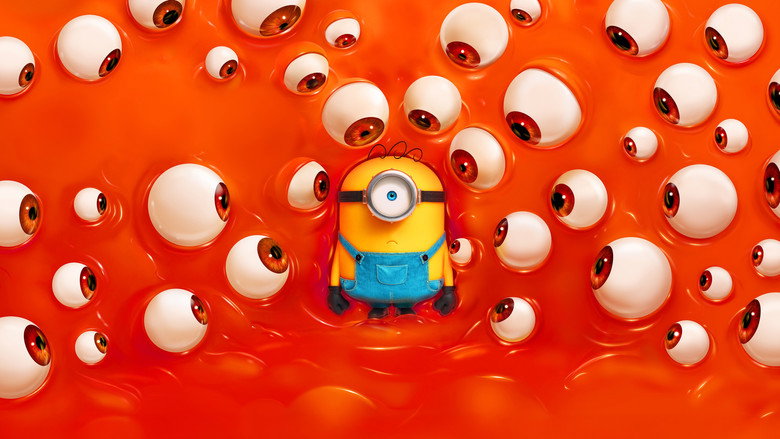
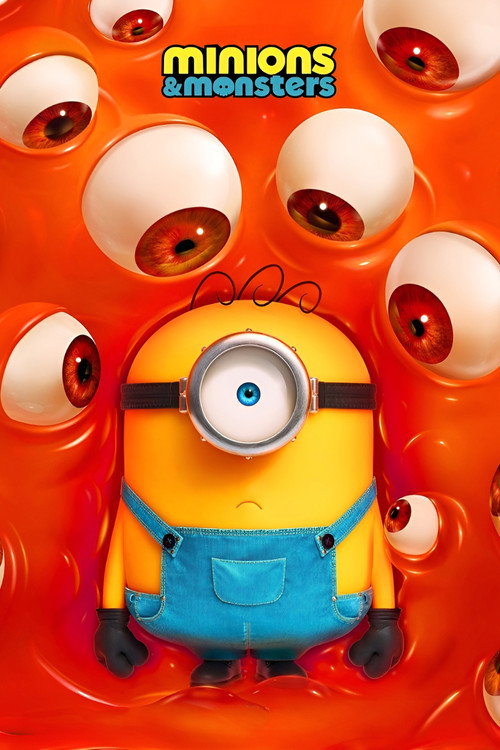
Minions & Monsters
Animation/Comedy. A chaotic, gibberish-filled love letter to Old Hollywood where slapstick collides with cinematic history, revealing that true art is born from lived chaos.
Minions & Monsters

Minions & Monsters

"Hollywood has a monster problem."

24 June 2026 United States of America 90 min 6.4 (204)

Director: Pierre Coffin

Cast: Pierre Coffin, Trey Parker, Allison Janney, Christoph Waltz, Jeff Bridges

Animation Family Fantasy Comedy Adventure The Evolution of Cinema Art Imitating Life The Fickle Nature of Fame Embracing the Absurd
Budget: $85,000,000
Box Office: $357,900,000

Overview

Set in the dazzling yet cutthroat world of 1927 Old Hollywood, the film follows three distinct Minions—James, Henry, and the mute Ed—who stumble into a bustling movie studio while searching for a new evil master. By accidentally ruining a western directed by the intense Max, they catch the eyes of bulbous studio executives Frank and Elwood. Their natural propensity for slapstick destruction propels them to silent film superstardom, echoing the physical comedy of Buster Keaton and Charlie Chaplin.

However, the sudden advent of the 'talkies' effectively ends their careers overnight, as audiences are utterly baffled by their Minionese gibberish. Desperate to reclaim their creative spark, the trio decides to produce their own masterpiece—a monster movie. They acquire an ancient, mysterious spellbook to serve as a prop, inadvertently summoning real, terrifying creatures into the world, including the chaotic entity Goomi.

As Old Hollywood is overrun by actual cinematic nightmares, James, Henry, and Ed must rally their fellow Minions to save the industry and the planet. Bridging the gap between the chaotic slapstick of the franchise and genuine film history, the movie becomes a meta-narrative about the unruly, unpredictable magic of filmmaking.
Core Meaning

Beneath the surface of standard Minion mayhem, director Pierre Coffin delivers a surprisingly poignant commentary on the evolution of cinema and the essence of true art. By juxtaposing the Minions' physical comedy with the silent era, the film argues that the purest form of entertainment transcends language. When the 'talkies' render them obsolete, the Minions resort to real magic to create their art, suggesting that the most resonant, authentic stories are forged not in safe, controlled environments, but through lived, chaotic, and often dangerous experiences. It is a tribute to the unruly, boundary-pushing pioneers of early Hollywood.

Thematic DNA

The Evolution of Cinema 30%
Art Imitating Life 30%
The Fickle Nature of Fame 20%
Embracing the Absurd 20%

The Evolution of Cinema

Through the transition from silent films to talkies, the film mirrors the real-life struggles of silent stars whose careers ended when sound arrived, using the Minions' incomprehensible language as a clever narrative device.

Art Imitating Life

The Minions set out to make a fake monster movie but end up fighting real monsters. This theme highlights how genuine artistic expression often stems from real-life survival, trauma, and unscripted chaos.

The Fickle Nature of Fame

Represented by the studio executives Frank and Elwood, the movie showcases how quickly the entertainment industry can chew up and discard its biggest stars the moment trends shift.

Embracing the Absurd

Rather than destroying everything they fear, the Minions often neutralize threats with affection, such as turning a giant, menacing pink bunny monster into a friendly companion through a simple hug.

Character Analysis

James, Henry, and Ed

Pierre Coffin

Archetype: The Unintentional Auteurs Key Trait: Unintentional brilliance

Motivation

Initially driven by the biological Minion urge to serve a master, they eventually become motivated by the desire to create their own cinematic masterpiece and save their friends.

Character Arc

Starting as desperate lackeys searching for an evil boss, they accidentally become silent film superstars, lose their fame to the talkies, and finally evolve into independent filmmakers who must become actual heroes to save Hollywood.

Goomi

Trey Parker

Archetype: The Unleashed Chaos Key Trait: Theatrical megalomania

Motivation

Upon being freed from the ancient spellbook, Goomi's primary goal is to wreak havoc, demanding freedom and reveling in the destruction of Old Hollywood.

Character Arc

Goomi is summoned as a terrifying antagonist meant to destroy the world, but eventually finds himself unwillingly incorporated into the Minions' final film production as a lead actor.

All 5 characters and cast

Symbols & Motifs

The Ancient Spellbook

Meaning:

It symbolizes the untamed, unpredictable power of imagination and the creative process, which can easily spiral out of control if not handled with respect.

Context:

The Minions initially use it as a mere prop for their movie, but it quickly unleashes Goomi and a horde of monsters upon Los Angeles, forcing them to become actual heroes.

The Western Movie Set

Meaning:

The set represents the rigid, structured conventions of traditional filmmaking, which are inevitably destroyed by the Minions' raw, unfiltered physical comedy.

Context:

Max is attempting to shoot a serious cowboy picture when James, Henry, and Ed crash the set, accidentally creating a comedic masterpiece that launches their careers.

The Giant Pink Bunny Monster

Meaning:

This creature symbolizes the perceived threats of the unknown, which often just need understanding and compassion rather than violence.

Context:

Summoned during the film's chaotic climax, Bob and a little girl choose to hug the towering beast rather than run from it, instantly taming the creature and embodying the film's underlying sweetness.

Memorable Quotes

I am free! I am free! Freedom!
— Goomi

Context

Goomi shouts this triumphantly when James and Henry accidentally read the actual incantation from the spellbook, unleashing him into 1920s Los Angeles.

Meaning

This line marks the shift from a movie-making comedy to a high-stakes monster film, establishing Goomi's manic energy and threat level.

Poopaye, ba dooi? Labba duka duka? Bello tu la banya, na bable na foon-ya...
— The Minions

Context

The Minions belt out this dramatic pop-ballad tune during their disastrous first attempt at recording audio for a sound film, bewildering the executives.

Meaning

A hilarious reminder that the Minions communicate exclusively in an absurdist, multi-lingual amalgam, which ultimately costs them their careers in the talkies.

Philosophical Questions

Does art need to be understood to be meaningful?

The film explores this through the Minions' transition from silent films to talkies. Their physical comedy is universally beloved in silence, but when forced to speak, their gibberish (Minionese) alienates the studio. It asks whether true artistic expression transcends language.

Is chaos a necessary component of creation?

Max tries to make rigid, controlled art, but fails. The Minions bring total anarchy, which results in cinematic genius. The film posits that true creativity requires a relinquishing of control and an embrace of the unpredictable.

Alternative Interpretations

The film's climax presents a fascinating meta-narrative that sparked multiple interpretations. When the dust settles on the monster invasion, the film cuts to reveal a movie set, implying that James, Henry, and Ed had simply shot a fictional film and that Goomi and the monsters were merely actors in practical suits. This 'it was all a movie' reading suggests the Minions never actually saved the world. Conversely, the true interpretation—confirmed by the end-credits scene where the spellbook retains its real magic in the hands of Kevin, Stuart, and Bob—is that the Minions survived a genuine, lethal monster attack, and subsequently marketed their real-life trauma as a theatrical production. A third philosophical reading posits that the film blurs the line entirely, suggesting that in the realm of Hollywood, the distinction between authentic chaos and manufactured spectacle is completely irrelevant.

Full ending explanation

Cultural Impact

Upon its release in the summer of 2026, Minions & Monsters achieved a unique cultural footprint by successfully bridging the gap between a massive children's franchise and adult cinephiles. Critics widely praised it as the strongest entry in the franchise since the original 2010 Despicable Me. By weaving deep-cut references to Buster Keaton, Charlie Chaplin, and the Lumière brothers into its manic slapstick, it served as an introductory film history lesson for younger generations. The movie successfully converted many long-time franchise skeptics into begrudging admirers, proving that Illumination could elevate their trademark chaotic humor with sophisticated, meta-textual storytelling. However, while it was lauded as an adult cinephile's dream, some debated whether its complex homage to the Golden Age of Hollywood flew over the heads of its core demographic.

Audience Reception

Aggregated audience reviews and critical consensus highlight Minions & Monsters as a surprising critical darling. Viewers praised the visually inventive homages to the silent film era, citing the intelligent integration of cinematic history as a massive step up in quality for the series. The voice acting, particularly Trey Parker's unhinged performance as Goomi and Christoph Waltz's intense director Max, received high marks. However, the main point of criticism centered on the third act; some audiences felt that once the monsters were unleashed, the film abandoned its clever Hollywood satire in favor of the loud, familiar slapstick chaos typical of the franchise. Despite this, the overall verdict was highly positive, earning a solid 'C+' to 'B+' average from tougher critics and standing as a top-tier family event movie for 2026.

Interesting Facts

  • The film's opening features a shot-for-shot recreation of Eadweard Muybridge's 1878 'The Horse in Motion', with Minions galloping alongside the horse.
  • Academy Award-nominated composer John Powell scored the film, marking his third collaboration with Illumination and breaking Heitor Pereira's long-running streak of scoring the Despicable Me franchise.
  • South Park co-creator Trey Parker impressed director Pierre Coffin by physically contorting himself in the recording booth to achieve the chaotic, strained voice of the villain Goomi.
  • The movie takes place in 1927, exactly 41 years before the events of the 2015 prequel film 'Minions'.
  • Legendary filmmaker George Lucas makes a surprise vocal cameo in the film.

Easter Eggs

The Arrival of a Train at La Ciotat

During a frantic chase sequence, a train barrels directly toward the camera, mimicking the legendary 1895 Lumière brothers film that supposedly sent early audiences fleeing in terror.

Citizen Kane Parody

The film features a shot-for-shot parody of Orson Welles' masterpiece, showcasing the filmmakers' deep appreciation for cinematic history woven into a children's movie.

Kyle's Origin Story

In the end credits, the original Minion trio (Kevin, Stuart, and Bob) find the spellbook and accidentally transform an ordinary dog into Kyle, the fanged, gremlin-like pet owned by Gru in the main timeline.

Singin' in the Rain Parallel

The plot point where the Minions lose their acting jobs because their voices (Minionese) don't translate to sound film is a direct homage to the classic 1952 musical.

Frequently Asked Questions

Explore More About This Movie

Dive deeper into specific aspects of the movie with our detailed analysis pages

Comments (0)

Leave a comment

No comments yet. Be the first to share your thoughts!

Similar Movies