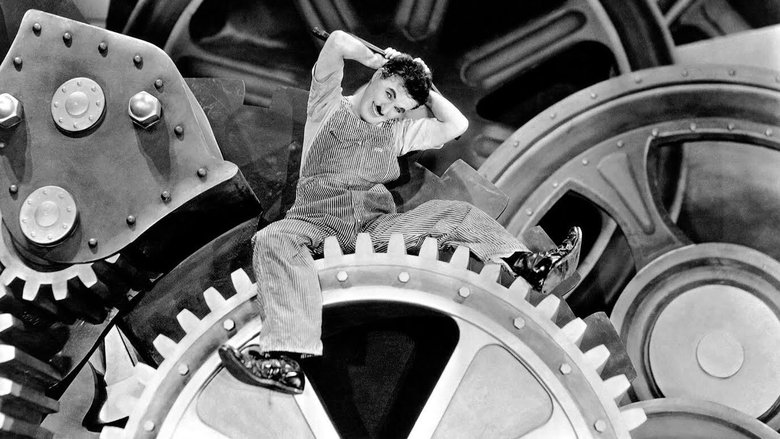
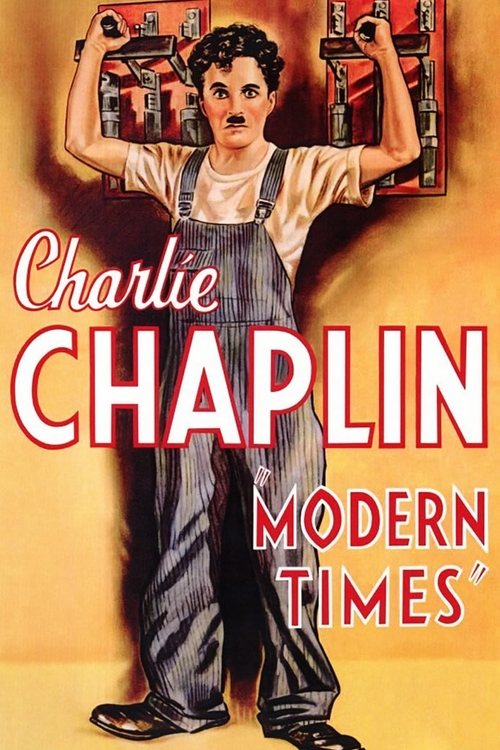
"He stands alone as the greatest entertainer of modern times! No one on earth can make you laugh as heartily or touch your heart as deeply...the whole world laughs, cries and thrills to his priceless genius!"
Director: Charlie Chaplin
Cast: Charlie Chaplin, Paulette Goddard, Henry Bergman, Tiny Sandford, Chester Conklin
Modern Times — Movie Quotes
Memorable Quotes
(Nonsense Song Lyrics) Se bella giu satore je notre so cafore, je notre si cavore je la tu la ti la twah...
Context
Working as a singing waiter, The Tramp loses the cuffs on which he'd written the lyrics to his song. Urged on by the Gamin, he improvises the song with nonsensical words and expressive pantomime, winning over the audience with his charismatic performance.
Meaning
This is the first and only time audiences hear The Tramp's voice. By singing in gibberish—a mix of fake French and Italian—Chaplin cleverly preserved the character's universal appeal, which he feared would be lost if the Tramp spoke a specific language. The song's success in the film demonstrates that emotion and story can be conveyed through performance and intonation alone, transcending language barriers.
Buck up - never say die. We'll get along!
Context
In the final scene, the Gamin is heartbroken after they are forced to flee their jobs at the café. Sitting by the side of the road, she asks, "What's the use of trying?" The Tramp delivers this line, lifts her spirits, and they walk off down the road together.
Meaning
This intertitle quote encapsulates the film's core message of hope and resilience. After facing their latest and most crushing defeat, The Tramp refuses to give in to despair. His words are a simple yet profound affirmation of their ability to survive and find happiness together, no matter the obstacles.
We ain't burglars. We're hungry.
Context
The Tramp, working as a night watchman in a department store, confronts a trio of armed burglars. He recognizes one of them, "Big Bill," as his former co-worker from the factory. Big Bill says this line to explain their actions, transforming a dangerous encounter into a moment of shared struggle.
Meaning
This line provides a powerful social commentary on the connection between poverty and crime during the Great Depression. It reframes the burglars not as villains, but as desperate, unemployed factory workers driven to theft by starvation. It highlights one of the film's key themes: that societal and economic systems, not individual moral failings, are often the root cause of crime.
Explore More About This Movie
Dive deeper into specific aspects of the movie with our detailed analysis pages