Skip to content
Money Heist: Korea - Joint Economic Area
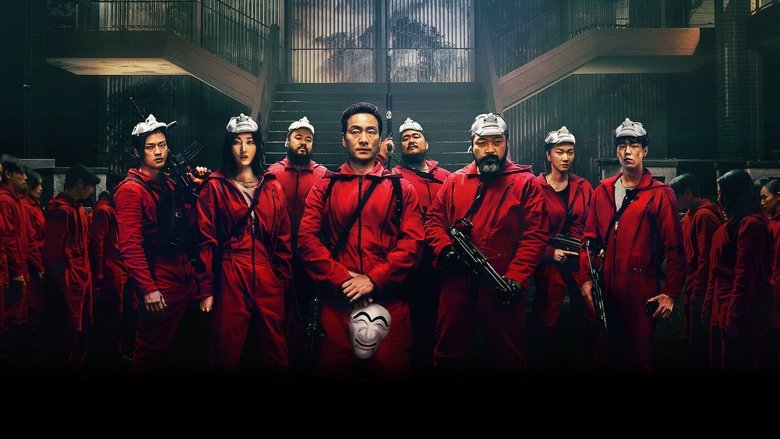
A high-octane political crime thriller steeped in desperate tension and revolutionary hope, where blood-red silhouettes clash against cold concrete inside the pressure cooker of a divided nation's unified dream.
Money Heist: Korea - Joint Economic Area

Money Heist: Korea - Joint Economic Area

종이의 집: 공동경제구역

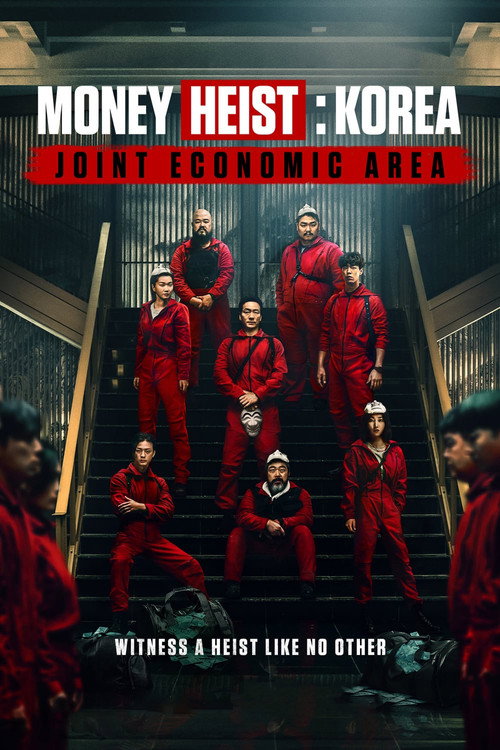
"Witness a heist like no other."

24 June 2022 — 09 December 2022 South Korea 1 season 12 episode Ended 7.7 (727)

Cast: Yoo Ji-tae, Park Hae-soo, Jeon Jong-seo, Lee Won-jong, Kim Ji-hoon

Drama Crime Action & Adventure Mystery Reunification, Capitalism, and Socioeconomic Inequality Ideological Division vs. Human Solidarity Resistance Against Political Exploitation and Corruption Trust, Deception, and Moral Ambiguity Redemption and Reclaiming Personal Agency

Overview

Money Heist: Korea – Joint Economic Area (종이의 집: 공동경제구역) is a 12-episode South Korean crime drama series released by Netflix in two six-episode instalments in 2022. Directed by Kim Hong-sun and written by Ryu Yong-jae, the series is an official Korean adaptation of the hit Spanish series La Casa de Papel (Money Heist), executive produced by original series creator Álex Pina. Set in a hypothetical 2025–2026, the narrative unfolds against the backdrop of a near-future Korean Peninsula on the verge of peaceful reunification.

The story begins as North and South Korea establish a Joint Economic Area (JEA) along the former Demilitarized Zone, launching a Unified Korea Mint (UKM) to print a new joint currency intended to foster economic prosperity. However, reunification enriches only wealthy capitalists while exacerbating extreme inequality for ordinary working-class citizens from both sides. In response, an enigmatic strategist known as "The Professor" recruits a team of skilled operatives named after international cities to orchestrate an unprecedented 4-trillion-won heist at the Mint, taking hostages and forcing the newly formed Joint Task Force into a high-stakes battle of wits.

Across its 12 episodes, the series expands beyond a simple bank robbery into a complex political chess match. As the thieves print untraceable currency inside the Mint, deep tensions arise between North and South Korean hostages, law enforcement factions, and the heist crew itself while the Professor operates covertly from the outside.

Core Meaning

The creators transformed a global heist story into a poignant allegory for contemporary Korean geopolitical anxieties, economic disillusionment, and class struggle. The series demonstrates that political or territorial unification is meaningless if it merely serves capitalistic elites at the expense of vulnerable citizens.

It conveys that true solidarity across ideological divides—symbolized by North and South Koreans finding common ground inside the Mint—is born not from corporate policy or political summits, but from shared human experience, mutual empathy, and resistance against institutional exploitation. The heist acts as a public trial of corrupt power, asserting that ordinary people can reclaim their agency when they reject artificial divisions.

Thematic DNA

Reunification, Capitalism, and Socioeconomic Inequality 30%
Ideological Division vs. Human Solidarity 25%
Resistance Against Political Exploitation and Corruption 20%
Trust, Deception, and Moral Ambiguity 15%
Redemption and Reclaiming Personal Agency 10%

Reunification, Capitalism, and Socioeconomic Inequality

The narrative grounds its entire heist in the economic betrayal of reunification. Rather than delivering shared wealth, the Joint Economic Area turns into a capitalist playground where wealthy elites profit while North Korean defectors and poor South Koreans are exploited. The creation of 4 trillion won represents a populist redistribution of wealth in a system rigged against the public.

Ideological Division vs. Human Solidarity

The show pits North Korean communist conditioning against South Korean capitalist individualism. Inside the Mint and within the Joint Task Force, prejudice and mutual suspicion initially trigger conflict. However, operational survival and genuine bonds overcome political brainwashing, showing that common human dignity transcends border lines.

Resistance Against Political Exploitation and Corruption

The series critiques political figures who manipulate national sentiment for personal ambition. High-ranking politicians, represented by Assemblyman Kim Sang-man, use the economic summit and hostage situation as leverage for power and financial gain. The Professor’s plan exposes how state authorities prioritize elite economic interests over human lives.

Trust, Deception, and Moral Ambiguity

Every major character navigates double lives and shifting loyalties. The Professor woos negotiator Seon Woo-jin under an alias, blurring the boundary between tactical calculation and genuine love. Tactical mind games test whether morality lies with law enforcers enforcing a corrupt status quo or criminals fighting an unjust economic system.

Redemption and Reclaiming Personal Agency

The crew members enter the heist as broken outcasts—disillusioned soldiers, former prisoners, betrayed workers, and marginalized youth. By carrying out the heist according to strict moral codes such as avoiding unnecessary civilian bloodshed, they transform from petty criminals into symbolic figures claiming control over their destinies.

Character Analysis

The Professor / Park Sun-ho

Yoo Ji-tae

Archetype: Mastermind / Visionary Architect / Intellectual Antihero Key Trait: Unwavering composure and strategic foresight

Motivation

To execute his late father's dream of establishing true economic equality and exposing high-level political corruption surrounding Korean reunification.

Character Arc

Initially a detached strategist who views every move as a mathematical calculation, his cold logic is shaken when he falls genuinely in love with Inspector Seon Woo-jin. Over the series, he evolves from a solitary puppet master into a leader willing to risk his life to save his team and maintain his ethical standards.

Berlin / Song Jung-ho

Park Hae-soo

Archetype: Ruthless Enforcer / Pragmatic Antihero / Tragic Leader Key Trait: Cold charisma and intimidating tactical discipline

Motivation

To live his final days on his own terms and prove that human dignity can survive under extreme tyranny.

Character Arc

A survivor who endured 24 years in a brutal North Korean labor camp, Berlin initially rules the hostages through fear, division, and harsh authoritarian control. As his terminal illness progresses, his cynical exterior softens, culminating in a heroic sacrifice to secure the team's escape.

All 5 characters and cast

Symbols & Motifs

The Hahoe Yangban Mask

Meaning:

Replacing the original Spanish Salvador Dalí mask, the traditional Korean Hahoe mask—specifically the smiling Yangban (aristocrat) mask from Andong—serves as a satirical symbol of rebellion against arrogant ruling classes. Its exaggerated, mocking smile hides the wearers' true emotions while ridiculing elite hypocrisy.

Context:

Worn by the heist crew and hostages inside the Mint during the takeover and negotiations.

Red Jumpsuits

Meaning:

A visual hallmark carried over from the original franchise representing collective solidarity, equality among crew members, and revolutionary disruption against corporate sterility.

Context:

Worn by both the heist crew and hostages inside the Unified Korea Mint to blur identities and present a unified visual front.

The 4 Trillion Won Unified Currency

Meaning:

Printed inside the Mint, this unreleased money represents the promise of a unified economic future. Because the bills carry no recorded serial numbers, they symbolize pure, untraceable wealth detached from state debt or capitalist control.

Context:

Printed continuously inside the Unified Korea Mint during the heist as the central objective of the Professor's plan.

The Joint Economic Area (JEA) & Unified Mint

Meaning:

Built on the physical border separating North and South Korea, this setting symbolizes the liminal state of the peninsula—a place where boundaries collide, ideologies clash, and a new reality is forged.

Context:

Serves as the primary physical setting and backdrop for the central conflicts and heist operations.

BTS Music / K-Pop Subculture

Meaning:

Represents soft power, global youth connection, and secret hope among oppressed North Koreans who consume banned South Korean media.

Context:

Introduced in Episode 1 through Tokyo, who listens and dances to BTS's "DNA" in Pyongyang.

Subterranean Tunnels and Escape Corridors

Meaning:

Symbolizes the hidden currents of history, secret resistance networks, and the underground pathways through which defectors and outcasts seek freedom.

Context:

Utilized throughout the series as hidden escape routes and operational channels beneath the Mint.

Memorable Quotes

When the North opened up, everyone thought they'd cash in on it. But what's the reality? Only the haves got richer. The have-nots, like us, have to find our share of the pie. That's why this team was created.
— The Professor

Context

Season 1, Episode 1; during the initial recruitment orientation in the abandoned pool facility.

Meaning

Establishes the central socioeconomic anti-capitalist thesis of the entire heist.

Why Tokyo of all places? / Because we're going to do a bad thing.
— Denver & Tokyo

Context

Season 1, Episode 1; as crew members pick city code names.

Meaning

A witty exchange establishing Tokyo's code name while referencing historic East Asian geopolitical tensions.

All 5 quotes

Episode Highlights

Episode 1

S1E1

Introduces Tokyo’s backstory in Pyongyang, the geopolitical reality of the JEA, and the gathering of the crew. The grand takeover of the Unified Korea Mint sets the overarching plot into motion.

Significance:

Establishes the premise, characters, and high-stakes environment of the Joint Economic Area heist.

Episode 4

S1E4

Features high-stakes tactical chess between Seon Woo-jin and the Professor. The police attempt a stealth entry, forcing the robbers to wear identical Hahoe masks and jumpsuits alongside hostages, turning human shields into a psychological weapon.

Significance:

Demonstrates the Professor's psychological warfare capabilities and reinforces the tactical complexity of the standoff.

Episode 6

S1E6

The dramatic mid-season finale where Cha Moo-hyuk begins suspecting Sun-ho. Woo-jin enters the Mint in person to verify hostage safety, ending in a tense cliffhanger.

Significance:

Solidified the series' popularity and escalated tensions between law enforcement and the mastermind.

Episode 7

S1E7

Shift in dynamics following Berlin's removal from command. Explores Captain Cha's backstory and introduces Seoul (Lim Ji-yeon), an outside operative who adds a dangerous new dimension to the escape plan.

Significance:

Expands the external scope of the operation and shifts crew leadership dynamics.

Episode 10

S1E10

A major turning point where the Professor turns public opinion against corrupt politicians. By broadcasting political conspiracy details to the public, the crew transforms from common thieves into popular folk heroes.

Significance:

Shifts public perception and turns political warfare into the crew's main leverage.

Episode 12

S1E12

The explosive finale featuring the military raid on the Mint, Berlin's dramatic stand, the crew's escape with 4 trillion won through the subterranean tunnel, and Woo-jin eventually reuniting with Sun-ho abroad.

Significance:

Concludes the heist, completes major character arcs, and executes the final escape.

Philosophical Questions

Is illegal wealth redistribution morally defensible when legal economic structures perpetuate systematic poverty?

The show poses this by contrasting the Professor's non-lethal printing of 4 trillion won against corrupt politicians profiting off the suffering of working-class citizens.

Can genuine national unity be forged through shared opposition to systemic injustice rather than state-mandated political policy?

Explored through North and South Korean hostages and crew members setting aside ideological indoctrination to resist authoritarian military force.

Does maintaining ethical integrity require absolute refusal to take human lives, even in pursuit of a noble revolution?

Tested repeatedly through the Professor's strict "no-kill" rule, which creates tactical vulnerabilities but preserves their moral authority in the court of public opinion.

Alternative Interpretations

The Cynical Capitalist Reading: A perspective suggesting the entire heist demonstrates that true economic justice is impossible; even a revolutionary act printing 4 trillion won depends on capitalist financial systems to have value.The Allegorical Unification Narrative: Reads the Mint as a microcosm of the Korean Peninsula. The conflict between hostages, thieves, and task force members demonstrate...

Full ending explanation

Cultural Impact

The series taps directly into complex real-world debates regarding Korean reunification, the Sunshine Policy, and fears of economic inequality. It explores the practical anxieties South Koreans hold regarding the immense financial costs of integration, alongside North Korean fears of becoming second-class citizens under Southern capital.

It demonstrated South Korea's ability to localize massive Western global IPs while weaving in deep cultural commentary. The Hahoe mask became a recognized global symbol of TV resistance alongside the Dalí mask.

Audience Reception

The series was a major commercial hit for Netflix, reaching #1 on the Global Non-English TV Top 10 list with over 33 million hours viewed in its opening week. Critical reception was mixed-to-positive (56/100 on Metacritic). Critics praised the Korean political framing, high production values, and standout performances by Yoo Ji-tae and Park Hae-soo, though many noted Part 1 stuck too closely to the original Spanish plot beats.

Viewers initially expressed skepticism during Part 1 due to heavy narrative overlaps with the Spanish version, but audience sentiment improved significantly in Part 2 as original storylines involving Seoul, political conspiracies, and an altered escape sequence were introduced. The overall verdict is a polished, action-packed political crime thriller with an IMDb audience rating of 6.8 / 10.

Interesting Facts

  • Original Money Heist creator Álex Pina officially backed the Korean adaptation, expressing fascination with placing the narrative on the divided Korean Peninsula.
  • The decision to swap Dalí masks for traditional Korean Hahoe (Yangban) masks was made to ground the show in local heritage, as the Yangban mask historically represents satirical mockery of corrupt Joseon dynasty aristocrats.
  • Production companies BH Entertainment and Content Zium constructed a massive, highly detailed set for the Unified Korea Mint, incorporating modern security systems alongside traditional Korean architectural motifs.
  • Writers created an imaginary near-future (2025–2026) where North and South Korea agree to a demilitarized open economic zone to make the premise plausible.
  • Coming off global success in Squid Game, Park Hae-soo drew on his extensive stage theater experience to give Berlin a terrifying, authoritative aura.
  • Unlike the original Spanish Tokyo, writer Ryu Yong-jae adapted Tokyo into a trained former North Korean soldier, making her calmer, more tactical, and less impulsive.

Easter Eggs

Café Bella Ciao

The Professor opens a cozy cafe named Café Bella Ciao, where he meets Inspector Seon Woo-jin—a direct nod to the iconic Italian anti-fascist anthem central to the original Spanish series.

The Salvador Dalí Mask Cameo

In early episodes, when the Professor selects masks in his hideout, a traditional Salvador Dalí mask appears hanging on his wall among various Korean traditional masks, acknowledging the original series.

BTS DNA Pyongyang Opening

Episode 1 opens with Tokyo dancing to BTS's song "DNA" in North Korea, highlighting the real-world underground consumption of K-pop among North Korean youth.

Cho Young-min as Arturo Román

The character Cho Young-min (played by Park Myung-hoon) is written to mirror the universally disliked Arturo Román from the original series, down to his cowardly self-preservation instincts.

Visual Artwork on Unified Currency

The custom 4-trillion-won banknotes feature artwork portraying peaceful cooperation between North and South Korea, adding an ironic touch as the money is printed during an armed takeover.

Frequently Asked Questions

Explore More About This Movie

Dive deeper into specific aspects of the movie with our detailed analysis pages

Comments (0)

Leave a comment

No comments yet. Be the first to share your thoughts!

Similar Movies