Skip to content
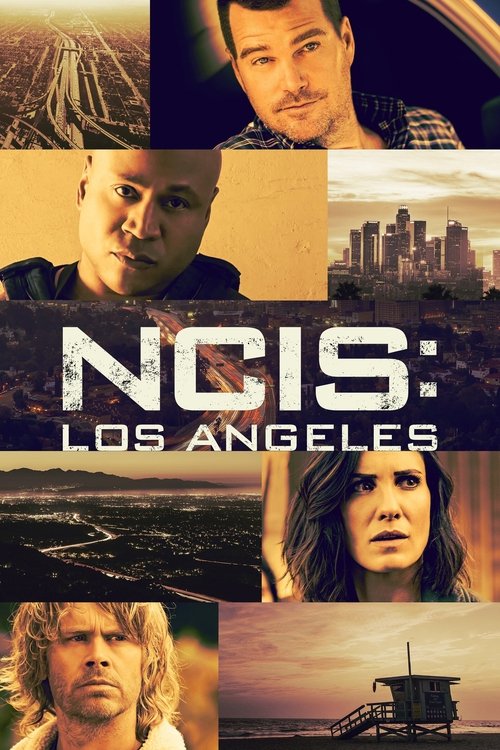
NCIS: Los Angeles
Sun-drenched espionage meets hard-hitting tactical action, where shadowy operatives shield the world while searching for belonging, navigating high-stakes gunfights and neon-lit boulevards like ghosts chasing the warmth of family.
NCIS: Los Angeles

NCIS: Los Angeles

"New city. New team. Same attitude."

22 September 2009 — 21 May 2023 United States of America 14 season 323 episode Ended 7.5 (1,261)

Cast: Chris O'Donnell, Daniela Ruah, LL Cool J, Eric Christian Olsen, Barrett Foa

Drama Crime Action & Adventure Mystery The Quest for Identity and Origin Chosen Family vs. Operational Isolation The Moral Toll and Duality of Undercover Tradecraft Mentorship, Secrecy, and Institutional Accountability Partnership and Relational Resilience

Overview

NCIS: Los Angeles is an action-packed military police procedural and undercover espionage drama created by Shane Brennan. The series centers on the Office of Special Projects (OSP), an elite division of the Naval Criminal Investigative Service headquartered in a converted mission in Los Angeles, California. The specialized unit is tasked with confronting high-level domestic and international security threats, hostile foreign agents, terrorist cells, and cyber warfare networks through deep-cover surveillance, cutting-edge intelligence technologies, and tactical field combat.

Over its fourteen-season run spanning 323 episodes, the series weaves procedural investigations with sweeping character arcs. Rather than relying solely on crime-scene forensics, the narrative centers on undercover tradecraft—requiring agents to constantly assume false identities while safeguarding national security. Anchored by senior agents G. Callen and Sam Hanna under the watchful, enigmatic oversight of Operations Manager Henrietta "Hetty" Lange, the team operates in a world where truth is fragmented and moral lines are continually tested.

As global threats evolve across fourteen seasons, the OSP transforms from a squad of guarded, duty-bound operatives into a tightly bonded surrogate family. The broader narrative charts their collective navigation through institutional bureaucracy, geopolitical skirmishes, personal trauma, and shifting loyalties, ultimately exploring what it costs to lead a clandestine life and what it takes to build a home within it.


Core Meaning

At its core, NCIS: Los Angeles posits that identity and family are not determined by past trauma, bloodlines, or institutional mandates, but by personal choice and loyalty. Across fourteen seasons, the show underscores that while the clandestine world demands deceit, deception, and psychological detachment, human connection and mutual trust are the only shields that prevent an operative from being consumed by the darkness. The complete narrative conveys that true duty extends beyond serving an agency—it lies in protecting and sustaining one's chosen community.

Thematic DNA

The Quest for Identity and Origin 30%
Chosen Family vs. Operational Isolation 25%
The Moral Toll and Duality of Undercover Tradecraft 20%
Mentorship, Secrecy, and Institutional Accountability 15%
Partnership and Relational Resilience 10%

The Quest for Identity and Origin

Explored primarily through G. Callen’s search for his real name, heritage, and origins as an orphan recruited into intelligence work. Over the seasons, the journey transitions from an obsession with past secrets to an understanding that one's future and self-worth are self-determined.

Chosen Family vs. Operational Isolation

Undercover work fosters deep emotional isolation. Across 14 seasons, the OSP bullpen shifts from a group of lone operatives into a resilient surrogate family unit where partners risk everything for each other's survival and happiness.

The Moral Toll and Duality of Undercover Tradecraft

The team constantly constructs false personas to dismantle criminal syndicates. The series tracks how living double lives creates psychological fractures, moral compromises, and post-traumatic stress, requiring agents to fight to retain their authentic humanity.

Mentorship, Secrecy, and Institutional Accountability

Manifested through Hetty Lange's dual role as a maternal protector and a ruthless Cold War puppet master. Later seasons examine the fallout of her secretive decisions, questioning the ethics of intelligence agencies molding young lives for national defense.

Partnership and Relational Resilience

Highlighted through the brotherhood between Callen and Sam, as well as the professional and romantic evolution of Kensi Blye and Marty Deeks. The show illustrates that unwavering partnership is the foundation for surviving extreme trauma and life-threatening danger.

Character Analysis

G. Callen

Chris O'Donnell

Archetype: The Lone Wolf / Reluctant Hero Key Trait: Intuitive chameleon with dry wit and sharp tradecraft.

Motivation

Driven by an intense desire to uncover his real identity, protect his surrogate family, and defend national security.

Character Arc

Initially driven by an obsessive quest to discover his true name, past, and family origins. Over 14 seasons, he evolves from a detached, foster-system survivor working in a psychological bubble into an open leader who embraces love, marries Anna Kolcheck, and settles into his chosen family.

Sam Hanna

LL Cool J

Archetype: The Warrior-Brother / Honorable Protector Key Trait: Disciplined former Navy SEAL guided by an unyielding moral code.

Motivation

Driven by an unyielding moral code, deep loyalty to his family and team, and dedication to protecting the nation.

Character Arc

Motivated by honor, national defense, and protecting his wife Michelle and children. After suffering tragic personal loss, he channels grief into supporting his team, caring for his ailing father Raymond, and reinforcing his unbreakable brotherly bond with Callen.

All 5 characters and cast

Symbols & Motifs

The Shed / Converted Mission (The OSP Headquarters)

Meaning:

Symbolizes the intersection between ancient sanctuary and modern espionage warfare, serving as both a fortress of state-of-the-art surveillance and a sanctuary for the operatives.

Context:

Used throughout the series as the Spanish-mission-style operations center and headquarters for the Office of Special Projects.

The Letter "G"

Meaning:

Represents Callen's fractured past, nameless existence, and lack of rooted identity, which eventually symbolizes reclamation and closure when resolved.

Context:

Serves as Callen's only known identifier for seven seasons until his full first name "Grisha" is finally uncovered.

Tea Sets and Antique Trinkets

Meaning:

Symbolizes Hetty's vast intelligence network, Cold War history, and her ability to weave old-world diplomatic finesse into lethal intelligence maneuvers.

Context:

Featured continuously within Hetty Lange’s personal office as part of her endless collection of exotic teas, rare weapons, and historic artifacts.

The Ops Center Monitors (The "Kaleidoscope" System)

Meaning:

Represents omnipresence and the Panopticon nature of modern counterterrorism intelligence, balancing technological superiority against the loss of privacy.

Context:

The high-tech surveillance wall and monitoring software utilized by the team during active operations and threat tracking.

The Challenger / High-Performance Muscle Cars

Meaning:

Reflects American muscle, precision, and grounded strength amidst chaotic undercover missions.

Context:

Sam Hanna's prized Dodge Challenger and assigned tactical vehicles driven throughout field operations.

The Pouch / Small Keepsakes

Meaning:

Symbolizes grounded emotional commitment and vulnerability amidst high-risk, dangerous missions.

Context:

Small personal keepsakes exchanged between Kensi and Deeks, including the contents of the lockbox and wedding reminders.

Memorable Quotes

Nice job, Dr. Venkman. / We came, we saw, we kicked ass.
— Callen and Sam

Context

Spoken during an early season field operation after neutralizing a hostile suspect with foam.

Meaning

Highlights the duo's brotherly chemistry, mutual trust, and lighthearted banter even during dangerous field encounters.

We have trust issues.
— Sam Hanna

Context

Stated by Sam when confronting arms dealer Isaak Sidorov in the Season 4 Finale ("Descent").

Meaning

Captures the core tension of deep undercover operations where trust serves simultaneously as a weapon and a vulnerability.

All 5 quotes

Episode Highlights

Identity

S1E1

The official series premiere introduces the Office of Special Projects, Callen’s return to active duty following his recovery, his dynamic with Sam, and the high-tech mission aesthetic.

Significance:

Establishes the foundational relationships, undercover operational style, and overarching tone of the series.

Ambush

S1E15

A seminal tactical episode following an investigation into domestic militia groups stealing military hardware.

Significance:

Solidifies the undercover synergy, improvisational banter, and tactical field coordination between Callen and Sam.

Sans Voir, Parts 1 & 2

S3E23

Master criminal Marcel Janvier, "The Chameleon," traps the team in a deadly psychological chess match that results in operational casualties.

Significance:

Pushes Callen to the brink of his professional boundaries and leads to a high-profile staged incident to protect Hetty.

Descent

S4E24

The OSP tracks stolen nuclear warheads, leading to Sam's undercover wife being compromised and the capture of Sam and Deeks.

Significance:

A major narrative turning point that exposes the team to brutal torture, permanently altering Kensi and Deeks' bond and raising the series' stakes.

Matryoshka, Parts 1 & 2

S7E15

Callen and the team infiltrate Russia on an off-the-books mission alongside Arkady Kolcheck to rescue family members and confront Russian intelligence.

Significance:

Solves the series' longest-running mystery by introducing Callen's father, Nikita Aleksandr Reznikov, and revealing Callen's true name, Grisha.

Hot Water

S8E13

A coordinated conspiracy orchestrated by a mole inside NCIS frames Callen, Sam, Deeks, and Granger, leading to their simultaneous arrests.

Significance:

Tests the resilience of the OSP under direct institutional siege and marks the beginning of Assistant Director Granger's final arc.

Unleashed

S8E24

Vengeful adversary Tahir Khaled traps and murders Sam's wife, Michelle, sending Sam and the team into an emotionally devastated manhunt.

Significance:

Shatters Sam Hanna's personal life, redefining his character arc and driving a darker, more personal operational focus.

Till Death Do Us Part

S10E17

Kensi and Deeks' long-awaited wedding day is disrupted by an assault from Anatoli Kirkin and old enemies before they successfully exchange vows.

Significance:

Serves as a major emotional and romantic milestone, cementing the relationship between Kensi and Deeks amidst chaotic action.

New Beginnings, Parts 1 & 2

S14E20

The two-part series finale features Callen and Anna’s wedding, major family news for Kensi and Deeks, and an impromptu international deployment.

Significance:

Concludes fourteen seasons of character development by resolving long-term personal arcs and launching Sam and Callen on a final mission to assist Hetty.

Philosophical Questions

Can an individual manufactured for deception ever live an authentic life?

Explored through Callen's continuous struggle to separate constructed undercover identities and emotional detachment from his genuine personal desires.

},{

Does the necessity of national defense justify the manipulation of young lives?

Addressed via Hetty Lange’s secretive past recruitment programs, questioning the ethical boundaries of shaping orphans into intelligence assets for state security.

},{

Where is the line between righteous justice and personal vengeance in undercover operations?

Examined during Callen's confrontations with Marcel Janvier and Sam Hanna's pursuit of Tahir Khaled following devastating personal losses.

}],

Where is the line between righteous justice and personal vengeance in undercover operations?

Examined during Callen's confrontations with Marcel Janvier and Sam Hanna's pursuit of Tahir Khaled following devastating personal losses.

Alternative Interpretations

One analytical interpretation frames Hetty Lange not simply as a benevolent guardian, but as a morally complex operative who weaponized vulnerable foster youth into state assets, making Callen's journey a tragedy of institutional conditioning. Another reading suggests that the persistent comedic banter among the team serves as an essential psychological coping strategy to mitigate cumulative post-traumatic stress from continuous undercover deception and field trauma.

Full ending explanation

Cultural Impact

Premiering in 2009 during a transition in post-9/11 television, NCIS: Los Angeles shifted the procedural format away from static laboratory deduction toward dynamic counter-terrorism, tactical combat, and international undercover tradecraft. Filmed across Southern California, the series established an energetic visual style that helped shape CBS's contemporary action procedural lineup.

Over its fourteen-season run, the show established a massive global audience through the chemistry of its lead cast and its blend of humor, romance, and tactical realism. It demonstrated that a franchise spin-off could craft an enduring identity and mythology distinct from its parent series.

Audience Reception

Early seasons were noted for combining formulaic procedural elements with the standout charisma of Chris O'Donnell, LL Cool J, and Linda Hunt. The series reached peak critical and fan acclaim during Seasons 4 through 8, celebrated for high-stakes serial arcs like the Sidorov investigation and the internal mole storyline that balanced tactical action with emotional stakes.

Later seasons managed cast transitions and reduced appearances by Linda Hunt while earning praise for character-centric milestones, such as Kensi and Deeks' marriage and the introduction of Admiral Kilbride, culminating in a satisfying and emotional series finale.

Interesting Facts

  • Creator Shane Brennan originally wrote the character of G. Callen as a CIA operative for an unrelated television project that never made it to air before adapting him for the NCIS spin-off.
  • Shane Brennan modeled the show's undercover structure and aesthetic after Miami Vice, emphasizing high-octane action and contemporary tech over pure lab forensics.
  • Oscar-winning actress Linda Hunt won two Teen Choice Awards for her portrayal of Operations Manager Henrietta "Hetty" Lange.
  • Core cast members expanded into production, with Daniela Ruah directing multiple episodes and Eric Christian Olsen writing key episodes for the series.
  • By its conclusion with 323 episodes, NCIS: Los Angeles became the fifth longest-running primetime scripted series in CBS television history.

Easter Eggs

Shared Franchise Crossovers

The series features narrative crossovers with NCIS, NCIS: New Orleans, NCIS: Hawai'i, and Hawaii Five-0, establishing a shared procedural continuity.

JAG Universe Connections

David James Elliott and Catherine Bell reprised their iconic roles as Harmon Rabb Jr. and Sarah MacKenzie in Seasons 10 and 11, tying the OSP directly to the foundational origins of the NCIS franchise.

Notable Guest Villains and Cameos

Features iconic guest appearances, including Christopher Lambert as master villain "The Chameleon" (Marcel Janvier) and Danny Trejo as Tuka.

Real-Life Family Involvements

Eric Christian Olsen's brother and Daniela Ruah's real-life husband, stunt performer David Paul Olsen, worked on the series as Olsen's stunt double and made on-screen appearances.

Frequently Asked Questions

Explore More About This Movie

Dive deeper into specific aspects of the movie with our detailed analysis pages

Comments (0)

Leave a comment

No comments yet. Be the first to share your thoughts!

Similar Movies