Skip to content
Mother Mary
A haunted pop psychodrama in a freezing English barn, where a faltering superstar and her estranged designer stitch a dress together from old love, old wounds and the ghosts of their collaboration.
Mother Mary

Mother Mary

"This is not a ghost story."

16 April 2026 United States of America 112 min 5.7 (200)

Director: David Lowery

Cast: Anne Hathaway, Michaela Coel, Hunter Schafer, FKA twigs, Sian Clifford

Drama Thriller Music Collaboration as consumption Fame and the fractured self Love and resentment intertwined Confronting the past Costume as identity
Budget: $20,000,000
Box Office: $2,982,197

Overview

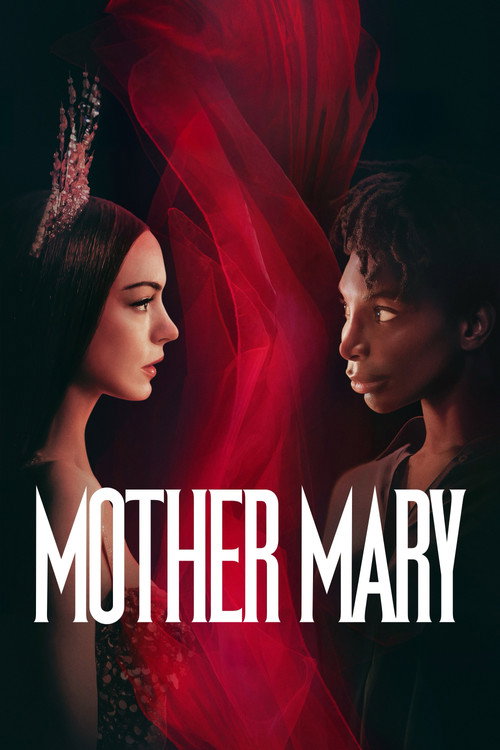
Mother Mary is a 2026 psychological drama written and directed by David Lowery and released by A24. Anne Hathaway plays Mother Mary, a world-famous musical artist getting ready for a comeback performance after an accident on stage.

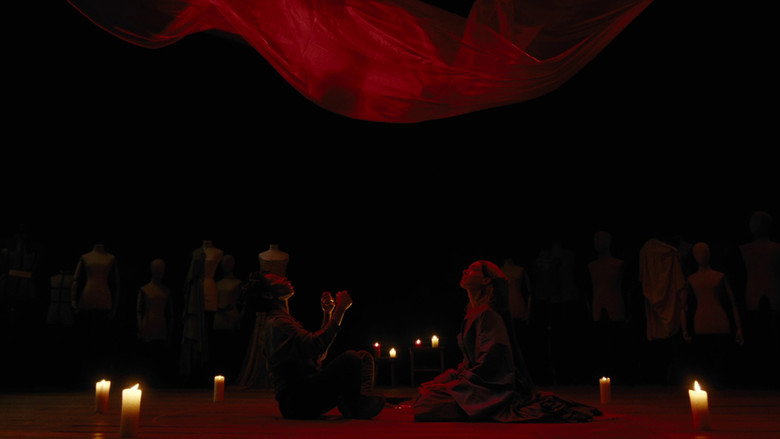
A costume fitting overwhelms Mary, and she flees to the English countryside to find Sam Anselm (Michaela Coel), a fashion designer who was once her lover and creative partner. The two have been estranged. Mary's show is three days away, and Sam grudgingly agrees to design her a dress.

IndieWire called the result a "hypnotic, formally unbound psychodrama." Most of it plays out between the two women in an unheated barn outside London. Along the way it becomes a lavish pop melodrama, with original songs written by Charli XCX, Jack Antonoff and FKA twigs, all sung by Hathaway.

Core Meaning

Reviewers describe the film's central idea as the vampiric nature of artistic collaboration: creators feed on each other's pain to make their work. Lowery uses the relationship between a pop idol and the designer who helped build her image to ask what the art costs the people behind it. He also asks whether love and resentment can be pulled apart once two lives have become one creative project.

IndieWire put it this way: by the end, Sam's love and hate for Mary are "as tightly bound together as a verse and its chorus." The film treats that tangle as the truth of the relationship rather than something to fix.

Thematic DNA

Collaboration as consumption 30%
Fame and the fractured self 25%
Love and resentment intertwined 20%
Confronting the past 15%
Costume as identity 10%

Collaboration as consumption

Critics single out the 'vampiric' side of creative partnership. Mary's fame was partly built from Sam's work and feelings, and her return to ask for a new dress reopens that pattern of taking.

Fame and the fractured self

After an onstage accident, Mary is a pop star in an existential crisis, as Variety's trailer coverage described her. Running away from her comeback preparations shows the gap between the persona she performs and the person underneath.

Love and resentment intertwined

Sam and Mary were lovers and collaborators before they became estranged. Sam's anger slowly turns into awe, and the film holds both feelings at once.

Confronting the past

The premise is a reunion that forces Mary to face her history. The isolated barn works like a confessional, a place where she can't avoid what happened.

Costume as identity

The plot turns on making a single dress. Designing Mary's clothes becomes a way of deciding who she will be when she goes back on stage.

Character Analysis

Mother Mary

Anne Hathaway

Archetype: Wounded idol / tragic hero Key Trait: Magnetic but fractured star persona

Motivation

To get the dress, and the version of herself, she needs for her comeback. That means going back to the person who helped create her.

Character Arc

She starts out overwhelmed and shaken after an onstage accident and runs from her comeback preparations. In the barn she is made to face her past with Sam, and the reckoning is tied to getting ready to return to the stage.

Sam Anselm

Michaela Coel

Archetype: Estranged collaborator / reluctant mentor Key Trait: Guarded, wounded creative brilliance

Motivation

To protect herself from a partner who has taken from her before, while still feeling a pull toward Mary and toward the work they made together.

Character Arc

She starts out resentful and grudging. According to IndieWire, her anger gradually 'melts into awe,' until her love and hate for Mary are completely bound together.

Symbols & Motifs

The dress

Meaning:

Stands for Mary's public identity and for the creative bond between the two women. Sam literally builds the image Mary shows the world.

Context:

Sam reluctantly agrees to design it with only three days left before the show. Making it drives the whole plot.

The unheated barn

Meaning:

A cold, bare space far from the spectacle of pop stardom. It suggests isolation, emotional frost, and a place for reckoning.

Context:

Most of the two-hander drama happens here, somewhere outside London.

The onstage accident

Meaning:

A crack in the flawless pop persona that forces Mary to face how fragile she is.

Context:

It happens before the story starts and is the reason for her comeback show.

The songs

Meaning:

Mary's music is her public voice. The verse-and-chorus structure also mirrors how love and hate keep returning together in the relationship.

Context:

The original songs by Charli XCX, Jack Antonoff and FKA twigs are performed by Hathaway throughout the film.

Memorable Quotes

These metaphors are exhausting.
— Mother Mary

Context

Mary mutters it at one point during her time with Sam, as the Boston Globe review noted.

Meaning

A self-aware line that seems to comment on how heavily the film leans on metaphor. The Boston Globe used the film's metaphor-heavy style as its main criticism.

Philosophical Questions

Can great art be made without taking from someone else?

Mary's stardom depended on Sam's work and emotional investment. The film asks whether collaboration is always partly exploitation.

Is a public persona a mask, or has it become the self?

Mary's collapse after the accident and her search for a new dress raise the question of whether anything of her is left underneath the costume.

Can love and hatred coexist without cancelling each other out?

Sam's feelings end up as 'tightly bound together as a verse and its chorus.' The film suggests the contradiction is permanent, not something to resolve.

How It Ends

Alternative Interpretations

Critics and viewers read the film in several ways:

Full ending explanation

Cultural Impact

Mother Mary came out during a stretch when pop stardom was a common subject for film, and it uses the real music industry directly. Charli XCX, Jack Antonoff and FKA twigs wrote songs for it, and Hathaway recorded a full album in character, with singles released ahead of the film. IndieWire compared Mary to a Lady Gaga-like diva, and Lowery used Taylor Swift's Reputation as a production reference, so the film is closely tied to modern pop spectacle.

Critics were split. IndieWire called it a "divinely strange pop psychodrama," while the Boston Globe said it "goes too heavy on metaphor." It earned around $3 million against a $20 million budget, which suggests it is more likely to last as a divisive cult item than as a mainstream hit.

Audience Reception

What people praised: the performances by Hathaway and Coel, the ambitious form, the original pop songs from Charli XCX, Jack Antonoff and FKA twigs, and Hathaway's singing. Some reviews were very enthusiastic; IndieWire called it hypnotic and "divinely strange."

What people criticized: overloaded symbolism (the Boston Globe said it "goes too heavy on metaphor"), a slow and oblique structure, and the feeling that the film strains to find meaning. Moviejawn called it "a haunting tale of two halves," which points to uneven pacing.

Overall: reviews were mixed and it did poorly at the box office, but it has a devoted audience who admire how strange it is.

Interesting Facts

  • Anne Hathaway sings every track on the soundtrack album, titled Greatest Hits.
  • The original songs were written by Charli XCX, Jack Antonoff and FKA twigs. FKA twigs also appears in the film.
  • The costumes were designed by Bina Daigeler and couture designer Iris van Herpen.
  • Lowery had a text thread with Jack Antonoff and Charli XCX to reshape songs around scene structure, asking for things like repeating a verse or adding a lift at a specific point.
  • Lowery said Taylor Swift's album Reputation worked as a budgeting template: three of its songs, broken down shot by shot, guided the visual effects budget.
  • A24 opened the film in limited US release on April 17, 2026, and expanded it nationwide on April 24.
  • It reportedly grossed about $3 million against a $20 million budget.
  • Dazed described it as the film that 'even A24 thought was too weird.'

Frequently Asked Questions

Explore More About This Movie

Dive deeper into specific aspects of the movie with our detailed analysis pages

Comments (0)

Leave a comment

No comments yet. Be the first to share your thoughts!

Similar Movies