Skip to content
Animals
A cold, glossy Los Angeles crime thriller where ambition curdles into dread, and a polished campaign smile slowly slips like a mask dropped onto a dark city street.
Animals

Animals

"Power can't protect you."

09 October 2026 United States of America 106 min 7.4 (315)

Director: Ben Affleck

Cast: Ben Affleck, Kerry Washington, Gillian Anderson, Steven Yeun, Adriana Paz

Drama Thriller Moral compass vs. self-interest Political image-making Class, race and immigration Marriage and hidden secrets Leverage and money

Overview

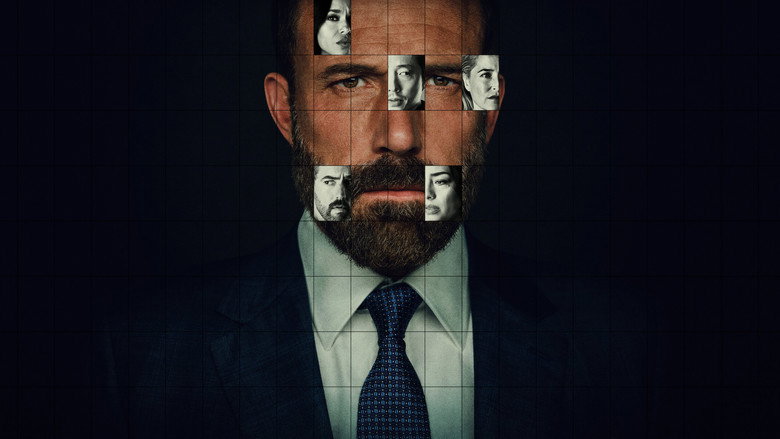
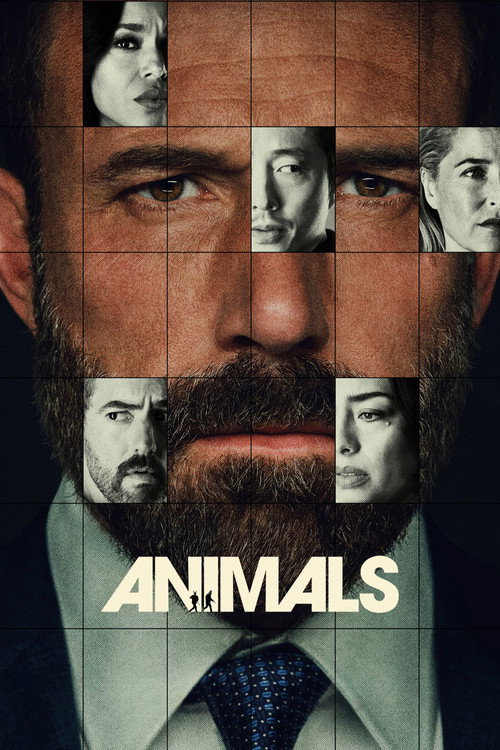
Animals (2026), directed by Ben Affleck and released by Netflix on October 9, 2026, is set in the final days of a Los Angeles mayoral race. Independent candidate Mark Kimball (Affleck) trails narrowly, mostly because of Latino voters. He has put his savings and inherited fortune into a last big push for the election.

On Halloween, a caller says Mark's young son has been kidnapped and demands $7 million by midnight. Mark cannot pay, because the money is already committed to the campaign. He and his wife Abigail (Kerry Washington), whose marriage is already shaky, turn to campaign manager Sam (Steven Yeun) and a British fixer named Dayle Burton (Gillian Anderson).

The film asks who people are "when our masks come off", in Affleck's own words. It plays out as a pressure-cooker thriller and a study of politics and image-making. Critics widely compared its premise to Kurosawa's High and Low and Spike Lee's Highest 2 Lowest.

Core Meaning

Affleck has framed the film as a test of whether people have a real moral compass or simply act in their own interest. The kidnapping works as a stress test that strips Mark, Abigail and the people around them of their public personas.

The film's cynical point, which Affleck discussed in relation to the ending, is that a politician can be unredeemed and still profit from a crisis. Virtue becomes a performance and a PR asset. The title suggests that, under the narratives we tell about ourselves, humans are animals driven by leverage, appetite and self-preservation. A line given to Dayle makes the same point: "Humans are animals who tell stories."

Thematic DNA

Moral compass vs. self-interest 30%
Political image-making 25%
Class, race and immigration 20%
Marriage and hidden secrets 15%
Leverage and money 10%

Moral compass vs. self-interest

Mark must decide whether to pay for a child who is not his own once the kidnappers' mistake is revealed. The question of what he owes the housekeeper's family drives the film.

Political image-making

Mark treats a crisis as a campaign problem and weighs the optics of his choices. The ending shows him framing a rescue as a talking point.

Class, race and immigration

The kidnapped boy is the son of the nanny's undocumented boyfriend. The Latino vote shapes Mark's decisions, and the film moves from wealthy Westside neighborhoods to Skid Row.

Marriage and hidden secrets

Mark's concealed finances and Abigail's affair surface under pressure, culminating in a bedroom confrontation.

Leverage and money

Dayle trades in leverage and takes a 20% fee, with the Kimballs' mansion as collateral. Everyone is beholden to something.

Character Analysis

Mark Kimball

Ben Affleck

Archetype: Antihero / ambitious politician Key Trait: Image-conscious opportunism

Motivation

Winning the mayoral race and protecting his image and political future.

Character Arc

Mark begins as a frustrated candidate and is pushed into a moral test over a child who is not his own. According to Affleck, the film does not redeem him in the end.

Abigail Kim(ball)

Kerry Washington

Archetype: Conflicted spouse Key Trait: Fierce and guarded

Motivation

Saving her family while managing a failing marriage.

Character Arc

Abigail is a mother in crisis whose secrets, including an affair, emerge as the marriage buckles. Washington says her character was not originally written as Black, which made the central marriage interracial.

All 5 characters and cast

Symbols & Motifs

Masks / Halloween

Meaning:

Public personas hiding the animal underneath.

Context:

The kidnapping happens on Halloween, and Affleck's stated premise is about what is revealed when our masks come off.

The Kimballs' mansion

Meaning:

Wealth, status and its fragility.

Context:

The house is put up as collateral for Dayle's fee, so the couple's security is literally wagered.

Dayle's white pantsuit

Meaning:

Detached, amoral purity; a fixer who stays clean while others get dirty.

Context:

Reviewers noted her crisp white pantsuit and her aphoristic dialogue about leverage.

The journey from the Westside to Skid Row and the LA River

Meaning:

A descent through the city's class geography and into Mark's moral choice.

Context:

Affleck described a long sequence of aerial shots running from the Westside through Koreatown and downtown to Skid Row and the river.

The ransom recording

Meaning:

Mark's real, unvarnished self, captured and weaponized.

Context:

The kidnapper sends a recording of Mark refusing to pay for Hector, which Sam warns would ruin his standing with Latino voters.

Memorable Quotes

Humans are animals who tell stories.
— Dayle Burton

Context

Dayle's aphoristic dialogue, as quoted in reviews; the exact scene is not specified here.

Meaning

It is the film's thesis: our moral narratives cover instinct.

The best leverage is the leverage you never have to use.
— Dayle Burton

Context

One of her signature lines, cited by multiple critics.

Meaning

It sums up her philosophy of power as implied threat.

All 5 quotes

Philosophical Questions

Who are we when our masks come off?

The kidnapping removes social cover and forces Mark and Abigail to act on their real priorities.

Is a moral act still moral if it is also useful for your image?

Mark's rescue of Hector becomes material for his political narrative, which blurs the line between heroism and publicity.

Does everyone have a price or a leash?

Dayle's idea of leverage frames every relationship as a transaction.

How It Ends

Alternative Interpretations

Some critics read Dayle as secretly involved in the scheme, based on her opaque dialogue. Others see her as simply a symbol of amoral leverage. The ending can be taken as a cynical satire of manufactured political virtue, as Affleck has framed it, or, as some critics argue, as a shallow observation that is not especially revealing.

Full ending explanation

Cultural Impact

The film arrived as another Netflix-era star vehicle for Affleck and Damon's Artists Equity, and critics mostly received it badly. Wikipedia reports negative reviews, and Metacritic shows a "generally unfavorable" Metascore of 33 from 19 critics. Reviewers compared it to High and Low and Highest 2 Lowest, and many criticized the writing as inconsistent and Dayle's dialogue as unintentionally funny. Much of the online conversation focused on Gillian Anderson's performance and on the improvised "Is he Black?" line.

Audience Reception

Audience and critic reaction was largely negative. Letterboxd reviewers called it a wasted cast and an empty exercise in "corporate filmmaking". Critics called the script shallow and its structure disjointed. Praise went to the leads' sparring in the domestic scenes and especially to Gillian Anderson's eccentric, hypnotic Dayle, which reviewers found entertaining. Some viewers found it watchable but mediocre, and some dismissed it as an unacknowledged remake. The overall verdict is a watchable but disappointing thriller well below Affleck's usual standard as a director.

Interesting Facts

  • The screenplay is credited to Connor O. McIntyre, Billy Ray and Ben Affleck; the film is produced by Matt Damon, Affleck, Brad Weston, Dani Bernfeld and Collin Creighton.
  • It is an Artists Equity, Makeready and Fifth Season production distributed by Netflix, with a limited theatrical release alongside streaming on October 9, 2026.
  • Cinematography is by Robert Elswit, music by Harry Gregson-Williams, and editing by William Goldenberg and Christopher Rouse.
  • Affleck told Entertainment Weekly he had never seen High and Low, though he reportedly delayed production to avoid comparison with Highest 2 Lowest.
  • The cast rehearsed for a couple of weeks in the actual location before shooting, according to Affleck.
  • Kerry Washington says the role of Abigail was not originally written as Black.
  • The line "Is he Black?" in the bedroom fight was improvised by Affleck during filming.
  • Affleck called it probably the film he is most proud of in his career.

Easter Eggs

Premise parallels Kurosawa's High and Low (1963) and Spike Lee's Highest 2 Lowest

The mistaken-kidnapping dilemma, in which the wealthy father must decide whether to pay for another family's child, echoes both films. Critics noted the lack of a Kurosawa credit.

Frequently Asked Questions

Explore More About This Movie

Dive deeper into specific aspects of the movie with our detailed analysis pages

Comments (0)

Leave a comment

No comments yet. Be the first to share your thoughts!

Similar Movies