Mouse
A dark crime thriller where the clinical coldness of genetic determinism meets the searing heat of human guilt, visually unfolding like a fractured mirror reflecting the monstrous duality hidden within a smile.
Mouse

Mouse

마우스

"The most heinous psychopath. the most evil predator ever. the truth of the unsolved case."

03 March 2021 — 19 May 2021 South Korea 1 season 20 episode Ended ⭐ 8.4 (299)
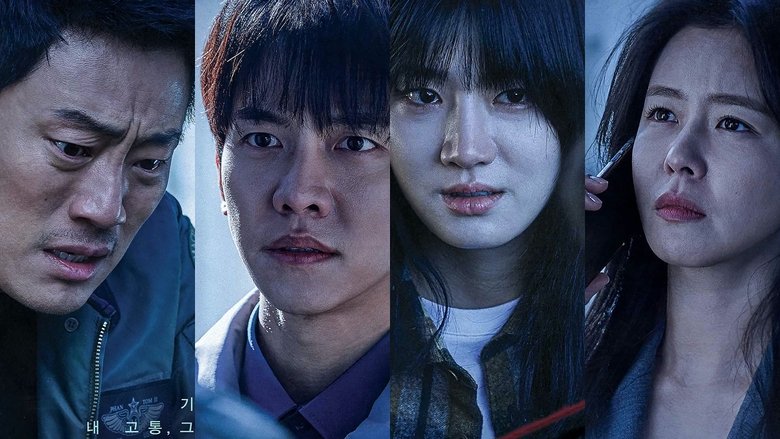
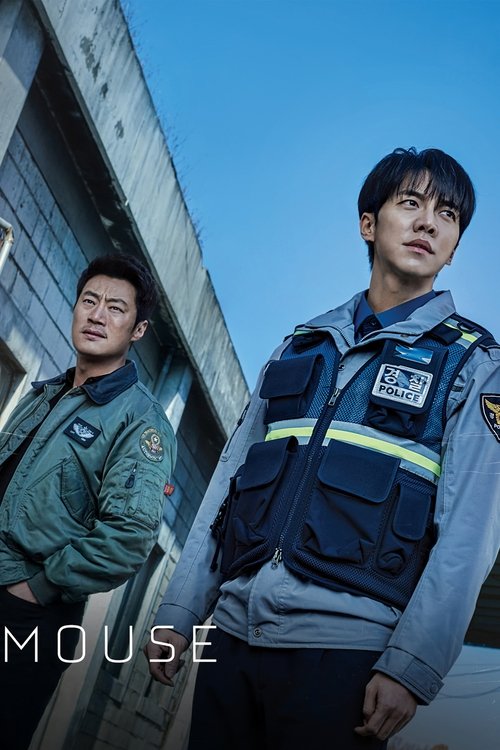
Cast: Lee Seung-gi, Lee Hee-jun, Park Ju-hyun, Kwon Hwa-woon, Gyeong Su-jin
Crime Sci-Fi & Fantasy Mystery
Genetic Determinism vs. Free Will Guilt as Salvation Cycles of Trauma Institutional Corruption and Dehumanization

Overview

Mouse (2021) is a complex and dark psychological thriller that follows Jung Ba-reum, a steadfast and kindhearted rookie police officer, and Ko Moo-chi, a veteran detective consumed by a vengeful obsession with the serial killer who murdered his family. The narrative is set against a near-future background where a genetic test can identify the 'psychopath gene' in a fetus with 99% accuracy, raising the ethical question of whether potential monsters should be eliminated before birth.

As a series of brutal murders grips the nation, Ba-reum and Moo-chi form an unlikely partnership to track down a predatory serial killer. However, the investigation takes an unprecedented turn after a life-altering encounter that leads to a groundbreaking brain surgery. The story spirals into a deep exploration of identity, as the characters uncover a massive conspiracy involving swapped infants, secret government organizations, and the terrifying realization that the line between a hero and a monster is thinner than anyone dared to imagine.

Core Meaning

The core of Mouse lies in the philosophical debate of nature vs. nurture and the definition of true justice. The creators sought to explore a 'fantasy' scenario where a psychopath—traditionally incapable of feeling remorse—is forced to develop a conscience. Through this, the series argues that the ultimate punishment for a monster is not death, but the crushing weight of empathy and the realization of one's own sins. It challenges the viewer to consider if genetic destiny can be overcome and if redemption is possible for the irredeemable.

Thematic DNA

Genetic Determinism vs. Free Will 35%
Guilt as Salvation 25%
Cycles of Trauma 20%
Institutional Corruption and Dehumanization 20%

Genetic Determinism vs. Free Will

The series centers on the psychopath gene and whether being born with a specific DNA sequence dooms a person to evil. It contrasts Jung Ba-reum, who initially succumbs to his genetic predatory instincts, with Sung Yo-han, who possesses the gene but lives a life of compassion and sacrifice. This theme evolves into a critique of society's tendency to judge individuals based on their origins rather than their choices.

Guilt as Salvation

Unlike most thrillers where the villain remains remorseless, Mouse posits that guilt is a form of spiritual salvation. After his brain transplant, Ba-reum begins to experience the pain of his victims through a newly acquired conscience. His journey from a cold predator to a man begging for his own punishment serves as a harrowing exploration of how empathy defines humanity.

Cycles of Trauma

The series meticulously depicts how childhood trauma shapes adult behavior. Ko Moo-chi's life is defined by the trauma of witnessing the Head Hunter's murders, while Oh Bong-yi and Choi Hong-ju struggle with their own past victimizations. The show illustrates that while trauma can create monsters, it can also forge the strength to fight them.

Institutional Corruption and Dehumanization

Through the reveal of the OZ organization, the series examines how high-level political interests can treat human lives as 'lab mice' (hence the title) to push legislative agendas. It explores the dark side of utilitarianism, where individuals are sacrificed for the supposed 'greater good' of a crime-free society.

Character Analysis

Jung Ba-reum

Lee Seung-gi

Archetype: Antihero / Villain-Protagonist
Key Trait: Chameleon-like deceptive duality

Motivation

Initially driven by a predatory bloodlust and the desire to hide his true self; after the surgery, his motivation shifts to atonement and destroying the monsters (including his own biological father) who created the cycle of violence.

Character Arc

Initially presented as the ultimate 'good citizen' and kind cop, his arc takes a shocking turn when it is revealed he is the actual serial killer. After a brain transplant from the innocent Sung Yo-han, he develops emotions and guilt, eventually turning himself in and seeking redemption through death.

Ko Moo-chi

Lee Hee-jun

Archetype: The Relentless Avenger
Key Trait: Obsessive and volatile resilience

Motivation

Revenge against the Head Hunter and his perceived successor. His motivation evolves into uncovering the truth behind the OZ conspiracy and finding peace for his brother's soul.

Character Arc

A detective whose life was shattered by the Head Hunter. He starts as a reckless, alcoholic officer driven by hate, but through the series, he learns the painful truth about his 'partner' Ba-reum and the innocent Yo-han, leading him to a more complex understanding of justice and forgiveness.

Oh Bong-yi

Park Ju-hyun

Archetype: The Survivor
Key Trait: Tough exterior masking deep trauma

Motivation

Protection of her grandmother and personal safety. Her motivation eventually shifts to survival and moving past the betrayal of the person she trusted most.

Character Arc

A high school student who survived a sexual assault as a child. She grows from a traumatized, fearful girl into a fierce fighter who learns martial arts to protect herself. Her relationship with Ba-reum is her source of light until the truth destroys her world.

Sung Yo-han

Kwon Hwa-woon

Archetype: The Tragic Scapegoat
Key Trait: Stoic and misunderstood altruism

Motivation

To prove he is not a monster like his supposed father and to stop the real killer, Jung Ba-reum, to protect his mother and unborn child.

Character Arc

A genius doctor stigmatized as the 'Head Hunter's son.' He remains silent and aloof, leading the world to believe he is a killer. In reality, he was an innocent man trying to stop the real murderer. He dies a tragic death, and his brain is used to 'save' the actual killer.

Symbols & Motifs

The Lab Mouse

Meaning:

Symbolizes the dehumanization of the test subjects (Ba-reum and Yo-han) who were monitored and manipulated by the government from birth like experimental animals.

Context:

Used literally in the opening credits and referenced throughout the show to describe the children born with the psychopath gene who were being observed by the OZ organization.

Cherry Blossoms

Meaning:

Symbolizes a lack of remorse and the irony of beauty in the face of horror. It represents the 'monstrous' detachment of a psychopath who values aesthetic pleasure over human life.

Context:

Inspired by a real-life case, the killer mentions missing cherry blossoms during his trial. In the show, they appear during key moments of transition and are mentioned in the final moments of the killer's life.

The Cross / Religious Imagery

Meaning:

Symbolizes divine judgment and the mockery of God. The killer intentionally positions victims toward crosses as a challenge to the idea of a benevolent deity.

Context:

The 'Seven Deadly Sins' murders specifically use religious motifs to taunt God for 'failing' to stop the killer's birth or his actions.

Wounded Birds

Meaning:

Represent vulnerability and the 'mask' of kindness. They serve as a test for the killer's true nature—whether he will heal them or kill them.

Context:

Ba-reum is seen helping wounded birds early in the series to establish his 'good guy' persona, but a later scene reveals his true, darker history with them.

Memorable Quotes

I asked God to stop me from becoming a monster.

— Young Jung Ba-reum (Jae-hoon)

Context:

A recurring flashback to his childhood in the church, establishing the 'predestined' nature of his condition.

Meaning:

Highlights the character's early self-awareness and the tragic plea for a humanity he was not born with.

The weather is nice, but it's the hardest for me not to see cherry blossoms.

— The Killer / Defendant

Context:

Inspired by the real-life 2017 Incheon murder case, used in the drama to illustrate the emotional void of the predators.

Meaning:

A chilling demonstration of the psychopath's lack of empathy; the 'horror' of the crime is secondary to his own minor inconveniences.

In the next life, I want to be born as an ordinary person.

— Jung Ba-reum

Context:

Spoken in the final episode as he faces his end, signifying his complete transformation and repentance.

Meaning:

Expresses his ultimate desire for a life not dictated by monstrous genes or government experiments.

Episode Highlights

Episode 1: The Head Hunter

S1E1

The chilling introduction of Han Seo-joon (The Head Hunter) and the discovery of his crimes through young Ko Moo-chi. It sets the scientific backdrop for the 'psychopath gene' debate.

Significance:

Lays the foundational trauma and genetic premises that drive the entire 20-episode mystery.

Episode 5: The Live Broadcast

S1E5

A high-stakes episode featuring a live television broadcast where Moo-chi tries to save a child. It ends with the devastating murder of Moo-chi's priest brother.

Significance:

This is a pivotal emotional peak that cements Moo-chi's hatred and the killer's absolute cruelty.

Episode 6: The Transformation

S1E6

Ba-reum survives a critical injury but undergoes a brain transplant from Sung Yo-han. He wakes up as a seemingly 'different' person with altered memories and instincts.

Significance:

The major narrative shift of the series, changing Ba-reum from a suspect/witness into a 'reborn' character.

Episode 15: The Basement Revelation

S1E15

Ba-reum discovers the hidden basement and the evidence of his own past murders, realizing that the 'kind' cop persona was just a mask for the monster he truly was.

Significance:

The climax of the psychological mystery where the protagonist and the audience finally face the horrific truth together.

Episode 20: Final Justice

S1E20

Ba-reum takes down the OZ organization, confronts his father, and dies in prison after finding a sense of peace. The truth about Sung Yo-han is finally cleared.

Significance:

Provides a definitive, albeit tragic, resolution to the themes of guilt, redemption, and poetic justice.

Philosophical Questions

Can a person be held morally responsible for an innate lack of empathy?

The series explores this through Jung Ba-reum's journey. It asks if a predator who lacks the 'wiring' for guilt is truly evil, or simply a biological machine. It concludes that while the impulse may be biological, the 'salvation' is only found when that biological barrier is broken by trauma or intervention.

Is it ethical to judge a life before it begins based on probability?

Through the 99% vs. 1% genetic test, the show presents Sung Yo-han as the '1% genius' to prove that preemptive judgment (like the proposed abortion bill) would lead to the loss of good people. It warns against a dystopian future where science replaces human judgment.

Alternative Interpretations

Critics and audiences have discussed several interpretations of the ending. One common alternative reading is that Ba-reum's 'redemption' is a form of medical determinism rather than true free will—that he only became 'good' because of a physical part of someone else's brain, which raises questions about where the soul resides. Another interpretation focuses on the mouse metaphor, suggesting that even at the end, Ba-reum was just a piece of a larger political experiment, and his 'choice' to confess was exactly what the hidden powers needed to pass their abortion bill. Some viewers also see the ending as a reincarnation metaphor, where Ba-reum's death and the symbolic return of the 'mouse' in the epilogue suggest a never-ending cycle of genetic experimentation.

Cultural Impact

Mouse made a significant impact on the K-drama landscape by pushing the boundaries of the crime-thriller genre with its R-rating and 'sci-fi' genetic premise. It sparked public discourse in South Korea regarding the ethics of genetic testing and the treatment of psychopaths in the justice system. The series was highly successful for cable network tvN, ranking as one of the top-rated Wednesday-Thursday dramas in the first half of 2021. It is often cited as a 'masterpiece of twists,' influencing subsequent psychological thrillers to adopt more non-linear and unreliable narrator tropes. Lee Seung-gi’s performance, in particular, was widely praised for shattering his 'nation's younger brother' image and establishing him as a top-tier dramatic actor.

Audience Reception

The audience reception for Mouse was generally ecstatic but polarized. Most viewers praised the shocking twists and the acting (especially Lee Seung-gi and Lee Hee-jun), calling it one of the most addictive thrillers in years. However, a segment of the audience criticized the plot for being overly convoluted and relying on 'pseudo-science' brain transplants that felt too far-fetched for a grounded crime thriller. The finale was widely regarded as heartbreakingly perfect, providing the emotional closure that many felt was necessary after such a brutal journey. Despite criticisms of its 'hysterical' plotting, it maintained high ratings and a dedicated cult following who spent weeks dissecting theories online.

Interesting Facts

  • The screenwriter Choi Ran was inspired by the 2017 Incheon Elementary School murder case, where the defendant showed zero remorse.
  • Lee Seung-gi chose this project specifically because it was his first R-rated drama, allowing for a more gritty and dark performance.
  • The character Jung Ba-reum was named to sound like 'upright' or 'correct' (bareum) in Korean, ironic given his true nature.
  • Lee Seung-gi underwent significant training to portray four distinct personality shifts throughout the show's run.
  • The series had such a complex plot that a special episode, 'Mouse: Restart,' was aired mid-season to help viewers keep track of the twists.
  • This was the final drama of actress Cheon Jeong-ha, who passed away shortly after filming wrapped in 2021.

Easter Eggs

Prisoner Number 1124

Ba-reum's prisoner number 1124 refers to the Bible verse John 11:23-24, which discusses resurrection and rising again, mirroring the show's 'rebirth' theme.

The 'Truman Show' Reference

A line in the show explicitly compares the characters' lives to The Truman Show, hinting at the fact that they were being watched and manipulated by a larger organization (OZ) since childhood.

Parallelism in Prayers

The young Ba-reum and the adult Ba-reum are seen praying in the same church with the same stance, but with vastly different weights of guilt, symbolizing the 'circular' nature of his fate.

⚠️ Spoiler Analysis

Click to reveal detailed analysis with spoilers

Frequently Asked Questions

Explore More About This Movie

Dive deeper into specific aspects of the movie with our detailed analysis pages

Comments (0)

Leave a comment

No comments yet. Be the first to share your thoughts!