The Mandalorian
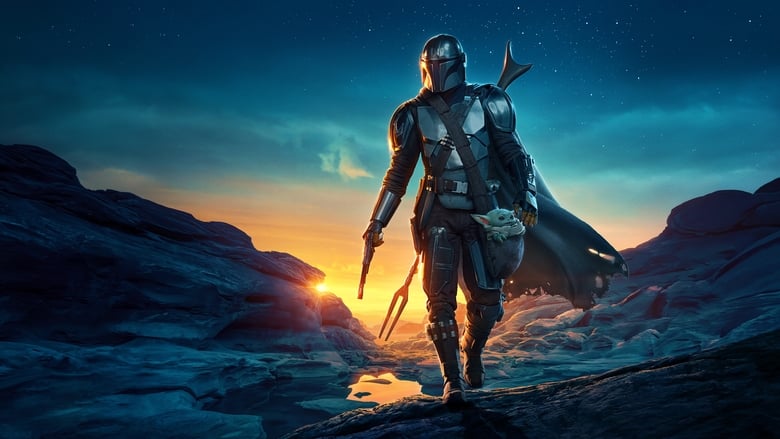
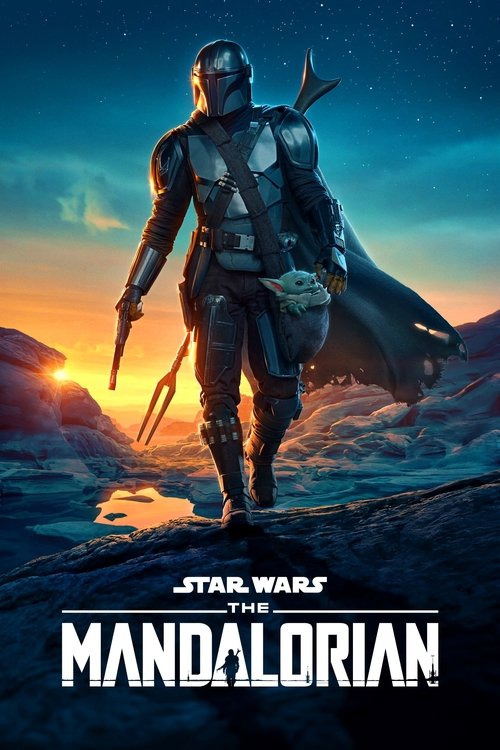
A gritty space-western odyssey where a cold, steel-clad warrior finds warmth in a small, green spark, painting a dusty galaxy with the cinematic colors of found family and honor.
The Mandalorian

The Mandalorian

"Bounty hunting is a complicated profession."

12 November 2019 — 19 April 2023 United States of America 3 season 24 episode Ended ⭐ 8.4 (10,619)
Cast: Pedro Pascal, Katee Sackhoff, Chris Bartlett, Carl Weathers, Misty Rosas
Drama Sci-Fi & Fantasy Action & Adventure
Unexpected Fatherhood The Conflict of Tradition vs. Individualism Redemption and Honor Displacement and Diaspora

Overview

Set five years after the fall of the Empire in Return of the Jedi, the series follows Din Djarin, a lone Mandalorian bounty hunter operating in the lawless Outer Rim. His life takes a radical turn when he is hired to retrieve a mysterious asset known as "The Child," a Force-sensitive being of the same species as Grand Master Yoda. Instead of delivering his prize to the Imperial remnants, Din chooses to protect the infant, embarking on a dangerous journey across the stars that challenges his beliefs and redefines his identity.

As the series progresses, the scope expands from episodic planetary adventures to a sweeping saga involving the reclamation of the devastated Mandalorian homeworld. Din Djarin evolves from a masterless ronin into a reluctant leader and devoted father figure, navigating shifting alliances with former rebels, fellow Mandalorians, and legendary Jedi. The narrative masterfully weaves together the personal stakes of a father-son bond with the larger political struggle to restore the honor of a scattered warrior culture.
Core Meaning

The core of The Mandalorian explores the idea that identity and purpose are forged through choice rather than heritage or rigid dogma. While Din Djarin begins the series as a fundamentalist adherent to "The Way," his relationship with Grogu teaches him that the true meaning of his creed lies in the protection of the innocent and the bonds of found family. It suggests that a person’s true "way" is discovered not by following ancient rules blindly, but by showing compassion in a lawless universe.

Thematic DNA

Unexpected Fatherhood 35%
The Conflict of Tradition vs. Individualism 25%
Redemption and Honor 20%
Displacement and Diaspora 20%

Unexpected Fatherhood

The central pillar of the show is the transformation of a lethal killer into a caregiver. This theme develops as Din moves from viewing Grogu as a "bounty" to a "foundling," and finally to his adopted son. It highlights how the responsibility of raising a child can soften even the hardest heart and provide a new moral compass.

The Conflict of Tradition vs. Individualism

Throughout the three seasons, the series contrasts different Mandalorian sects. Din belongs to the Children of the Watch, who never remove their helmets, while characters like Bo-Katan represent a more secular, political view of their culture. The show explores how one can honor their roots while adapting to the realities of a changing galaxy.

Redemption and Honor

Many characters seek to atone for past sins, whether it is Din seeking ritual cleansing in the Living Waters of Mandalore or Greef Karga transforming from a shady middleman into a legitimate High Magistrate. The series posits that honor is an active pursuit, requiring constant sacrifice and reform.

Displacement and Diaspora

The story serves as an allegory for a displaced people trying to reclaim their homeland. The Mandalorians are scattered and "shattered" after the Great Purge, and the later seasons focus heavily on the philosophical and physical struggle of reuniting disparate clans to rebuild their society.

Character Analysis

Din Djarin (The Mandalorian)

Pedro Pascal

Archetype: Antihero / Father Figure
Key Trait: Unwavering stoicism coupled with deep hidden compassion.

Motivation

Initially motivated by survival and religious duty; evolves into a desire to protect and provide a future for Grogu.

Character Arc

Starts as a cold, religious fundamentalist who sees the world in black and white. Through his bond with Grogu, he learns that loyalty to family transcends loyalty to a strict creed. By the end of Season 3, he finds peace as a suburban father and mentor, having helped unify his people without needing to be their king.

Grogu

Various Puppeteers

Archetype: The Foundling / The Bridge
Key Trait: Innocent curiosity backed by immense latent power.

Motivation

Seeking safety, connection, and ultimately, a place where he truly belongs.

Character Arc

A helpless asset who reveals his immense Power in the Force. After training briefly with Luke Skywalker, he makes the choice to reject the Jedi path in favor of the Mandalorian way, choosing attachment over detachment.

Bo-Katan Kryze

Katee Sackhoff

Archetype: Fallen Leader / Hero
Key Trait: Regal authority and tactical brilliance.

Motivation

Obsessed with reclaiming her family's legacy and the throne of Mandalore.

Character Arc

A cynical, defeated warrior who has lost her home and her people twice. Through her partnership with Din, she regains her faith in the Mandalorian people and her own ability to lead, eventually uniting the clans and retaking their planet.

Moff Gideon

Giancarlo Esposito

Archetype: Shadow / Tyrant
Key Trait: Calculating intellect and ruthless pragmatism.

Motivation

Power, control, and the perfection of his own genetic legacy.

Character Arc

The persistent antagonist who seeks to harness Grogu's blood to create Force-sensitive clones. He represents the clinical, cold remnants of the Empire trying to synthesize the "best" of the galaxy through theft rather than honor.

Symbols & Motifs

The Mandalorian Helmet

Meaning:

Represents total devotion to the Creed and the sacrifice of personal identity for the collective. For Din Djarin, it is both a shield and a prison that he must eventually learn to navigate emotionally.

Context:

Used as a primary plot device; the act of removing it signifies the highest form of intimacy or the most desperate of sacrifices, as seen in the Season 1 and Season 2 finales.

The Darksaber

Meaning:

A symbol of leadership and the right to rule Mandalore. It represents the weight of history and the burden of power that cannot be simply handed over, but must be won in combat.

Context:

Introduced in the Season 1 finale by Moff Gideon, it becomes the central focus of Season 3 as Bo-Katan and Din struggle with its legacy.

Beskar Steel

Meaning:

Symbolizes the purity of the Mandalorian heritage and the literal and figurative strength of the community. It is the only thing that belongs to them, often referred to as being "returned" to the tribe.

Context:

Seen throughout the series as Din upgrades his armor, highlighting his progression from a scavenger-like warrior to a knight in shining armor.

The Mythosaur

Meaning:

A legendary beast that symbolizes the rebirth of Mandalore and the return of its ancient glory. It represents hope and the fulfillment of prophecy.

Context:

Iconography of the skull is everywhere; the physical beast is finally glimpsed by Bo-Katan in the Living Waters in Season 3.

Memorable Quotes

This is the Way.

— Multiple Characters

Context:

Repeated throughout the series as a greeting, a validation of hard choices, and a prayer.

Meaning:

The central mantra of the Mandalorian people. It signifies total commitment to their code of conduct and a shared sense of identity.

I can bring you in warm, or I can bring you in cold.

— Din Djarin

Context:

Spoken in the very first scene of the pilot (Chapter 1) to a mark in a bar.

Meaning:

Establishes the character's efficiency and the dangerous nature of his profession.

I have spoken.

— Kuiil

Context:

Used by the Ugnaught Kuiil in Season 1 whenever he reaches a decision to help Din.

Meaning:

A phrase denoting finality and personal integrity; the speaker will not be moved by further argument.

A Mandalorian and a Jedi? They'll never see it coming.

— Din Djarin

Context:

Spoken to Ahsoka Tano in Season 2, Episode 5 before they attack a magistrate.

Meaning:

Highlights the bridging of two ancient, opposing cultures to fight a common evil.

Episode Highlights

Chapter 1: The Mandalorian

S1E1

The premiere introduces the gritty Western world and concludes with the shocking reveal of "Baby Yoda," changing the trajectory of the Star Wars universe.

Significance:

Establishes the show's visual tone and the central inciting incident: the meeting of Din and Grogu.

Chapter 3: The Sin

S1E3

Din Djarin breaks his contract with the Imperial Client to rescue Grogu, leading to a massive shootout with the Bounty Hunters' Guild and the revelation of the Mandalorian covert.

Significance:

The moral turning point where Din chooses fatherhood over his career.

Chapter 8: Redemption

S1E8

The Season 1 finale features Moff Gideon with the Darksaber and the first time the audience sees Din's face beneath the helmet as he is healed by IG-11.

Significance:

Formally establishes the quest to return Grogu to the Jedi.

Chapter 13: The Jedi

S2E5

Features the live-action debut of Ahsoka Tano and reveals "The Child's" real name: Grogu.

Significance:

Deepens the lore by connecting the show to the Prequel era and the Jedi Order.

Chapter 16: The Rescue

S2E8

A high-stakes mission to save Grogu from Moff Gideon's cruiser, ending with a legendary appearance by Luke Skywalker.

Significance:

Provides the emotional climax of the first two seasons, as Din removes his helmet to say goodbye to Grogu.

Chapter 24: The Return

S3E8

The united Mandalorian clans retake their homeworld and defeat Moff Gideon once and for all.

Significance:

Concludes the Mandalore restoration arc and formally adopts Grogu into the Din family line as "Din Grogu."

Philosophical Questions

Is identity inherited or chosen?

The show explores this through the concept of 'foundlings.' Din Djarin was not born a Mandalorian, yet he is 'more' Mandalorian than those who share the bloodline because of his adherence to the creed. Conversely, Grogu is born a Jedi but chooses to be a Mandalorian, suggesting that cultural identity is a matter of action and intent.

Does strict adherence to dogma hinder or help morality?

The 'Way of the Mandalore' provides Din with a sense of purpose, but it also creates barriers to intimacy and growth. The series asks if a code is worth following if it prevents you from doing what is objectively right or compassionate.

Alternative Interpretations

Critics and scholars have often viewed the series as a diaspora narrative, reflecting the Jewish or immigrant experience of trying to preserve a culture while living in exile. Another reading interprets the show as a commentary on religious trauma and deconstruction, as Din Djarin moves from a restrictive, cult-like sect toward a more inclusive and personal understanding of faith. Some also see it as a meta-commentary on the Star Wars franchise itself, with Din representing the fan who struggles between the 'old ways' of the original trilogy and the new directions of the evolving universe.

Cultural Impact

The Mandalorian saved the Star Wars brand for many fans after the polarizing reception of the sequel trilogy. It introduced the "Baby Yoda" (Grogu) phenomenon, which became a global marketing juggernaut and cultural icon. Beyond its story, the series revolutionized the television industry by proving that high-budget, cinematic sci-fi could thrive on streaming services. Its use of the "Volume" technology (virtual production) has since been adopted by major films like The Batman and other Marvel projects, changing how movies are made forever.

Audience Reception

The first two seasons received near-universal acclaim for their episodic 'western-of-the-week' feel and the emotional core of the central duo. Season 2, in particular, was praised for its balance of fan service and character development. Season 3 received a more mixed response; while critics praised the spectacle and Bo-Katan’s arc, some fans felt that Din Djarin became a secondary character in his own show and that the pacing was uneven. Overall, the series remains the crown jewel of Disney+, maintaining high viewership and a dedicated fanbase.

Interesting Facts

  • The series pioneered 'StageCraft' technology, using a massive LED video wall (The Volume) to create real-time, photo-realistic backgrounds.
  • Real members of the 501st Legion (a Star Wars fan costuming group) were recruited to play the army of Stormtroopers in the Season 1 finale.
  • The Grogu puppet cost approximately $5 million to build and required multiple puppeteers to operate.
  • Brendan Wayne, the grandson of legendary Western star John Wayne, served as one of the primary stunt doubles for Pedro Pascal's character.
  • Werner Herzog, who played The Client, reportedly became deeply attached to the Grogu puppet and treated it like a real actor on set.
  • The show's composer, Ludwig Göransson, used a recorder (flute) to create the iconic and distinct main theme.

Easter Eggs

Trapper Wolf and Dave Filoni

Executive producer Dave Filoni cameos as an X-Wing pilot named Trapper Wolf in several episodes, a nod to his love for wolves and his role as a 'pilot' for the franchise.

The Camtono

The container for the Beskar in the pilot is the same prop used by an extra in The Empire Strikes Back, a long-standing fan joke known as the 'Willrow Hood' ice cream maker.

Krayt Dragon Pearl

The pearl retrieved in Season 2, Episode 1 is a direct reference to the Knights of the Old Republic video game and original expanded universe lore.

⚠️ Spoiler Analysis

Click to reveal detailed analysis with spoilers

Frequently Asked Questions

Explore More About This Movie

Dive deeper into specific aspects of the movie with our detailed analysis pages

Comments (0)

Leave a comment

No comments yet. Be the first to share your thoughts!