Skip to content
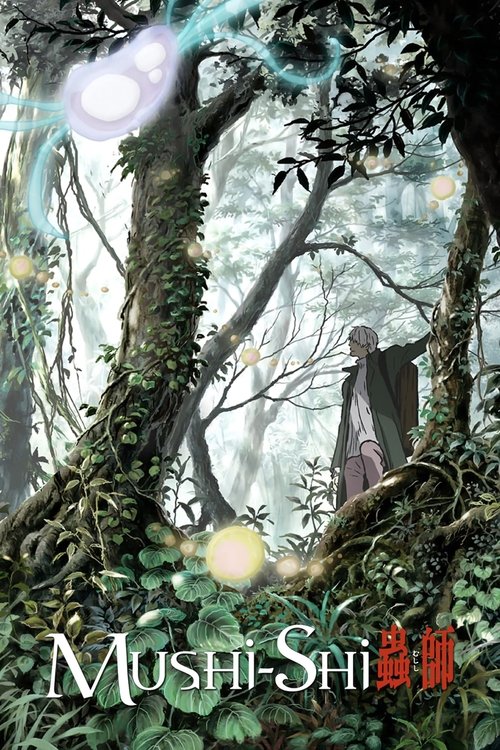
Mushi-Shi
Bathed in meditative supernatural tranquility, the series evokes a tender, aching wonder where unseen life-threads quietly dissolve the boundary between human grief and untamed nature.
Mushi-Shi
Mushi-Shi

蟲師

"The cure lies in the curse."

23 October 2005 — 21 December 2014 Japan 2 season 46 episode Ended 8.1 (250)

Cast: Yuto Nakano, Ai Kobayashi, Yuji Ueda, Mika Doi, Miyu Tsuzurahara

Drama Animation Sci-Fi & Fantasy Coexistence, Deep Ecology & Non-Anthropocentric Ethics Impermanence (Mono no Aware) and Transience Memory, Trauma, and Human Attachment Solitude and the Wandering Observer

Mushi-Shi — Ending Explained

⚠️ Spoiler Analysis

While ostensibly an episodic anthology, Season 1's narrative core turns on Episode 12 ("One-Eyed Fish"), revealing Ginko was born as a boy named Yoki. After a catastrophic landslide kills his mother, Yoki is taken in by Nui, a grieving Mushi-shi who has lost her family to the pond-dwelling Tokoyami (living darkness). When Nui is fully consumed by the void, Yoki tries to save her and is engulfed, losing his left eye. To survive, he accepts the light of the luminous Ginko Mushi, which erases his memories, bleaches his hair white, turns his remaining eye green, and curses his body to perpetually attract Mushi. Waking with amnesia, he names himself "Ginko" after the creature.

In Season 2, Ginko's visits with Tanyū Karibusa highlight the heavy cost of the hereditary Black Mushi sealed within her body. The special "Path of Thorns" exposes human hubris as the Minai clan fails to domesticate dangerous Mushi rifts, proving primordial forces cannot be subjugated for utilitarian motives.

The narrative reaches its ultimate conclusion in Suzu no Shizuku. A girl named Kaya is transmuted by a bell-like Mushi to become the mountain lord's successor. Ginko intervenes to stop her family from violently rescuing her, allowing Kaya to surrender her human identity to sustain the mountain ecosystem. The saga ends without romance or combat, concluding with Ginko picking up his medicine box and walking down another dirt trail as a solitary, eternal custodian of life.

Alternative Interpretations

1. The Medical / Epidemiological Reading: Many cultural analysts view Ginko as an early wandering epidemiologist or public health physician. Mushi behave like bacteria, viruses, prions, or fungal spores. Afflictions are not curses, but zoonotic transmissions or autoimmune reactions, reflecting humanity’s perpetual negotiation with micro-organisms that cannot be eradicated without ecological collapse.

2. The Psychoanalytic & Trauma Reading: Episodes frequently present Mushi as physical manifestations of psychological neuroses: suppressed grief, obsession, survivor's guilt, and loneliness. Healing only occurs when the human subject confronts their internal psychic knot; Ginko acts as a psychoanalyst helping patients achieve catharsis.

3. The Eco-Philosophical Reading of the Finale: In the finale, Kaya dissolves her human ego to become the mountain lord. Viewers interpret this either as a tragic loss of individual humanity or as the highest spiritual achievement: total re-integration with the cosmos, signifying that human life is merely borrowed matter returning to its origin.

Explore More About This Movie

Dive deeper into specific aspects of the movie with our detailed analysis pages

Similar Movies