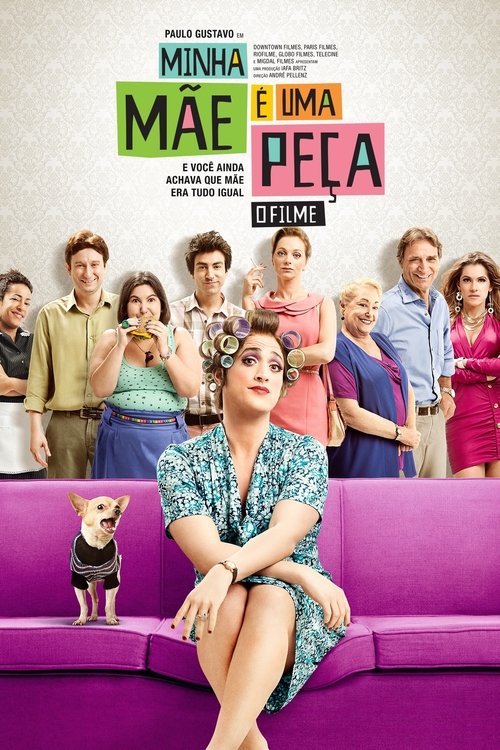
Minha Mãe é uma Peça: O Filme
"And you still thought that mothers were all the same."
Director: André Pellenz
Cast: Paulo Gustavo, Mariana Xavier, Rodrigo Pandolfo, Herson Capri, Alexandra Richter
My Mom Is a Character — Movie Quotes
Memorable Quotes
Marcelina, você tá obesa!
Context
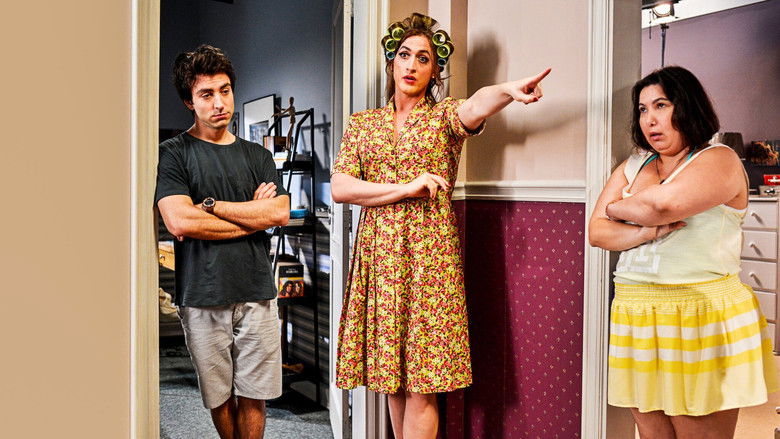
Hermínia yells this at her daughter, typically when Marcelina is eating or wearing tight clothes, highlighting the lack of boundaries in their relationship.
Meaning
While harsh, this quote became iconic for capturing the filter-less, blunt nature of the character. It reflects the Brazilian cultural mannerism where criticism of appearance is often conflated with maternal concern.
A gente que é mãe não tem lugar sossegado dentro de casa.
Context
Spoken to the camera/audience as a 'confessional' complaint about her children constantly demanding her attention, even when she is in the bathroom or trying to sleep.
Meaning
Encapsulates the central theme of the film: the invasion of privacy and the total loss of personal space that comes with motherhood.
Eu não te engravidei sozinha!
Context
Used during an argument with her ex-husband Carlos Alberto when he criticizes how the children turned out.
Meaning
A sharp reminder of shared responsibility, directed at her ex-husband. It asserts her worth and rejects the idea that the burden of raising 'problematic' children falls solely on the mother.
Cadê o Iesa?
Context
Hermínia frequently yells this name throughout the house whenever she needs something done, often without getting a response.
Meaning
Highlights Hermínia's dependency on her domestic worker and her tendency to shout for help for minor inconveniences. 'Iesa' became a catchphrase for the invisible labor that supports the household.
Explore More About This Movie
Dive deeper into specific aspects of the movie with our detailed analysis pages