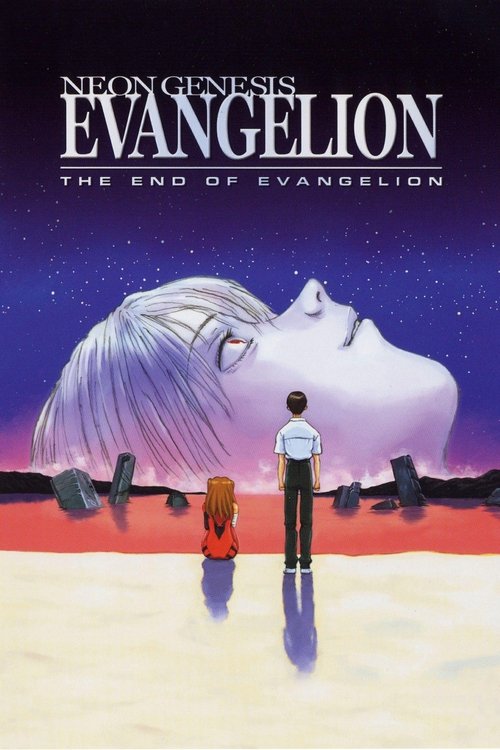
新世紀エヴァンゲリオン劇場版 Air/まごころを、君に
"The fate of destruction is also the joy of rebirth."
Director: Hideaki Anno, Kazuya Tsurumaki
Cast: Megumi Ogata, Megumi Hayashibara, Kotono Mitsuishi, Yuko Miyamura, Fumihiko Tachiki
Neon Genesis Evangelion: The End of Evangelion — Movie Quotes
Memorable Quotes
気持ち悪い (Kimochi warui)
Context
In the film's final moments, Shinji and Asuka are lying on a beach by a sea of LCL. Shinji begins to strangle Asuka, but stops when she gently caresses his cheek. As he breaks down crying, she utters this line.
Meaning
Translated as "How disgusting" or "I feel sick," this is the ambiguous final line of the film. Its meaning is heavily debated. It could be directed at Shinji for strangling her, at herself for her own feelings, or at the general pathetic state of their existence as the last two humans. It encapsulates the film's bleak but realistic take on human relationships: even after choosing to live, the path forward is filled with disgust, pain, and uncertainty. The line was famously ad-libbed by voice actress Yuko Miyamura at the director's request.
I thought this was supposed to be a world without pain and without uncertainty.
Context
During the abstract sequences within the Human Instrumentality Project, Shinji has a dialogue with the consciousnesses of Rei and others. He expresses his disappointment that even in this merged state, he still feels emotional turmoil, revealing his naive expectations.
Meaning
This quote perfectly summarizes Shinji's escapist desire. He wants the fruits of human connection—comfort, understanding, love—without any of the risks or pain. He longs for a utopia where he is never lonely or misunderstood. The process of Instrumentality is the ultimate manifestation of this wish, and his eventual rejection of it signifies his maturation and acceptance that such a world is an illusion.
Those who hate themselves, cannot love or trust others.
Context
This is said to Shinji during the surreal Instrumentality sequences as he struggles with his feelings of betrayal and loneliness, forcing him to confront the internal source of his pain.
Meaning
This line strikes at the heart of the psychological drama of the series and film. It explains the core problem of characters like Shinji and Asuka. Their inability to form healthy relationships stems from their own profound self-loathing. They cannot accept affection from others because they do not believe they are worthy of it. The film is an extended exploration of this idea, suggesting that self-acceptance, however difficult, is the first step toward genuine connection.
I mustn't run away!
Context
This phrase is repeated by Shinji multiple times in the original series when faced with the terrifying prospect of piloting the Evangelion or confronting a difficult emotional situation.
Meaning
This is Shinji's recurring mantra throughout the original series, a phrase he repeats to himself to muster the courage to face his fears and pilot the Eva. In "The End of Evangelion," its absence during his initial catatonic state is significant, showing he has completely given up. Its repetition represents his constant struggle between his overwhelming fear and his desperate need to find a reason to exist and act.
Explore More About This Movie
Dive deeper into specific aspects of the movie with our detailed analysis pages