
Skip to content
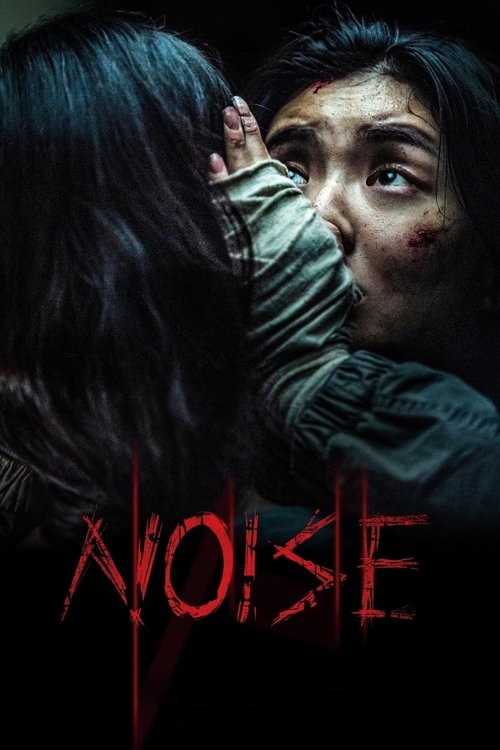
Noise
An oppressive, sensory horror of acoustic terror and suburban claustrophobia, where deafening acoustic violence meets suffocating silence—portraying an apartment complex as a rotting concrete ribcage vibrating with collective malice and unatoned guilt.
Noise

Noise

노이즈

"Could you be quiet before I rip your mouth out."

25 June 2025 South Korea 95 min 6.6 (100)

Director: Kim Soo-jin

Cast: Lee Sun-bin, Kim Min-seok, Jeon Ik-ryoung, Ryu Kyung-soo, Han Su-ah

Thriller Horror Inter-Floor Conflict and Neighbor Alienation Real Estate Capital Desperation vs. Communal Morality Sensory Vulnerability, Silence, and Perception Guilt, Familial Trauma, and Unresolved Grief
Box Office: $12,199,988

Overview

Noise (노이즈) follows two orphaned sisters, Joo-young and Joo-hee, who achieve their dream of buying a home in the aging, corridor-style Samil Apartment complex. However, their milestone quickly curdles into a living nightmare when mysterious, violent banging and dragging sounds begin reverberating through the ceiling and floorboards. While Joo-hee descends into frantic insomnia and paranoia, Joo-young—who is hearing-impaired from a childhood car crash that also left Joo-hee with a physical limp—initially fails to register the disturbance, creating a rift that drives Joo-young to stay at her factory’s dormitory.

The tension escalates when Joo-hee abruptly vanishes from their locked apartment, leaving her phone and personal belongings behind. Rushing back to the building, Joo-young joins forces with Joo-hee’s boyfriend, Ki-hoon, to investigate the disappearance. Their inquiries are met with hostility: the menacing downstairs neighbor from unit 504 issues violent threats under the belief that the sisters are orchestrating the noise, while the building's residents' association vehemently attempts to silence any controversy that could derail a lucrative upcoming reconstruction project.

As Joo-young's new hearing aid begins picking up unnatural audio frequencies and phantom whispers through the walls and ventilation shafts, she realizes the building harbors a malevolent presence. What begins as a dispute over inter-floor noise unravels into an exploration of isolation, sensory distortion, and dread buried beneath the concrete.


Core Meaning

Director Kim Soo-jin uses the cultural phenomenon of inter-floor noise (cheunggan soeum) as an allegory for societal alienation, modern housing anxiety, and the breakdown of community empathy.

The central thesis of the film asserts that when individuals exist within hyper-dense living spaces driven solely by capitalist real estate value and selfish self-preservation, neighbors stop viewing one another as human beings. Instead, they perceive each other as intrusions and threats. Kim explores how collective indifference and the suppression of others' suffering (sacrificed for property valuations) fester into literal and psychological rot. Through the protagonist’s auditory impairment, the film conveys that true horror does not merely stem from unbearable external noise, but from society’s selective refusal to listen to the cries of the vulnerable.

Thematic DNA

Inter-Floor Conflict and Neighbor Alienation 30%
Real Estate Capital Desperation vs. Communal Morality 25%
Sensory Vulnerability, Silence, and Perception 25%
Guilt, Familial Trauma, and Unresolved Grief 20%

Inter-Floor Conflict and Neighbor Alienation

The film explores the volatile domestic friction of shared-structure apartment living. The inability to identify or communicate with the source of disruption transforms ordinary domestic spaces into psychological battlegrounds, turning neighbors into aggressive adversaries.

Real Estate Capital Desperation vs. Communal Morality

The residents, spearheaded by the homeowners' association, are desperate for their decrepit building to be demolished and rebuilt to generate personal wealth. Consequently, they actively suppress reports of crime and disappearances, showing how economic interests dismantle moral duty and basic human empathy.

Sensory Vulnerability, Silence, and Perception

By contrasting intense, dissonant sound design with total muteness from Joo-young’s perspective, the film examines sensory subjectivity. Silence is both a refuge from auditory torture and a vulnerability where danger lurks unnoticed.

Guilt, Familial Trauma, and Unresolved Grief

The sisters carry emotional scars from the car accident that took their parents and caused their respective disabilities. Joo-young’s search for Joo-hee is driven by guilt over having dismissed her sister’s initial cries for help and abandoning her to live in a dormitory.

Character Analysis

Seo Joo-young

Lee Sun-bin

Archetype: The Reluctant Investigator / The Protector Key Trait: Hearing-impaired, highly observant, and resilient.

Motivation

To find her missing younger sister and redeem her past neglect.

Character Arc

Evolves from an emotionally withdrawn, guilt-ridden sister into a desperate fighter confronting sensory horror to uncover the truth.

Seo Joo-hee

Han Su-a

Archetype: The Catalyst / The Tormented Victim Key Trait: Chronically sleep-deprived, physically impaired (limp), and hyper-sensitive.

Motivation

To reclaim peace, quiet, and safety within her own home.

Character Arc

Starts as an optimistic homeowner but quickly spirals into frantic hysteria and paranoia before mysteriously vanishing.

All 5 characters and cast

Symbols & Motifs

The Hearing Aid & Audio Feedback

Meaning:

Symbolizes the thin threshold between reality and the supernatural.

Context:

When Joo-young adjusts or turns on her device, screeching feedback and unnatural frequencies manifest, functioning as a bridge between the physical and psychological dimensions.

The Barricaded Basement / Accumulating Trash

Meaning:

Serves as a metaphor for the hidden sins, neglected trauma, and suppressed moral rot of the apartment's tenants.

Context:

Located in the building’s lower level, converted into an illegal, padlocked dumping ground.

Ceiling Foam Panels & Scratched Door Locks

Meaning:

Visually represent acute psychological distress, territorial invasion, and desperate attempts to keep external hostility at bay.

Context:

Shown as frantic, makeshift foam stuck to Joo-hee’s ceiling and the deeply scratched keypad on unit 604.

The Demolition/Reconstruction Banners

Meaning:

Symbolize how modern society prioritizes monetary redevelopment over human lives.

Context:

Seen hanging along the facade of Samil Apartments as red-and-white promotional banners.

Plumbing Pipes and Air Vents

Meaning:

Act as an auditory conductor of malice, transmitting distorted disembodied voices and footsteps that disrupt privacy and spatial sanity.

Context:

Found throughout the labyrinthine network of pipes running through the apartment complex.

Memorable Quotes

저 아랫집 사는 사람인데요. 밤에는 좀 조용히 해주시면 어떨까 싶어서요. 그 입을 다 찢어버리기 전에요.
— Park Geun-bae (Unit 504)

Context

Spoken through the cracked doorway to Joo-young early in her search.

Meaning

Establishes the extreme, volatile hostility characterizing tenant interactions in the building.

시끄러워 죽겠어요. 못 살겠네. 진짜 죽이고 싶다.
— Seo Joo-hee

Context

Spoken during Joo-hee’s frantic audio recordings while pounding the soundproofed ceiling.

Meaning

Captures the manic mental deterioration caused by chronic auditory torture.

All 3 quotes

Philosophical Questions

Where does individual sanity end and collective social madness begin in high-density urban environments?

Explored through the characters' collective mental breakdown as acoustic friction turns an ordinary apartment complex into a hostile psychological battleground.

Is sensory impairment a limitation or a shield when the surrounding world is saturated with malice?

Examined through Joo-young's auditory impairment, which initially isolates her from danger but ultimately serves as a tool to withstand acoustic horror.

How does the relentless pursuit of financial security and real estate wealth commodify and erase human empathy?

Depicted via the residents' association suppressing deaths, disappearances, and crimes purely to preserve property values and redevelopment approvals.

Can guilt ever be silenced, or does it continually reverberate like persistent background noise?

Investigated through Joo-young’s unresolved trauma regarding her sister, where emotional neglect manifests as persistent acoustic and phantom torment.

Alternative Interpretations

Viewers and critics have proposed several alternative readings of the narrative:

Full ending explanation

Cultural Impact

The film addresses key facets of contemporary South Korean society:

  • The "Cheunggan Soeum" (Inter-Floor Noise) Crisis: In South Korea, where high-density concrete high-rise apartments (apateu) dominate urban living, sound insulation issues frequently result in legal battles, physical assaults, and even homicides. Noise reflects this shared public anxiety.
  • The Reconstruction (Jae-geon-chuk) Speculation: In Korean urban culture, old apartment complexes awaiting redevelopment approvals generate speculative real estate bubbles. The film depicts how tenants will intentionally silence scandals, suicides, and safety warnings to safeguard the resale value of their property allocations.
  • Box Office and Reception: Despite a modest budget of approximately $2.5 million (3.5 billion KRW), Noise became a box-office success upon its June 2025 domestic release, surpassing its break-even point with over 1.7 million admissions and generating strong buzz among summer horror audiences.

Audience Reception

Critical and audience reception holds an aggregated breakdown of approximately 70% positive and 30% mixed/critical.

Praised Elements:

  • Sound Design: Universally acclaimed for its innovative, jarring soundscape that juxtaposes deafening clatter with eerie muteness.
  • Lead Performances: Lee Sun-bin’s nuanced portrayal of a deaf protagonist and Ryu Kyung-soo’s chilling turn as the unhinged neighbor received strong praise.
  • Tension Building: The first two acts succeed in crafting an unsettling, claustrophobic atmosphere out of everyday apartment life.

Points of Criticism:

  • Third-Act Genre Shift: Several critics and viewers noted that the sudden transition from grounded, realistic social thriller into supernatural monster/ghost tropes felt slightly disjointed and overcomplicated.
  • Ambiguous Ending: The climax and resolution left some general audience members frustrated by unanswered narrative questions.

Overall Verdict: An effective, claustrophobic South Korean horror debut that successfully turns a distinct everyday societal problem into a sensory film experience.

Interesting Facts

  • Noise is the debut feature film of director Kim Soo-jin, who previously gained international recognition in 2013 when her short film Line (선) screened in the Cinéfondation section of the Cannes Film Festival.
  • Kim Soo-jin drew inspiration from real-world South Korean police reports regarding deadly inter-floor noise disputes, aiming to ground the film's supernatural elements in authentic social horror.
  • The concept of Joo-young’s partial hearing loss acting as a dynamic auditory filter was inspired by the director’s partially deaf niece, reframing a sensory disability into a tool of narrative tension.
  • Prior to its South Korean domestic theatrical release on June 25, 2025, Noise had its festival presence at the Toronto International Film Festival (TIFF 2024), Sitges Fantastic Film Festival, and Montreal's Fantasia International Film Festival.
  • The sound engineering team developed custom, non-musical sub-bass frequencies and sharp hearing aid feedback cues to simulate the physiological experience of acoustic sensory overload in a cinema environment.

Easter Eggs

Homage to Classic J-Horror and Apartment Terrors

The film deliberately echoes Hideo Nakata’s Dark Water (2002) and Kiyoshi Kurosawa’s Pulse (2001) in its use of stained ceilings, dilapidated corridors, and communal decay.

Visual Nods to Roman Polanski’s Apartment Trilogy

The paranoia of being surrounded by indifferent, malevolent neighbors subtly references The Tenant (1976) and Repulsion (1965).

Korean Auditory Superstition

The plot incorporates the traditional Korean superstition that if a person hears their name whispered while completely alone in an empty room, responding to it invites an evil spirit or impending death.

Speech-to-Text App Glitches

Early in the film, the text transcription on Joo-young’s mobile app displays fractured, nonsensical Korean words before transitioning into coherent warnings, foreshadowing that her phone is capturing supernatural frequencies human ears cannot isolate.

Frequently Asked Questions

Explore More About This Movie

Dive deeper into specific aspects of the movie with our detailed analysis pages

Comments (0)

Leave a comment

No comments yet. Be the first to share your thoughts!

Similar Movies