Nosferatu
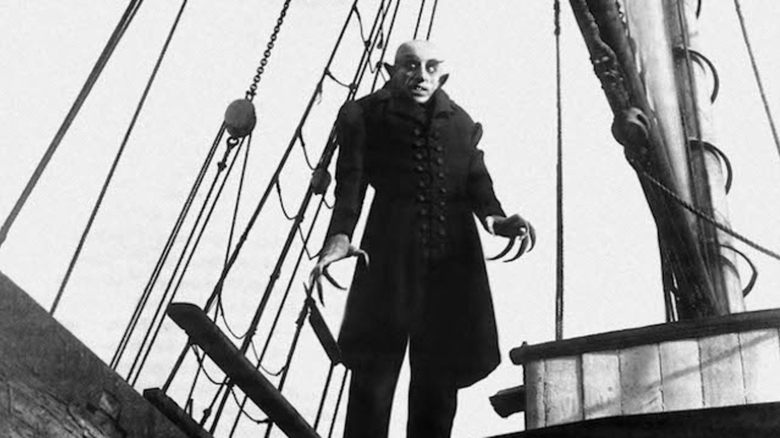
A seminal Expressionist masterpiece veiled in dread and shadows. It evokes a primal terror through the visceral, pestilential silhouette of a creeping nightmare, inextricably binding the fragility of life to the eternal hunger of death.
Nosferatu
Nosferatu

Nosferatu, eine Symphonie des Grauens

"A symphony of horror."

16 February 1922 Germany 89 min ⭐ 7.7 (2,400)
Director: F. W. Murnau
Cast: Max Schreck, Gustav von Wangenheim, Greta Schröder, Georg H. Schnell, Ruth Landshoff
Fantasy Horror
Death, Disease, and Pestilence The Power of Nature vs. The Supernatural Repressed Sexuality and Taboo Xenophobia and the Threat of the "Other"
Box Office: $24,194

Nosferatu - Ending Explained

⚠️ Spoiler Analysis

The tragic climax of Nosferatu diverges significantly from Stoker's Dracula by entirely omitting the heroic, stake-wielding vampire hunters. After discovering in the 'Book of Vampires' that the monster can only be defeated if a sinless woman freely offers her blood to distract him until dawn, Ellen deliberately ignores her husband's warnings. She opens her window, willingly sacrificing herself to Orlok's deadly embrace. The vampire becomes so intoxicated by her pure blood that he forgets the rising sun; the first light of dawn reduces him to a puff of smoke.

This ending shifts the narrative from a traditional battle of good versus evil into a somber tale of martyrdom. Ellen dies in Hutter's arms shortly after, rendering the victory profoundly tragic. The plague ends, and Orlok's ruined castle is shown in the final shots, but the cost is absolute. The hidden meaning lies in the futility of masculine intervention (Hutter is entirely useless in the climax) and the sheer destructive inevitability of death, leaving a lingering sense of loss rather than triumphant salvation.

Alternative Interpretations

Critics and scholars have vigorously debated the underlying subtext of Nosferatu for decades. A prominent socio-political interpretation views Count Orlok as a manifestation of the xenophobic and anti-Semitic anxieties brewing in Weimar Germany. Under this lens, the vampire represents the fearful "Other"—a foreign invader from the East who brings economic disruption, disease, and the corruption of pure German women, with the character of Knock acting as a heavily stereotyped scapegoat.

Another profound reading focuses on the psychological and psychoanalytic dimensions of the film. Orlok can be seen as the repressed, dark shadow of Thomas Hutter himself, acting out the destructive, forbidden sexual desires that the repressed, bourgeois husband cannot express. Furthermore, Ellen's final sacrifice is often debated: is it the ultimate act of holy martyrdom by a pure-hearted woman, or is it a transgressive, ecstatic surrender to her own repressed sexuality and a subconscious rejection of her mundane marriage?