After failing to reach Palos in time to stop Columbus (they see the three caravels departing from the beach), Saverio and Mario are resigned to their life in the past. In the final scene, they see smoke and hear a train whistle, believing they have returned to the 20th century. They rush toward the tracks, only to find a primitive steam locomotive driven by Leonardo da Vinci. Leonardo reveals that he built it based on the confusing descriptions they gave him earlier. They are not back in the future; they have inadvertently altered the timeline to create a steampunk Renaissance, but they are still trapped in the 15th century. (Note: In the extended version, there is an additional subplot where they are stopped by an Amazonian warrior, Astriaha, preventing them from even reaching the coast).
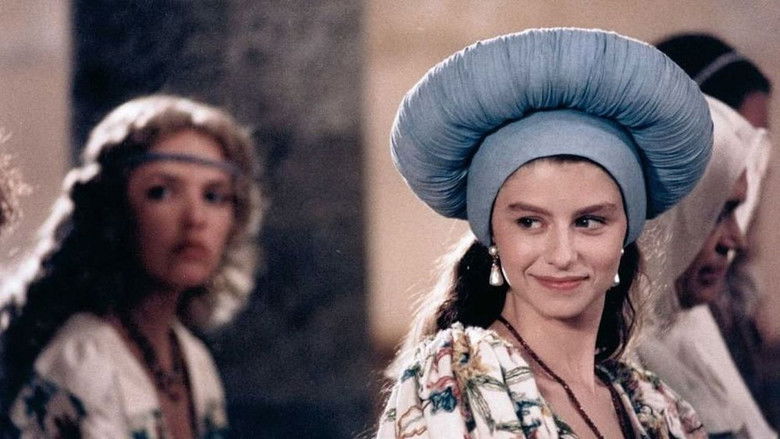
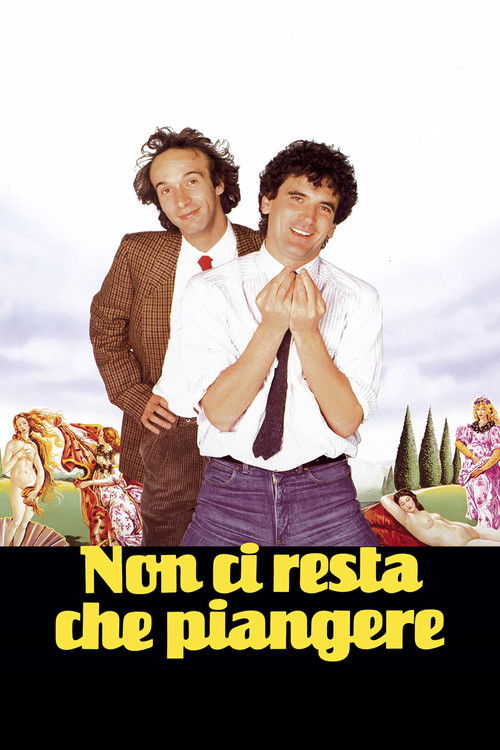
Non ci resta che piangere
Director: Massimo Troisi, Roberto Benigni
Cast: Massimo Troisi, Roberto Benigni, Amanda Sandrelli, Iris Peynado, Carlo Monni
Nothing Left to Do But Cry — Ending Explained
⚠️ Spoiler Analysis
Alternative Interpretations
Some critics view the film as a metaphor for the political stagnation of Italy in the 80s: two men trapped in an immutable past, unable to move forward or effect change despite their knowledge. The ending, where Leonardo invents the locomotive but they remain stuck, can be seen as a commentary on how technological progress does not necessarily equate to social escape or personal freedom. Additionally, the ambiguity of how they time-traveled suggests the entire experience might be a shared purgatorial dream or a fable about the timeless nature of the Italian character.
Explore More About This Movie
Dive deeper into specific aspects of the movie with our detailed analysis pages