"Oldboy" is a dark and complex meditation on the destructive and cyclical nature of revenge. Director Park Chan-wook explores how the consuming desire for vengeance ultimately devastates not only the target but the avenger as well, leaving a hollow and irreparable void. The film posits that some truths are so monstrous they are better left unknown, and that ignorance, in certain extreme circumstances, can be a form of salvation. It delves into themes of fate, the inescapable consequences of past actions, and the profound pain that can be inflicted by careless words. Ultimately, it questions the very essence of identity and memory, suggesting that what we choose to forget can be as defining as what we remember.
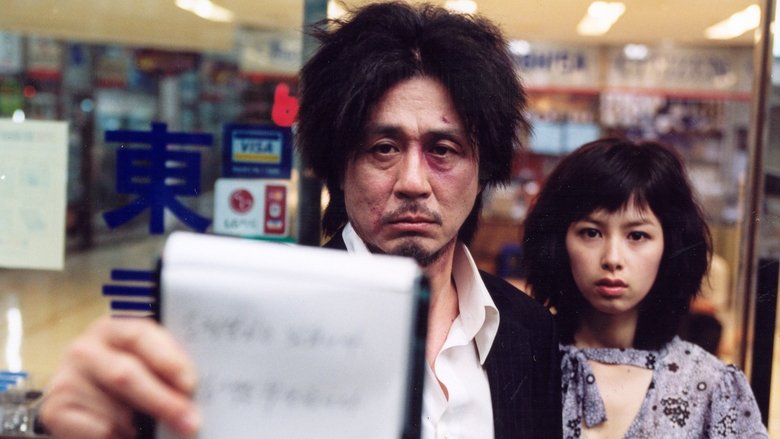
A visceral neo-noir thriller descending into a maelstrom of vengeance, where a man's 15-year torment becomes a haunting ballet of violence and revelation.
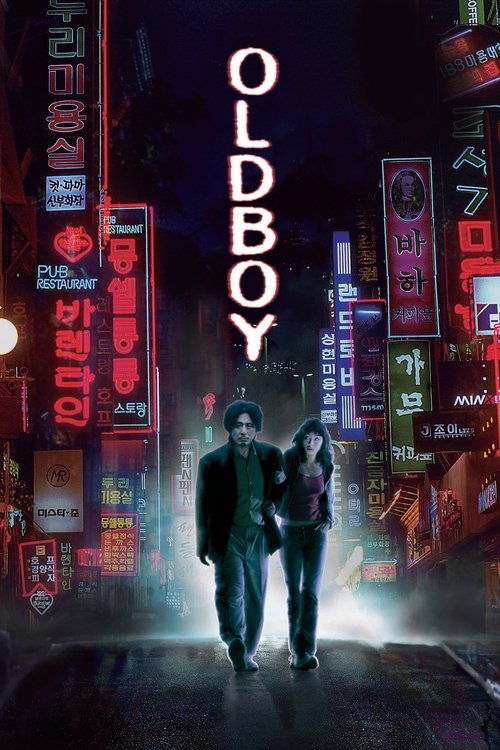
Oldboy
올드보이
"15 years of imprisonment, five days of vengeance."
21 November 2003
South Korea
120 min
8.2
(9,260)
Director: Park Chan-wook
Cast: Choi Min-sik, Yoo Ji-tae, Kang Hye-jung, Kim Byeong-ok, Ji Dae-han
Drama
Action
Thriller
Mystery
Revenge and Its Futility
The Power and Danger of Knowledge
Incest and Taboo
Imprisonment and Freedom
Budget:
$3,000,000
Box Office:
$17,500,000
Oldboy — Symbolism & Philosophy
Symbols & Motifs
Live Octopus
Meaning:
The act of eating a live octopus symbolizes Oh Dae-su's raw, primal state and his desperate need to feel alive and exert control after 15 years of helplessness. It represents his transformation from a civilized man into something more bestial, driven by pure instinct and a thirst for vengeance. It also foreshadows the film's Oedipal themes, as octopus is considered an aphrodisiac in Korean culture.
Context:
Shortly after his release, Dae-su enters a sushi restaurant and demands to eat "something alive." The chef, Mi-do, brings him a live octopus, which he proceeds to devour whole, its tentacles clinging to his face. The scene is infamous for actor Choi Min-sik actually consuming four live octopuses during filming.
Ants
Meaning:
Ants symbolize loneliness, despair, and a loss of sanity. As social creatures that live in colonies, they represent the human connection and community that Dae-su has been deprived of for 15 years. The hallucination signifies his psychological breakdown from prolonged isolation.
Context:
During his imprisonment, Dae-su hallucinates ants crawling out of his arm and swarming over his body. Later, when Mi-do discusses his journals and hallucinations, she remarks, "If you're alone, you see the ants," connecting the symbol directly to the experience of profound loneliness.
The Violet Box
Meaning:
The violet box represents the hidden, monstrous truth at the heart of the film's mystery. It contains the evidence of Dae-su's unwitting incestuous relationship with his daughter, a truth so terrible that its revelation destroys him. It is a Pandora's box of suffering.
Context:
Lee Woo-jin presents Dae-su with a violet gift box containing a photo album that reveals Mi-do's true identity. He also sends an identical box to Mi-do, forcing Dae-su into a desperate plea to stop her from opening it and learning the devastating truth.
The Hallway
Meaning:
The long, claustrophobic hallway where Dae-su fights a score of men symbolizes his arduous and brutal path to revenge. It's a physical manifestation of his relentless, singular focus and the immense obstacles he must overcome. The single-take nature of the shot emphasizes his exhaustion and the raw, unglamorous reality of his violent struggle.
Context:
In one of the film's most iconic scenes, Dae-su, armed only with a hammer, fights his way down a narrow corridor packed with thugs. The fight is filmed in a single, continuous sideways-tracking shot, lasting nearly three minutes.
Philosophical Questions
Is ignorance truly bliss?
The film's entire climax revolves around this question. Oh Dae-su's quest is for knowledge—the truth of why he was imprisoned. Yet, when he finds it, the truth is so monstrous that it destroys him. His final act is to seek a hypnotist to erase this knowledge from his mind, allowing him to live with the woman he loves, who is also his daughter. The film leaves it ambiguous whether this erasure is successful or even possible, forcing the audience to confront whether a life built on a terrible lie is preferable to a life destroyed by an unbearable truth. It challenges the very value we place on knowledge when that knowledge leads only to suffering.
What is the nature of revenge?
"Oldboy" presents revenge not as a heroic or satisfying pursuit, but as a hollow, self-consuming force. Lee Woo-jin dedicates his life and fortune to a meticulous plan of vengeance, but upon its completion, he is left with nothing and takes his own life. His revenge doesn't bring him peace, only emptiness. Similarly, Dae-su's own violent quest for retribution leads him to a truth that is far more punishing than any physical harm. The film suggests that the act of seeking revenge transforms the avenger into a monster, mirroring the cruelty they originally suffered, thus perpetuating a destructive cycle.
Can we ever truly escape our past?
The central conflict is born from a single, careless comment made by Oh Dae-su in his youth. This seemingly insignificant act festers for years and ultimately leads to the complete destruction of his life. Lee Woo-jin is similarly imprisoned by his past trauma, unable to move beyond his sister's death. The film operates on the principle that past actions, no matter how small or forgotten, have inescapable consequences. Even Dae-su's attempt to literally erase his past through hypnosis is presented as a desperate and possibly futile gesture, suggesting that the shadows of our former selves are impossible to outrun.
Core Meaning
Explore More About This Movie
Dive deeper into specific aspects of the movie with our detailed analysis pages