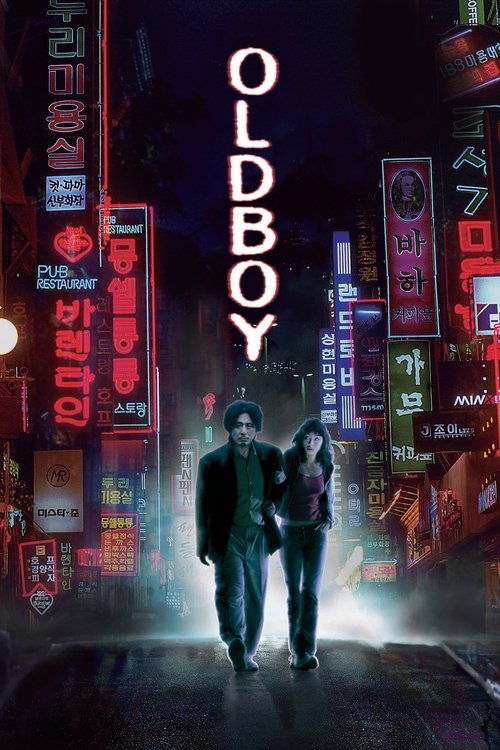
Oldboy
올드보이
"15 years of imprisonment, five days of vengeance."
Overview
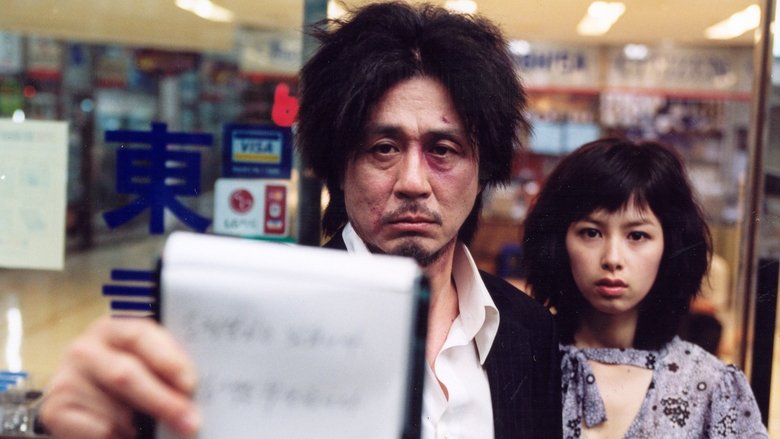
"Oldboy" follows Oh Dae-su, an ordinary businessman who is inexplicably kidnapped and imprisoned in a sealed hotel room for 15 years. His only connection to the outside world is a television, through which he learns he has been framed for his wife's murder. During his long confinement, he hones his body and mind, driven by an all-consuming desire for revenge against his unknown captor.
Suddenly released without explanation, Dae-su is given a wallet full of cash, a mobile phone, and new clothes, and is set loose upon the world. He is taunted by his captor, who gives him five days to uncover the reason for his imprisonment. His quest for answers leads him to Mi-do, a young sushi chef who becomes his unlikely ally and lover. As Dae-su violently carves a path toward the truth, he unravels a web of conspiracy that connects his past to his present torment in the most shocking way imaginable.
Core Meaning
"Oldboy" is a dark and complex meditation on the destructive and cyclical nature of revenge. Director Park Chan-wook explores how the consuming desire for vengeance ultimately devastates not only the target but the avenger as well, leaving a hollow and irreparable void. The film posits that some truths are so monstrous they are better left unknown, and that ignorance, in certain extreme circumstances, can be a form of salvation. It delves into themes of fate, the inescapable consequences of past actions, and the profound pain that can be inflicted by careless words. Ultimately, it questions the very essence of identity and memory, suggesting that what we choose to forget can be as defining as what we remember.
Thematic DNA
Revenge and Its Futility
The central theme is the all-consuming and ultimately self-destructive nature of revenge. Oh Dae-su's 15-year quest for vengeance is mirrored by Lee Woo-jin's even longer, more elaborate plot. Both characters are destroyed by their obsession. Woo-jin, having achieved his perfect revenge, finds his life devoid of purpose and commits suicide. Dae-su, in turn, is left so broken by the truth that he must try to erase his own memory to continue living. The film presents revenge not as a satisfying resolution, but as a hollow act that perpetuates a cycle of suffering.
The Power and Danger of Knowledge
The film explores the idea that some truths are too terrible to bear. Dae-su is driven by the question "why?"—the need to understand the reason for his suffering. However, the final revelation is so horrific that it completely shatters him. His captor, Woo-jin, even states, "Your gravest mistake wasn't failing to find the answer. You can't find the right answer if you ask the wrong questions." The film's ambiguous ending, where Dae-su seeks to have his memory of the truth erased, suggests that ignorance can be a necessary, albeit tragic, form of bliss.
Incest and Taboo
The film delves into the taboo of incest, drawing parallels to the Greek tragedy of Oedipus Rex. Lee Woo-jin's initial motivation for revenge stems from Dae-su spreading a rumor about his incestuous relationship with his sister, which leads to her suicide. His ultimate act of vengeance is to orchestrate an incestuous relationship between Dae-su and his own long-lost daughter, Mi-do, thereby making Dae-su experience a similar transgression. This theme explores the catastrophic consequences of breaking societal and moral boundaries.
Imprisonment and Freedom
The theme of imprisonment is explored both literally and psychologically. Dae-su's 15-year physical confinement is just the beginning of his torment. Upon his release, he discovers he is in a "bigger prison," manipulated and constantly watched by Woo-jin. The film questions what it truly means to be free, suggesting that one can be physically free but still trapped by the past, by trauma, and by the machinations of others.
Character Analysis
Oh Dae-su
Choi Min-sik
Motivation
His primary motivation is twofold: to find out who imprisoned him and, more importantly, why. This quest for answers fuels his violent rampage and his will to survive.
Character Arc
Oh Dae-su begins as an ordinary, somewhat boorish businessman. His 15 years of unjust imprisonment transform him into a hardened, vengeful man singularly focused on finding his captor. After his release, he is a feral, almost monstrous figure. His journey for revenge forces him to confront his past sins, and the final, devastating revelation shatters his psyche, leading him to sacrifice his own identity and memory in a desperate attempt to protect his daughter and find a semblance of peace.
Lee Woo-jin
Yoo Ji-tae
Motivation
His sole motivation is to inflict upon Dae-su the same pain and suffering he felt after losing his sister, whom he loved incestuously. He doesn't want to just kill Dae-su; he wants to psychologically destroy him by making him commit a similar taboo.
Character Arc
Lee Woo-jin is presented as a wealthy, sophisticated, and enigmatic figure. His entire adult life has been a meticulously planned, long-game of revenge against Oh Dae-su for spreading a rumor in high school that led to his sister's suicide. He becomes a god-like figure, manipulating every aspect of Dae-su's life. Once his elaborate revenge is complete, his life's purpose is fulfilled, leaving him empty. He ultimately takes his own life, demonstrating the hollow victory of his vengeance.
Mi-do
Kang Hye-jung
Motivation
Initially motivated by compassion and a sense of kinship with the lonely Dae-su, her motivation becomes love and a desire to help him find peace and uncover the truth behind his torment.
Character Arc
Mi-do is a young, lonely sushi chef who takes pity on the disheveled Oh Dae-su and helps him on his quest. She provides him with a sliver of hope and humanity, and they fall in love. Her arc is one of tragic ignorance; she is a pawn in Lee Woo-jin's cruel game. The film's ending leaves her fate ambiguous, as Dae-su attempts to erase his memory to protect her from the horrifying truth of their relationship, leaving her with a man who may or may not know he is her father.
Symbols & Motifs
Live Octopus
The act of eating a live octopus symbolizes Oh Dae-su's raw, primal state and his desperate need to feel alive and exert control after 15 years of helplessness. It represents his transformation from a civilized man into something more bestial, driven by pure instinct and a thirst for vengeance. It also foreshadows the film's Oedipal themes, as octopus is considered an aphrodisiac in Korean culture.
Shortly after his release, Dae-su enters a sushi restaurant and demands to eat "something alive." The chef, Mi-do, brings him a live octopus, which he proceeds to devour whole, its tentacles clinging to his face. The scene is infamous for actor Choi Min-sik actually consuming four live octopuses during filming.
Ants
Ants symbolize loneliness, despair, and a loss of sanity. As social creatures that live in colonies, they represent the human connection and community that Dae-su has been deprived of for 15 years. The hallucination signifies his psychological breakdown from prolonged isolation.
During his imprisonment, Dae-su hallucinates ants crawling out of his arm and swarming over his body. Later, when Mi-do discusses his journals and hallucinations, she remarks, "If you're alone, you see the ants," connecting the symbol directly to the experience of profound loneliness.
The Violet Box
The violet box represents the hidden, monstrous truth at the heart of the film's mystery. It contains the evidence of Dae-su's unwitting incestuous relationship with his daughter, a truth so terrible that its revelation destroys him. It is a Pandora's box of suffering.
Lee Woo-jin presents Dae-su with a violet gift box containing a photo album that reveals Mi-do's true identity. He also sends an identical box to Mi-do, forcing Dae-su into a desperate plea to stop her from opening it and learning the devastating truth.
The Hallway
The long, claustrophobic hallway where Dae-su fights a score of men symbolizes his arduous and brutal path to revenge. It's a physical manifestation of his relentless, singular focus and the immense obstacles he must overcome. The single-take nature of the shot emphasizes his exhaustion and the raw, unglamorous reality of his violent struggle.
In one of the film's most iconic scenes, Dae-su, armed only with a hammer, fights his way down a narrow corridor packed with thugs. The fight is filmed in a single, continuous sideways-tracking shot, lasting nearly three minutes.
Memorable Quotes
웃어라, 온 세상이 너와 함께 웃을 것이다. 울어라, 너 혼자 울 것이다. (Laugh, and the world laughs with you. Weep, and you weep alone.)
— Oh Dae-su
Context:
Dae-su first writes this in his journal during his imprisonment. He later repeats it after his release, reflecting on the lonely nature of his ordeal.
Meaning:
This quote, repeated by Dae-su, encapsulates the profound isolation of his suffering. It's a cynical acknowledgment that while joy can be communal, deep personal pain is a solitary experience. It becomes the mantra of his lonely 15-year imprisonment and his subsequent quest for revenge.
모래알이든 바윗덩어리든, 물에 가라앉기는 마찬가지다. (Be it a rock or a grain of sand, in water they sink as the same.)
— Lee Woo-jin
Context:
Lee Woo-jin says this to Oh Dae-su during one of their confrontations, dismissing Dae-su's attempts to understand the scale of his supposed crime.
Meaning:
This quote reflects Woo-jin's nihilistic and deterministic worldview. He suggests that the scale of a sin is irrelevant; all transgressions, large or small, lead to the same consequence. In his eyes, Dae-su's seemingly small act of gossiping is as damning as a monumental crime, justifying his disproportionate revenge.
15년 동안의 상상력. 그게 저의 정체를 알아내는 유일한 단서였습니다. (For 15 years, I imagined. That was the only clue to figuring out who you are.)
— Oh Dae-su
Context:
This is part of Dae-su's internal monologue as he reflects on his time in prison and how he compiled a list of everyone he had ever wronged.
Meaning:
This highlights the psychological toll of Dae-su's confinement. With no information, his only tool for survival and investigation was his own mind. He had to endlessly comb through his past, imagining every possible enemy and every sin he might have committed, turning his memory into a prison of its own.
당신의 가장 큰 실수는 정답을 못 찾은 게 아니야. 자꾸 틀린 질문만 하니까, 정답을 찾을 수 가 없는 거지. (Your gravest mistake wasn't failing to find the answer. You can't find the right answer if you ask the wrong questions.)
— Lee Woo-jin
Context:
Spoken by Woo-jin as he taunts Dae-su, revealing that the key to the mystery lies not in the identity of the captor, but in Dae-su's own past actions.
Meaning:
Woo-jin delivers this chilling line to mock Dae-su's frantic search for the truth. Dae-su is obsessed with the "who" and "how" of his imprisonment, but Woo-jin asserts that the only question that matters is "why." It underscores the philosophical nature of Woo-jin's revenge, which is rooted in motive and meaning rather than simple retribution.
Philosophical Questions
Is ignorance truly bliss?
The film's entire climax revolves around this question. Oh Dae-su's quest is for knowledge—the truth of why he was imprisoned. Yet, when he finds it, the truth is so monstrous that it destroys him. His final act is to seek a hypnotist to erase this knowledge from his mind, allowing him to live with the woman he loves, who is also his daughter. The film leaves it ambiguous whether this erasure is successful or even possible, forcing the audience to confront whether a life built on a terrible lie is preferable to a life destroyed by an unbearable truth. It challenges the very value we place on knowledge when that knowledge leads only to suffering.
What is the nature of revenge?
"Oldboy" presents revenge not as a heroic or satisfying pursuit, but as a hollow, self-consuming force. Lee Woo-jin dedicates his life and fortune to a meticulous plan of vengeance, but upon its completion, he is left with nothing and takes his own life. His revenge doesn't bring him peace, only emptiness. Similarly, Dae-su's own violent quest for retribution leads him to a truth that is far more punishing than any physical harm. The film suggests that the act of seeking revenge transforms the avenger into a monster, mirroring the cruelty they originally suffered, thus perpetuating a destructive cycle.
Can we ever truly escape our past?
The central conflict is born from a single, careless comment made by Oh Dae-su in his youth. This seemingly insignificant act festers for years and ultimately leads to the complete destruction of his life. Lee Woo-jin is similarly imprisoned by his past trauma, unable to move beyond his sister's death. The film operates on the principle that past actions, no matter how small or forgotten, have inescapable consequences. Even Dae-su's attempt to literally erase his past through hypnosis is presented as a desperate and possibly futile gesture, suggesting that the shadows of our former selves are impossible to outrun.
Alternative Interpretations
The most debated aspect of "Oldboy" is its ambiguous ending. After undergoing hypnosis to forget that Mi-do is his daughter, Oh Dae-su embraces her in the snow. His face contorts into a complex expression that is both a smile and a grimace of pain.
One interpretation is that the hypnosis was successful. Dae-su is now living in blissful ignorance, truly free from the horrifying knowledge. The pain on his face is a lingering, subconscious echo of his trauma, but the smile signifies his genuine love for Mi-do, unburdened by the truth. He has chosen love over morality, ignorance over unbearable knowledge.
Another, more tragic interpretation is that the hypnosis failed. Dae-su still remembers everything. His smile is a mask, a painful performance for Mi-do's sake, to protect her from the truth that has destroyed him. In this reading, he is condemned to live a lie, forever aware of his transgression, making his final state an even more profound form of psychological imprisonment. The final shot suggests that even if the "monster" within him is suppressed, it is not gone.
A third perspective views Lee Woo-jin not just as an antagonist but as a metaphor for fate or life itself—a cruel, manipulative force that toys with individuals, offering the illusion of free will while having already determined their tragic path. In this light, Dae-su's final choice is not about memory, but about a futile attempt to defy a destiny that has already consumed him.
Cultural Impact
"Oldboy" is widely regarded as a landmark film that catapulted South Korean cinema onto the global stage. Released in 2003, it arrived during a period of renaissance for the nation's film industry, often termed the "Hallyuwood" or Korean New Wave. The film's critical and commercial success, particularly its Grand Prix win at the 2004 Cannes Film Festival, brought unprecedented international attention to the country's filmmakers.
Its unflinching depiction of violence, complex narrative structure, and shocking thematic material challenged the conventions of mainstream cinema. The film's visual style, particularly the famous single-take hallway fight scene, has been widely influential and emulated in numerous action films and television shows, including Marvel's "Daredevil" series. More than just an action film, "Oldboy" is a philosophical thriller that draws heavily from Greek tragedy, specifically Sophocles' "Oedipus Rex," lending it a timeless and literary depth.
Critics praised its bold storytelling and powerful performances, solidifying its place as a modern classic and a cult favorite. It sparked a greater international appetite for Korean cinema, paving the way for subsequent successes like Bong Joon-ho's "Parasite" and the series "Squid Game." The film's success led to an official American remake in 2013 directed by Spike Lee, though it failed to capture the critical acclaim of the original. "Oldboy" remains a benchmark for revenge thrillers and a testament to the creative power and audacity of South Korean cinema.
Audience Reception
Audience reception for "Oldboy" has been overwhelmingly positive, with many viewers hailing it as a masterpiece of modern cinema. It is frequently lauded for its bold, unpredictable narrative and one of the most shocking and memorable plot twists in film history. The intense and visceral action sequences, especially the single-take hallway fight, are consistently singled out for praise as iconic moments of cinematic brilliance. Choi Min-sik's fearless and transformative performance as Oh Dae-su is often cited as a cornerstone of the film's power.
The primary point of criticism, or at least caution, from audiences revolves around the film's extreme and graphic content. The violence is brutal, and the thematic material, particularly the central theme of incest, is deeply disturbing and not for the faint of heart. Some viewers find the film to be overly grotesque or mentally taxing. Despite this, the general consensus is that the shocking elements are not gratuitous but serve the film's dark, complex themes. The ambiguous ending is also a major point of discussion, with audiences debating its meaning and implications long after viewing. Overall, "Oldboy" is considered a challenging but profoundly rewarding film for those who can stomach its intensity.
Interesting Facts
- Actor Choi Min-sik, a Buddhist and vegetarian, ate four live octopuses to film the infamous sushi bar scene. He would say a prayer for each octopus before the take.
- The iconic single-take hallway fight scene, where Dae-su fights dozens of men with a hammer, took three days and 17 takes to perfect. The knife in his back was the only CGI element in the sequence.
- The film is the second installment in Park Chan-wook's thematic "Vengeance Trilogy," preceded by "Sympathy for Mr. Vengeance" (2002) and followed by "Lady Vengeance" (2005).
- Director Park Chan-wook was inspired to become a filmmaker after seeing Alfred Hitchcock's "Vertigo".
- The rights to the original Japanese manga were purchased for only $20,000 as it was not very popular at the time.
- The final snow-covered scene of the film was shot in New Zealand because there was no snow in South Korea at the time of filming.
- The ant hallucination sequence was created using CGI; the entire arm crawling with ants was a digital effect.
- Quentin Tarantino, the president of the jury at the 2004 Cannes Film Festival, was a huge advocate for the film, which won the Grand Prix, the festival's second-highest honor.
- The name of the protagonist, Oh Dae-su, was intentionally chosen by the director to sound similar to Oedipus, foreshadowing the film's central incestuous twist.
Easter Eggs
The painting in Oh Dae-su's prison room is "The Man of Sorrows" by James Ensor.
This 15th-century Flemish painting depicts Christ crowned with thorns, presented to the crowds before his crucifixion. Its inclusion reflects Dae-su's own suffering, torment, and unjust persecution, framing him as a martyr figure in his own narrative of pain.
During the hallway fight, one of the thugs doesn't actually engage in the fight.
A keen-eyed viewer might notice that one of the fighters in the crowded corridor simply moves around in the background, making way for the main action but never throwing a punch or getting hit. He was reportedly there just to make up the numbers and add to the scene's chaotic feel.
⚠️ Spoiler Analysis
Click to reveal detailed analysis with spoilers
Frequently Asked Questions
Explore More About This Movie
Dive deeper into specific aspects of the movie with our detailed analysis pages
Comments (0)
No comments yet. Be the first to share your thoughts!