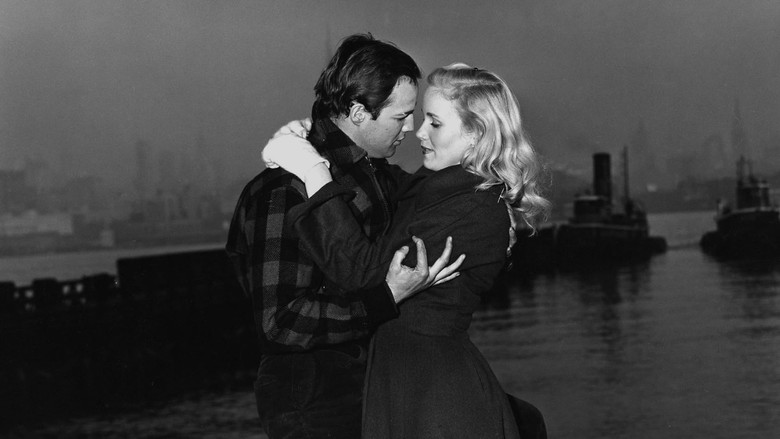

"The man lived by the jungle law of the docks!"
Director: Elia Kazan
Cast: Marlon Brando, Karl Malden, Lee J. Cobb, Eva Marie Saint, Rod Steiger
On the Waterfront — Movie Quotes
Memorable Quotes
You don't understand! I coulda had class. I coulda been a contender. I coulda been somebody, instead of a bum, which is what I am, let's face it. It was you, Charley.
Context
Spoken in the back of a taxi cab as Charley tries to convince Terry not to testify. Charley has just pulled a gun on him, and Terry gently pushes it away. The confrontation is not one of violence, but of profound emotional intimacy and sorrow, as Terry lays bare the soul-crushing impact of his brother's actions on his life.
Meaning
This is the film's most iconic quote, encapsulating Terry's deep-seated pain, regret, and the loss of his pride and potential. It is the moment he finally confronts his brother about the pivotal betrayal that defined his life, blaming Charley for his current status as a 'bum'. It signifies the death of his past and the beginning of his quest to reclaim his self-worth.
I'm standing over here now. I was rattin' on myself all those years, and I didn't even know it.
Context
Terry shouts this at Johnny Friendly during their final confrontation on the docks, after he has testified. Friendly has just accused him of being a rat, and this is Terry's defiant, public declaration of his new moral stance.
Meaning
This line serves as the moral climax of the film and is often seen as director Elia Kazan's own justification for his HUAC testimony. Terry reframes the act of 'ratting' not as a betrayal of his community, but as a betrayal of his own conscience. By staying silent, he was complicit in a corrupt system that was destroying him and others. Speaking out is an act of self-reclamation.
Some people think the Crucifixion only took place on Calvary. They better wise up! ... And every time the Mob puts the pressure on a good man, tries to stop him from doing his duty as a citizen, it's a crucifixion.
Context
After Kayo Dugan is killed in a staged accident for speaking with the crime commission, the longshoremen retrieve his body from the ship's hold. Father Barry stands over him on the dock and delivers a fiery, impassioned speech to the assembled men, shaming them for their inaction and imploring them to fight back.
Meaning
This quote from Father Barry's sermon over Kayo Dugan's body explicitly frames the struggle on the docks in religious and moral terms. He elevates the fight against corruption from a mere labor dispute to a spiritual battle between good and evil, urging the men to see their silence as a form of complicity in an ongoing crucifixion of justice.
Conscience... that stuff can drive you nuts!
Context
Terry says this to Edie during one of their early conversations as they walk in the park. He is trying to articulate the confusing and distressing feelings that have been plaguing him since Joey's death, trying to explain why he can't simply do what she asks and help her find the killers.
Meaning
This quote succinctly captures Terry's internal turmoil. It's a simple, colloquial expression of the profound and maddening moral crisis he is experiencing. It highlights his unsophisticated nature while simultaneously pointing to the universal and deeply troubling nature of a guilty conscience.
Explore More About This Movie
Dive deeper into specific aspects of the movie with our detailed analysis pages