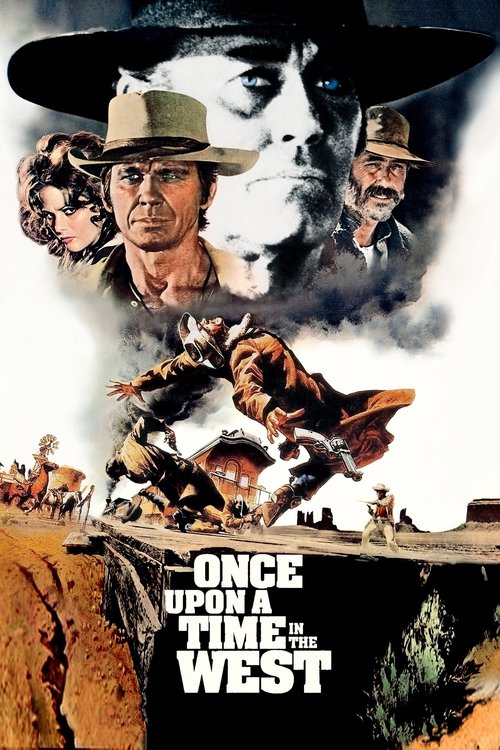
C'era una volta il West
"There were three men in her life. One to take her… one to love her —and one to kill her."
Once Upon a Time in the West - Symbolism & Philosophy
Symbols & Motifs
The Railroad
The railroad is the central symbol of the film, representing the unstoppable march of progress, modernity, and capitalism. It is a destructive force that carves its way through the landscape, displacing the old ways of the West and bringing a new, more corporate form of power and corruption.
The entire plot revolves around the construction of the railroad and the fight for the land and water needed to complete it. Morton, the railroad baron, is physically confined to his train, which serves as his moving seat of power. The final shot of the film shows the railroad tracks being laid at Sweetwater, with Jill providing water to the workers, signifying that the new era has definitively arrived.
The Harmonica
The harmonica is a deeply personal symbol of memory, trauma, and vengeance. It is inextricably linked to Harmonica's past and his singular motivation to kill Frank. Its haunting melody serves as his calling card and a constant reminder of the injustice he suffered.
Harmonica plays the instrument before confronting his enemies. In the film's climax, a flashback reveals that Frank shoved the harmonica into a young Harmonica's mouth as he struggled to support his hanging brother. In their final duel, Harmonica shoves the instrument into Frank's mouth just before killing him, bringing his quest for revenge full circle.
Water
Water symbolizes life, the future, and the foundation of civilization. In the arid landscape of the West, control over water means control over the future. Brett McBain's dream was not just to own land, but to control the water that would give life to a new town.
The McBain ranch, "Sweetwater," is valuable precisely because it has the only reliable water source in the area, which is essential for the steam-powered locomotives. The film ends with Jill, the new owner of Sweetwater, bringing water to the thirsty railroad workers, symbolizing her role as a life-giver and the matriarch of the burgeoning community.
Duster Coats
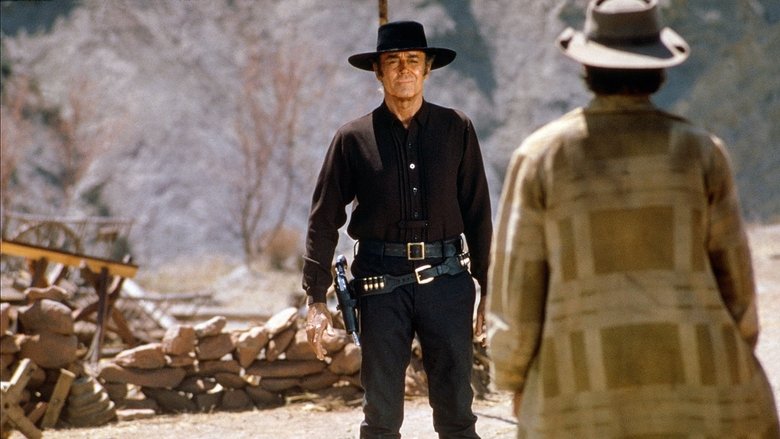
The long duster coats worn by Frank's gang and by Cheyenne are iconic signifiers of the gunslinger and the outlaw, representing the rugged, dangerous, and transient nature of the figures of the Old West.
Frank's gang is introduced wearing these coats during the McBain massacre. When Frank's men leave behind a piece of a duster to frame Cheyenne, it links the garment directly to the world of outlaws. Harmonica's later comment to Cheyenne, "I saw three of these dusters a short time ago. Inside the dusters, there were three men. Inside the men, there were three bullets," solidifies the duster as the uniform of this "ancient race" of gunmen.
Philosophical Questions
Is 'progress' inherently violent and destructive?
The film explores this question through the symbolism of the railroad. Its construction, a celebrated icon of American progress and manifest destiny, is shown to be driven by greed, corruption, and murder. The railroad tycoon Morton is a visionary, but his dream is realized through the brutal actions of his hired gun, Frank. Leone presents progress not as a clean, linear advancement but as a chaotic and bloody process that necessitates the destruction of a previous way of life. The film leaves the audience to ponder whether the benefits of civilization can ever be truly separated from the violent means used to achieve it.
Can one escape their fundamental nature?
This question is central to the character of Frank. He aspires to become a businessman, to wield power through wealth rather than just a gun. He sees that the world is changing and tries to adapt. However, his inherent brutality and his identity as a gunslinger constantly undermine his ambitions. He can't resist killing the McBains when simply scaring them would have sufficed, and in the end, he chooses an honorable, old-world duel with Harmonica over the pragmatic, business-like decision to flee. The film suggests that one's core identity is inescapable, and attempts to suppress it are ultimately futile.
What is the role of memory and the past in shaping the present?
Harmonica's character is the living embodiment of the past's inescapable influence. His entire existence is defined by a single, traumatic memory that fuels his quest for revenge. The haunting notes of his harmonica are a constant echo of this past trauma. The film demonstrates that the present is built upon the events of the past, both personally and historically. The final duel is not just a confrontation between two men, but a reckoning with a past crime that has shaped the lives of both. Frank, who has likely killed many, is finally forced to confront the specific consequences of one long-forgotten act of cruelty.
Core Meaning
"Once Upon a Time in the West" serves as an elegy for the American West, exploring the death of the romanticized frontier and the violent birth of modern civilization. Director Sergio Leone deconstructs the myths of the West, portraying it not as a land of heroes and villains, but as a harsh reality where progress, symbolized by the railroad, is achieved through brutality and corruption. The film laments the end of an "ancient race" of gunslingers and outlaws, who are ultimately displaced by the forces of capitalism and industry. It's a meditation on the transition from a world governed by a personal code of honor and violence to one dictated by money and corporate power, suggesting that while the methods may change, the inherent cruelty of human ambition remains.