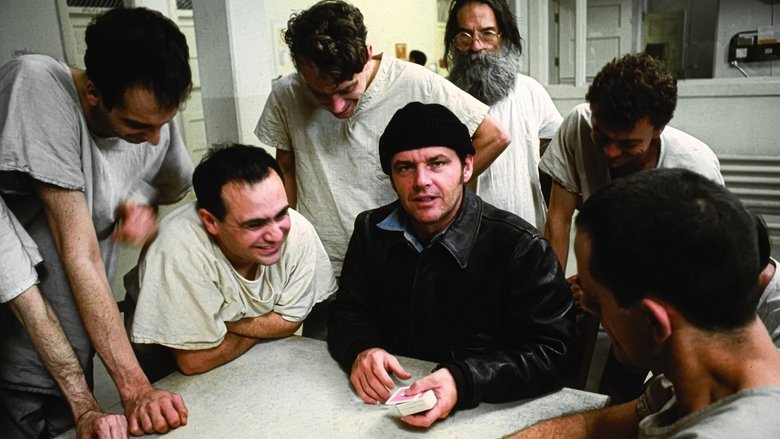
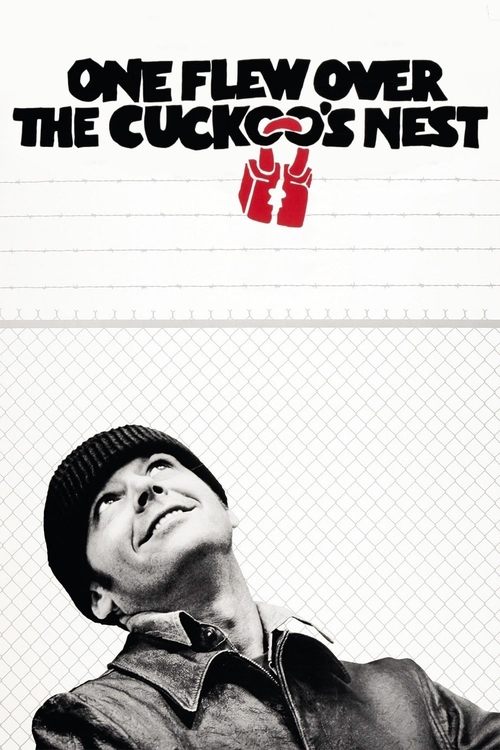
"If he's crazy, what does that make you?"
Director: Miloš Forman
Cast: Jack Nicholson, Brad Dourif, Louise Fletcher, Danny DeVito, William Redfield
One Flew Over the Cuckoo's Nest — Movie Quotes
Memorable Quotes
What do you think you are, for Chrissake, crazy or somethin'? Well you're not! You're not! You're no crazier than the average asshole out walkin' around on the streets and that's it.
Context
McMurphy says this during a group therapy session after learning that many of the patients are committed voluntarily. He is shocked that they are too afraid to leave and tries to instill in them a sense of self-worth and normalcy, challenging the very foundation of the institution's power over them.
Meaning
This quote encapsulates one of the film's central themes: the arbitrary line between sanity and insanity. McMurphy dismisses the clinical labels placed on the men, arguing that their fears and anxieties are no different from those of people in the 'sane' world. It's a powerful moment of validation for the patients.
But it's the truth even if it didn't happen.
Context
Chief Bromden prefaces his narration with this statement, asking the reader to trust his perspective despite his acknowledged mental state. It establishes the novel's tone and validates the subjective, allegorical nature of the story he is about to tell.
Meaning
This line, from the novel's narrator Chief Bromden, speaks to the idea of a deeper, metaphorical truth that transcends literal events. It suggests that his hallucinatory visions, while not factually real, accurately capture the oppressive and dehumanizing reality of the hospital and the 'Combine' (his term for society).
First Charles Cheswick and now William Bibbit! I hope you're finally satisfied. Playing with human lives—gambling with human lives—as if you thought of yourself to be a God!
Context
Nurse Ratched directs this accusation at McMurphy in the chaotic aftermath of finding Billy Bibbit dead. Her cold, calculated words are the final provocation that causes McMurphy to physically attack her, sealing his own fate.
Meaning
This quote reveals Nurse Ratched's masterful ability to deflect blame and use manipulation. After her threats drive Billy to suicide, she immediately frames McMurphy as the responsible party, twisting his attempts to liberate the men into a reckless, god-like game. It is a chilling display of her psychological cruelty.
He knows that you have to laugh at the things that hurt you just to keep yourself in balance, just to keep the world from running you plumb crazy.
Context
This is part of Harding's analysis of McMurphy's character and his impact on the ward. He recognizes that McMurphy's seemingly flippant and comical defiance is actually a profound and necessary survival tactic.
Meaning
This quote explains the philosophical core of McMurphy's rebellion. Laughter is his weapon against despair and oppression. It's a mechanism for maintaining sanity and perspective in an insane world. By laughing at his oppressors, he robs them of their power to intimidate him.
Explore More About This Movie
Dive deeper into specific aspects of the movie with our detailed analysis pages