One-Punch Man
ワンパンマン
"All it takes is one punch."
Overview
One-Punch Man follows the life of Saitama, a seemingly ordinary man who, after three years of intense training, has become the world's most powerful superhero. He can defeat any opponent with a single punch, a feat that has rendered his life profoundly unfulfilling. Instead of the thrill of battle, he faces the crushing reality of existential ennui, spending more time worrying about supermarket sales than the apocalyptic threats leveling nearby cities. The series begins as a parody of superhero tropes but quickly evolves into a sprawling epic involving a complex Hero Association, a biological Monster Association, and a society obsessed with rankings and optics.
Across three seasons, the narrative expands from Saitama's personal search for a challenge to a broader conflict involving his cyborg disciple, Genos, and the rise of the "Hero Hunter" Garou. While Saitama remains an immovable force at the center of the storm, the world around him undergoes massive shifts. The Hero Association's bureaucratic failures are exposed, and the lines between hero and monster blur as characters like Garou seek to dismantle the established order. The story culminates in a massive raid on the Monster Association, where the limits of heroism and the nature of absolute strength are put to the ultimate test.
Core Meaning
The core meaning of One-Punch Man lies in the deconstruction of fulfillment. It posits that the journey and the struggle—not the destination or the victory—provide life with its meaning. Saitama's invincibility is a curse because it removes the possibility of failure, and without the risk of failure, success becomes a hollow, repetitive chore. The series serves as a philosophical warning against the desire for a life without obstacles, suggesting that human growth is inextricably linked to the very pain and resistance we often try to avoid. Through Saitama’s deadpan gaze, the creators critique modern achievement culture, showing that even attaining the absolute pinnacle of a craft (in this case, combat) can lead to a spiritual void if there is no longer a path forward.
Thematic DNA
Subversion of the Hero's Journey
Existential Boredom and Depression
The Corruption of Meritocracy
Obsession and Transformation
Character Analysis
Saitama
Makoto Furukawa
Motivation
Initially motivated by the 'thrill of the fight' and a sense of duty, his motivation shifts toward maintaining a quiet, affordable life while occasionally hoping to find an opponent who doesn't die in one hit.
Character Arc
Saitama begins as a disillusioned salaryman who finds purpose in training to be a hero, only to lose his emotional range once he becomes too strong. Throughout the series, his arc is less about gaining power and more about finding social connection. By Season 3, he begins to value his unconventional 'family'—Genos, King, and others—realizing that while combat no longer thrills him, his relationships might provide the fulfillment he seeks.
Genos
Kaito Ishikawa
Motivation
Driven by a singular thirst for vengeance and the desire to reach 'the pinnacle of strength' by studying Saitama's every move.
Character Arc
Genos starts as a revenge-driven cyborg looking for a 'mad cyborg' that destroyed his village. Over three seasons, he transitions from a solo vigilante to a dedicated student of Saitama. His growth is measured by his constant mechanical upgrades and his gradual realization that Saitama's strength isn't just physical, but mental. He learns that sheer power (destructive capability) isn't the same as true heroism.
Garou
Hikaru Midorikawa
Motivation
To unite humanity by becoming a common enemy (a monster) so terrifying that all petty human conflicts cease in the face of his presence.
Character Arc
Garou is the primary focus of the later seasons. He views himself as the 'Hero Hunter' who roots for the underdog monsters. His arc is a descent into 'Monsterization' as he hunts S-Class heroes to prove the hypocrisy of the Hero Association. By the climax of Season 3, his internal struggle between his lingering humanity and his desire to become 'Absolute Evil' reaches a breaking point.
King
Hiroki Yasumoto
Motivation
Survival and the desire to simply stay home and play games without being summoned to die by the Hero Association.
Character Arc
Known as the 'Strongest Man on Earth,' King is actually a terrified otaku who accidentally takes credit for Saitama's kills. His arc involves coming to terms with his cowardice and forming a genuine friendship with Saitama through video games. He becomes Saitama’s only true 'rival,' but only in the digital world.
Symbols & Motifs
Saitama's Bald Head
The Supermarket Sale
The Hero Ranking (S-Class to C-Class)
Mumen Rider’s Bicycle (Justice)
Memorable Quotes
100 push-ups, 100 sit-ups, 100 squats, and a 10 km run every single day!
— Saitama
Context:
Meaning:
It's not about winning or losing! It's about me taking you on right here and right now!
— Mumen Rider
Context:
Meaning:
OK.
— Saitama
Context:
Meaning:
In exchange for power, maybe I've lost something that's essential for a human being?
— Saitama
Context:
Meaning:
Episode Highlights
The Strongest Man
The series opener introduces Saitama's daily life and his effortless defeat of Vaccine Man. It features a dream sequence where Saitama fights the Subterraneans, showing the only time he feels truly alive.
Sets the tone of the series as a subversion of the action genre and establishes Saitama's internal conflict: boredom.
Unyielding Justice
While multiple S-Class heroes fail against the Deep Sea King, the low-rank Mumen Rider stands his ground to protect the crowd, even as he is brutally beaten.
A pivotal shift where the series moves from parody to a deep exploration of what it means to be a hero.
The Strongest Hero
The final battle against Lord Boros, the only opponent to survive more than one punch. Saitama uses his 'Serious Punch' to deflect a planet-destroying beam.
Considered a masterpiece of animation, this episode highlights the tragedy of Boros—a reflection of Saitama—and confirms Saitama's isolation at the top.
The Strongest's Resistance
Elder Centipede, a disaster-level dragon monster, ravages the city. After Genos and Bang fail to stop it, Saitama ends the threat instantly with a Serious Punch.
Demonstrates the massive power gap that still exists despite the growth of other characters, and sets the stage for the Monster Association war.
Motley Heroes
The Hero Association begins its raid on the Monster Association headquarters. This episode focuses on the lower-ranked heroes proving their worth in the shadow of the S-Class.
Expands the world-building by showing the collaborative effort of the Hero Association and the tactical depth of the monster invasion.
Philosophical Questions
Can a person be a hero if there is no personal risk involved?
The series explores this through the contrast between Saitama and Mumen Rider. Saitama faces no danger, making his 'heroism' feel like a chore, while Mumen Rider faces certain death, making his actions feel truly 'heroic' despite his failure to win.
Does absolute power inevitably lead to the loss of human emotion?
Saitama’s 'dead fish eyes' and lack of adrenaline are presented as the price for his strength. The show asks if human experience is defined by our limitations, and if removing those limits removes our ability to feel joy, fear, and love.
Alternative Interpretations
One popular interpretation is that Saitama is the true antagonist of the series from the perspective of the world's narrative structure. By being an 'error' in the system that can resolve any conflict instantly, he prevents other characters from experiencing their own necessary growth and heroic moments. Another reading suggests the entire series is a metaphor for professional burnout; Saitama's journey from a passionate trainee to a bored professional mirrors the trajectory of many workers who reach the top of their field only to find it empty. Some viewers also interpret the show as a critique of late-stage capitalism, where heroes are corporate entities ranked by their marketability and profit-generating potential rather than their actual desire to save lives.
Cultural Impact
One-Punch Man transformed the landscape of modern anime by proving that a parody of a genre could become its most defining entry. It arrived during a period of 'superhero fatigue' in global cinema, offering a fresh, cynical, yet ultimately hopeful take on the caped crusader archetype. The series became a viral sensation primarily through its meme-ability—specifically Saitama's 'OK' face—which permeated internet culture far beyond the anime community. Critically, the first season is often cited as a benchmark for action animation, though the transition from Studio Madhouse to J.C.Staff for Seasons 2 and 3 sparked industry-wide debates about production schedules and the sustainability of high-fidelity animation. Philosophically, it has been analyzed alongside works like Camus’s The Myth of Sisyphus, framing Saitama as an absurd hero who finds meaning in the mundane despite a lack of cosmic challenge.
Audience Reception
The reception of One-Punch Man is a tale of two halves. Season 1 received near-universal acclaim, boasting a rare 100% on Rotten Tomatoes and becoming a gateway anime for millions due to its 'lightning in a bottle' animation and sharp wit. However, Season 2 and Season 3 faced significant backlash from the core fanbase. The primary criticism centered on the change in animation studio, with many viewers feeling the visual style became 'static' and 'lacked the cinematic weight' of the original Madhouse run. Despite the technical criticism, the writing and character development—particularly the introduction of Garou—remained highly praised, maintaining a strong, dedicated viewership. The series remains a top-tier global franchise, though the 'animation debate' continues to dominate discussion around each new release.
Interesting Facts
- The creator, known by the pseudonym ONE, originally published the series as a crudely drawn webcomic to practice using digital manga software.
- The name 'Saitama' is taken from the creator's home prefecture in Japan.
- The anime's first season, produced by Madhouse, featured a 'dream team' of freelance animators led by Shingo Natsume, which is why the animation quality was exceptionally high.
- Saitama's costume is a direct color-inverse tribute to the famous Japanese children's character Anpanman.
- The 'Serious Punch' does not actually represent Saitama's full power, but rather him putting a small amount of effort into a strike.
- Yusuke Murata, the illustrator of the manga remake, reached out to ONE on Twitter after seeing the webcomic went viral.
Easter Eggs
Mob Psycho 100 References
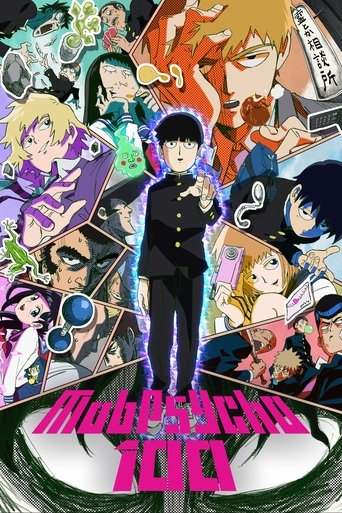
Saitama is frequently seen wearing hoodies or shirts with 'Mob' written on them, a reference to ONE’s other major series, Mob Psycho 100. Conversely, Mob is seen reading One-Punch Man manga in his own series.
The 'OK' face source
The iconic, simply drawn 'OK' face used in the anime during the Boros fight is a direct panel-for-panel recreation of ONE's original, less detailed webcomic art style.
Video Game Cameos
In the background of several scenes, characters resembling fighters from Street Fighter and Overwatch (like a Tracer-lookalike) can be seen during Hero Association gatherings.
⚠️ Spoiler Analysis
Click to reveal detailed analysis with spoilers
Frequently Asked Questions
Explore More About This Movie
Dive deeper into specific aspects of the movie with our detailed analysis pages
Comments (0)
No comments yet. Be the first to share your thoughts!