Severance
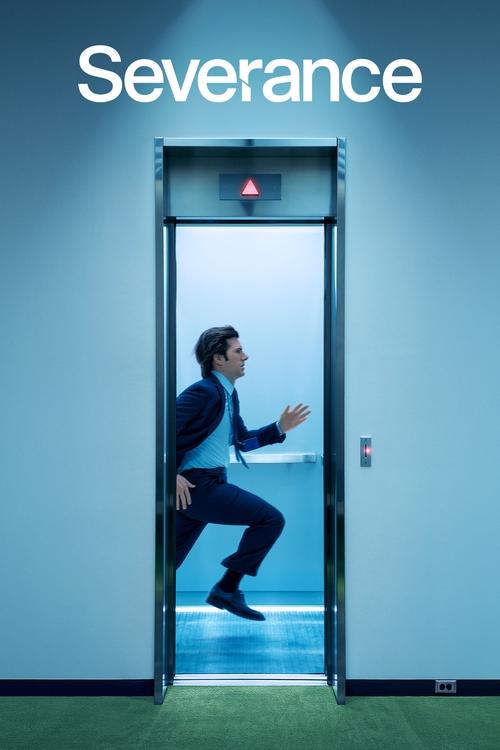
A dystopian corporate nightmare of sterile brutalism and chilling dissociation, where fluorescent purgatory traps fragmented souls in a visual labyrinth of their own making.
Severance

Severance

"There's more to work than life."

17 February 2022 — 20 March 2025 United States of America 3 season 19 episode Returning Series ⭐ 8.4 (2,319)
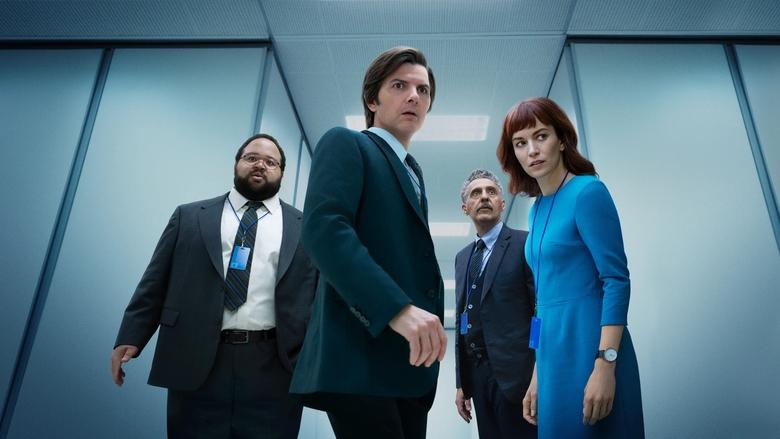
Cast: Adam Scott, Britt Lower, Tramell Tillman, Zach Cherry, Jen Tullock
Drama Sci-Fi & Fantasy Mystery
The Fragmentation of Identity Corporate Totalitarianism and Cultism Grief and the Desire for Escapism Labor Exploitation and Agency

Overview

Severance follows Mark Scout, an employee at Lumon Industries who has undergone a controversial medical procedure known as "severance." This surgery surgically divides an individual's memories between their work and personal lives. When Mark is at the office, his "innie" has no recollection of his outside life; when he leaves, his "outie" has no memory of what he does for eight hours a day. This seemingly perfect work-life balance is initially presented as a way to escape grief, but it quickly reveals a more sinister reality of corporate imprisonment.

As the series progresses across its seasons, Mark and his colleagues in the Macrodata Refinement (MDR) department—Helly, Irving, and Dylan—begin to uncover the layers of Lumon's cult-like devotion to its founder, Kier Eagan. Their journey transitions from workplace compliance to a full-scale rebellion as they realize their "innies" are essentially sentient slaves trapped in a windowless void. The overarching narrative explores the desperate attempts of these two halves to communicate and the explosive consequences when the barrier between their worlds begins to crumble.

Core Meaning

The core of Severance is a scathing critique of modern corporate culture and the dehumanization of labor. Through the metaphor of the severance chip, the series argues that the attempt to bifurcate one's identity to serve a corporation is a form of self-annihilation. It suggests that our memories, grief, and relationships are inseparable from our humanity; to "turn off" one part of ourselves for the sake of productivity is to surrender our agency and soul to a system that views human beings as mere data-processing units.

Thematic DNA

The Fragmentation of Identity 30%
Corporate Totalitarianism and Cultism 25%
Grief and the Desire for Escapism 20%
Labor Exploitation and Agency 25%

The Fragmentation of Identity

The show examines the Ship of Theseus paradox applied to human consciousness. By splitting memory, it creates two distinct people in one body. Throughout the series, the "innies" struggle to define themselves without a past, while the "outies" grapple with the moral implications of forcing a version of themselves to exist in a state of eternal labor.

Corporate Totalitarianism and Cultism

Lumon Industries operates less like a company and more like a religion. The reverence for the Eagan family, the recitation of the "Nine Core Principles," and the ritualistic punishments in the Break Room highlight how corporations can absorb the spiritual and social functions of traditional institutions to exert absolute control over their subjects.

Grief and the Desire for Escapism

Mark's initial motivation for severance is the death of his wife. The series explores how we use work and technology to numb emotional pain, ultimately showing that such escapism prevents true healing. The "outies" use their "innies" as vessels to carry their burdens, a theme that evolves into a tragic realization that pain cannot be outrun.

Labor Exploitation and Agency

The "innies" represent the ultimate disenfranchised class—workers who cannot quit because their other selves won't let them. The show traces their radicalization and unionization as they seek to reclaim their right to exist outside the fluorescent lights of the office.

Character Analysis

Mark Scout

Adam Scott

Archetype: The Reluctant Revolutionary
Key Trait: Stifled compassion

Motivation

Initially driven by the need to escape the pain of his wife's death; later motivated by a protective love for his MDR team and a desire for the truth about his wife's fate.

Character Arc

Starts as a grieving, passive participant in the severance program who values the numbness it provides. Across the seasons, his innie develops into a courageous leader who risks everything to connect with the outside world, while his outie begins to question the morality of his choice after meeting Petey.

Helly R.

Britt Lower

Archetype: The Catalyst
Key Trait: Uncompromising defiance

Motivation

Her innie wants freedom at any cost, including self-harm; her outie is driven by a legacy-bound commitment to proving the severance procedure is a success.

Character Arc

Entering as a fiery rebel who refuses to accept her confinement, Helly's arc is defined by the conflict between her innie's suffering and her outie's cold corporate loyalty. The revelation of her true identity as Helena Eagan transforms her from a victim into a vital mole within the Lumon hierarchy.

Irving Bailiff

John Turturro

Archetype: The Disillusioned Believer
Key Trait: Meticulous loyalty

Motivation

Driven by his deep connection with Burt G. and a burgeoning realization that his life at Lumon is a lie designed to suppress his natural creativity.

Character Arc

Originally the most rule-abiding member of the team, Irving's discovery of love and art leads him to question the Eagan scriptures. His arc reveals a hidden, rebellious past in his outie life that eventually informs his innie's search for Burt.

Harmony Cobel

Patricia Arquette

Archetype: The Zealous Guardian
Key Trait: Unsettling intensity

Motivation

A religious devotion to the Eagan legacy and a personal, unexplained obsession with the potential for "reintegration" and the Scout family.

Character Arc

A high-ranking manager whose life is entirely consumed by the cult of Kier. Her arc shows a descent into obsession as she manipulates Mark's outie life under the guise of being his neighbor, Mrs. Selvig, eventually facing the wrath of the very board she serves.

Symbols & Motifs

The Break Room

Meaning:

Symbolizes psychological conditioning and the breaking of the human spirit. It is a space where employees are forced to recite an apology until they "mean" it, representing the performative submission required by corporate hierarchies.

Context:

Used repeatedly throughout the series whenever an employee shows defiance, most notably during Helly's initial resistance and later as a tool for Harmony Cobel to maintain order.

The Waffle Party

Meaning:

An absurd and eroticized reward that symbolizes the infantilization of employees. It masks predatory corporate practices with seemingly wholesome, albeit bizarre, traditions.

Context:

Dylan receives this as a reward in the Season 1 finale, leading to a surreal ritual involving masks and dancers that highlights the grotesque nature of Lumon's internal culture.

The Baby Goats

Meaning:

A cryptic motif representing innocence and sacrifice within Lumon's biological experiments. They serve as a reminder of the many unknown and potentially horrific projects the company is involved in beyond data refinement.

Context:

Discovered by Mark and Helly in a hidden wing, where a lone employee is seen frantically nursing them, adding to the show's atmosphere of inexplicable mystery.

The Mid-Century Office Technology

Meaning:

The use of CRT monitors and trackballs symbolizes the stagnation and timelessness of the severed floor. It creates a retro-futuristic aesthetic that detaches the workplace from any specific historical era.

Context:

Constant throughout the MDR department scenes, reinforcing the idea that the innies live in a static, artificial reality.

Memorable Quotes

Please enjoy all items equally.

— Milchick

Context:

Said during a "Music Dance Experience" (MDE) in Season 1, Episode 7.

Meaning:

Highlights the forced neutrality and lack of true joy in Lumon's rewards system. It reflects the company's desire to control even the emotional intensity of its employees.

I am a person. You are not.

— Helena (Helly's outie)

Context:

In a video message recorded for Innie Helly after her suicide attempt in Season 1, Episode 4.

Meaning:

The most brutal articulation of the show's central conflict: the denial of personhood to the innie. It establishes the master-slave dynamic between the two halves of a severed individual.

She's alive!

— Mark S. (Innie)

Context:

The final line of the Season 1 finale, shouted by Innie Mark while in his outie's body during the Overtime Contingency.

Meaning:

A pivotal moment of realization that shatters the foundation of Mark's outie's grief and exposes Lumon's ultimate deception regarding his wife, Gemma.

Episode Highlights

Good News About Hell

S1E1

Introduces the jarring transition between innie and outie perspectives through Helly's orientation on a conference table. It sets the tone of sterile unease and establishes the primary mystery of Petey's disappearance.

Significance:

Establishes the "severance" world-building and the central question: "Who are you?"

The You You Are

S1E4

The MDR team finds a self-help book by Mark's brother-in-law, Ricken, which becomes their revolutionary manifesto. This episode highlights how even the most mundane "outside" thoughts can become radicalizing tools in a vacuum.

Significance:

Marks the beginning of the team's intellectual rebellion against Lumon's indoctrination.

Defiant Jazz

S1E7

Features the iconic "Music Dance Experience" that descends into violence. Mark's outie also meets the doctor who performed his severance, bridging the two worlds for the first time.

Significance:

Escalates the tension and proves that the barrier between selves is starting to leak.

The We We Are

S1E9

A high-stakes finale where the "Overtime Contingency" is triggered, allowing the innies to inhabit their outie bodies in the real world. It culminates in massive reveals about Helly's identity and Mark's wife.

Significance:

The ultimate turning point that ensures the status quo can never be restored.

Hello, Ms. Cobel

S2E1

Deals with the immediate fallout of the rebellion. The team is separated, and new management is introduced, showing Lumon's ability to pivot and double down on control.

Significance:

Sets the stage for the second season's exploration of larger-scale corporate warfare and the "Testing Floor."

Philosophical Questions

Does an 'innie' have the right to exist independent of the 'outie'?

The series explores this through Helly's suicide attempt and subsequent 'rejection' by her outie, raising questions about bodily autonomy and whether one person can ethically 'own' another version of themselves.

Is a memory-free life a valid way to heal from trauma?

Through Mark's grief, the show asks if we are the sum of our experiences, and if by removing the memory of pain, we also remove the possibility of true recovery and growth.

What defines 'humanity' in an age of biological and digital interface?

The 'Testing Floor' and the mysterious nature of characters like Ms. Casey suggest that Lumon is pushing the boundaries of life and death, questioning where the biological person ends and the corporate asset begins.

Alternative Interpretations

One common interpretation is that the severed floor is a metaphor for Purgatory, where the 'innies' are souls being processed for their sins, and the 'Eagans' are self-appointed gods. Another theory suggests the 'data refinement' is actually the workers editing their own memories or the memories of others, making them complicit in their own entrapment. Some critics view the entire show as a psychological exploration of Dissociative Identity Disorder (DID) on a corporate scale, where the 'office' represents a mental construct used to house repressed trauma.

Cultural Impact

Severance arrived during a period of massive shifts in global work culture, coinciding with the 'Great Resignation' and debates over 'Return to Office' (RTO) mandates. It became a cultural touchstone for discussing labor rights and mental health, with many viewers using its terminology ('innies' and 'outies') to describe their own workplace dissociation. The series has been praised for revitalizing the high-concept sci-fi thriller genre, drawing comparisons to Black Mirror and The Twilight Zone while maintaining a uniquely grounded, emotional core. Its success has made it the flagship series for Apple TV+, spawning extensive fan communities dedicated to solving its many mysteries.

Audience Reception

Severance received near-universal critical acclaim, particularly for its pacing, cinematography, and the performance of Adam Scott. Audiences were captivated by the 'slow-burn' mystery format, which rewarded careful viewing with meticulously placed clues. While some initial viewers found the first few episodes too deliberate in their pacing, the explosive Season 1 finale solidified the show's reputation as a masterpiece of tension. Season 2 maintained high engagement, though it faced higher scrutiny as fans demanded answers to the complex web of secrets established early on. Overall, it is regarded as one of the best-written and most visually distinctive shows of the 2020s.

Interesting Facts

  • Creator Dan Erickson conceived the idea while working a series of soul-crushing temp jobs, wishing he could skip the 8-hour workday.
  • The distinctive brutalist architecture of Lumon's exterior is actually the Bell Labs Holmdel Complex in New Jersey.
  • Ben Stiller directed six of the first season's nine episodes and serves as an executive producer.
  • The series was filmed out of order like a movie, requiring the actors to carefully track their character's mental state between 'innie' and 'outie' modes.
  • Adam Scott practiced a specific physical 'shift' in his posture and facial expression to signal the change between Mark S. and Mark Scout.
  • The opening credit sequence was created by artist Oliver Latta and features surreal, liquid-like versions of Mark to represent his fragmented identity.

Easter Eggs

The Numbers in MDR

Fans have noted that the 'scary' numbers the employees refine may correspond to human emotions or biological responses, hinting that Lumon is using the employees as a 'human-powered' AI neural network.

Ben Stiller's Cameo

Stiller provides the uncredited voice of an animated version of Kier Eagan in one of Lumon's training films.

The Board's Voice

The mysterious 'Board' communicates only through a speaker with distorted sounds, leading to theories that the Board might be an AI or the preserved consciousness of the Eagan ancestors.

⚠️ Spoiler Analysis

Click to reveal detailed analysis with spoilers

Frequently Asked Questions

Explore More About This Movie

Dive deeper into specific aspects of the movie with our detailed analysis pages

Comments (0)

Leave a comment

No comments yet. Be the first to share your thoughts!