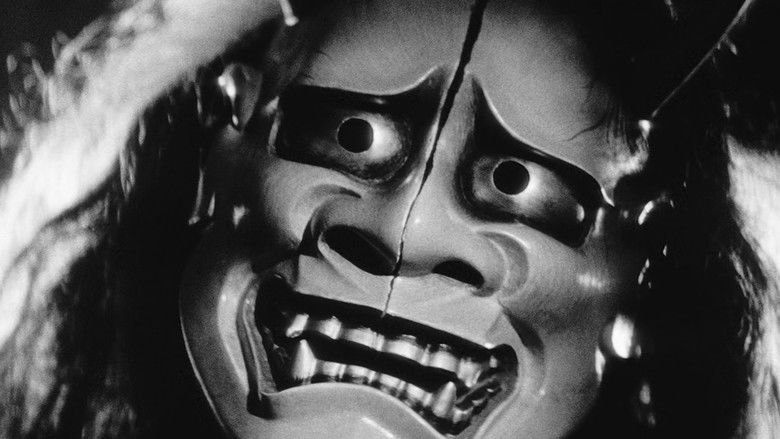
The film's most shocking twist occurs when the older woman, having successfully trapped and killed an aristocratic samurai wearing a demonic Hannya mask, uses the mask to terrorize her daughter-in-law and stop her sexual trysts. The profound horror is revealed when a heavy rainstorm causes the mask to permanently fuse to the older woman's face. When she begs her daughter-in-law to help smash it off, the mask tears away her skin, revealing hideous, bloody scars. The film ends on a chillingly ambiguous and chaotic note: the younger woman flees in absolute terror, and the disfigured older woman chases her through the grass, desperately screaming that she is a human being, right before seemingly leaping or falling over her own deadly pit trap. The ending solidifies the theme that humans become the monsters they create.
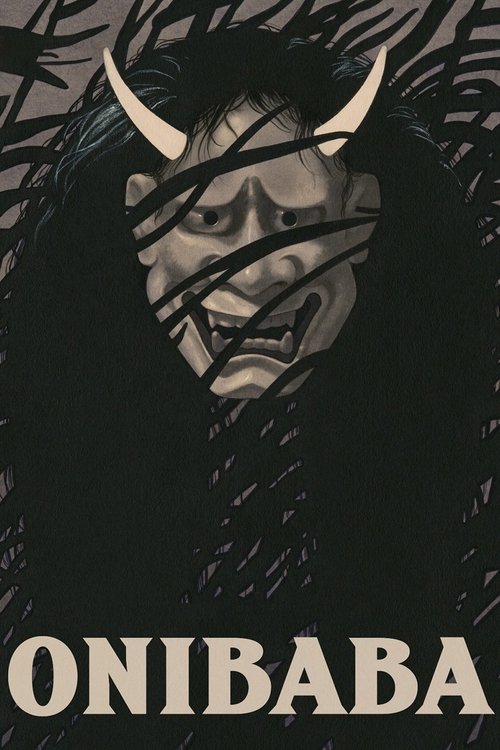
鬼婆
"The most daring film import ever...From Japan!"
Director: Kaneto Shindō
Cast: Nobuko Otowa, Jitsuko Yoshimura, Kei Satō, Jūkichi Uno, Taiji Tonoyama
Onibaba — Ending Explained
⚠️ Spoiler Analysis
Alternative Interpretations
Supernatural vs. Psychological: Audiences and critics debate whether the mask is genuinely cursed by a demon or Buddha, or if it sticks due to mundane physical reasons—such as the dead samurai's diseased flesh, rain, and sweat. In the latter reading, the 'curse' is entirely psychological, projecting the woman's own immense guilt and malice.
Feminist and Anti-Patriarchal Reading: The women's brutal murders can be interpreted not as villainy, but as an extreme, necessary rebellion against a patriarchal society that drafted their men, devastated their land, and abandoned them to starve. Their survival tactics are a direct consequence of male-dominated militarism.
Explore More About This Movie
Dive deeper into specific aspects of the movie with our detailed analysis pages