"A Legend for Today"
Ordet - Ending Explained
⚠️ Spoiler Analysis
The entire narrative of "Ordet" builds towards its miraculous and controversial climax. After Inger dies following childbirth, the family is plunged into despair. The rationalism of the doctor and the institutional faith of the pastor offer no solace. During the wake, Johannes, who has mysteriously disappeared and returned with his sanity restored, approaches Inger's coffin. He chastises the family for their lack of true faith, stating they never thought to simply ask God to return her.
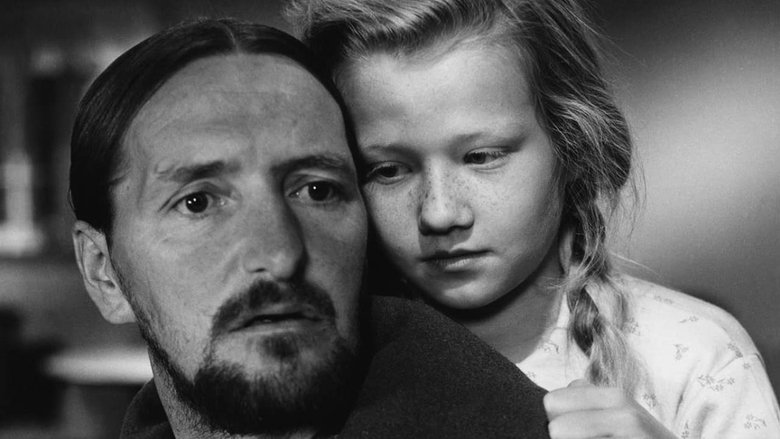
Prompted by the pure, unquestioning faith of Inger’s young daughter, Maren, who asks him to raise her mother, Johannes performs the miracle. He speaks to God, asking for "the Word," and Inger begins to stir. She sits up in her coffin, alive and well. This event resolves the film's central conflicts. The sight of the miracle prompts the agnostic Mikkel to proclaim his newfound belief, and the two rival patriarchs, Morten and Peter, are united in joyful, tearful reconciliation, their doctrinal differences rendered meaningless. The miracle is not an intellectual puzzle to be solved but an experience that transcends reason. It is the ultimate confirmation that faith, in its purest, most childlike form, holds a power that surpasses the limitations of the material world and the rigidity of organized religion.
Alternative Interpretations
While the film's ending is presented as a genuine miracle, several alternative interpretations exist. Some viewers interpret the resurrection psychologically, suggesting Inger was not truly dead but in a deep coma, and Johannes's powerful words simply roused her. Dreyer himself filmed two versions of the scene: one that hinted at this ambiguity and the one he ultimately used, which presents the event as an unambiguous miracle. A more metaphorical reading suggests the resurrection isn't a literal event but a symbolic representation of the family's spiritual rebirth. Inger's return to life signifies the healing of their divisions, the restoration of faith in the faithless (Mikkel), and the triumph of love over rigid dogma. This view sees the "miracle" as an internal transformation within the characters, manifested visually.
Another perspective is that the film is not an endorsement of a specific faith but a humanist affirmation of life itself. In this view, the miracle is secondary to the profound human emotions on display: grief, love, and reconciliation. Inger's final, passionate kiss and her simple utterance of the word "Life" ground the supernatural event in a celebration of physical, earthly existence.