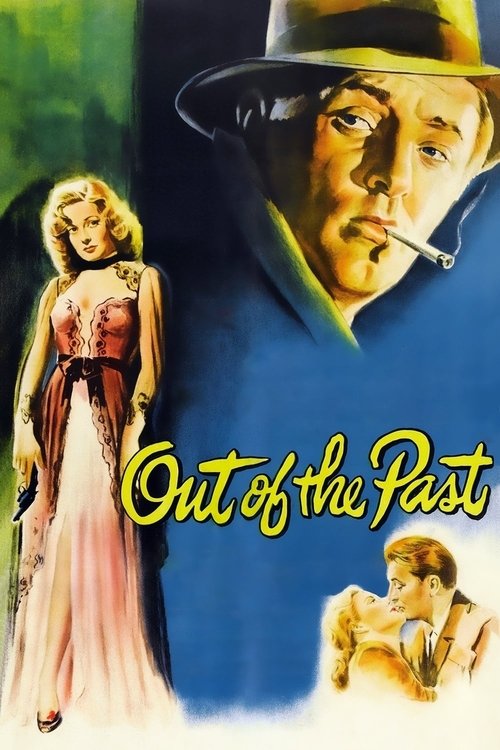
"OUT of the Sun, OUT of the Moonlight, OUT of the Past."
Out of the Past - Ending Explained
⚠️ Spoiler Analysis
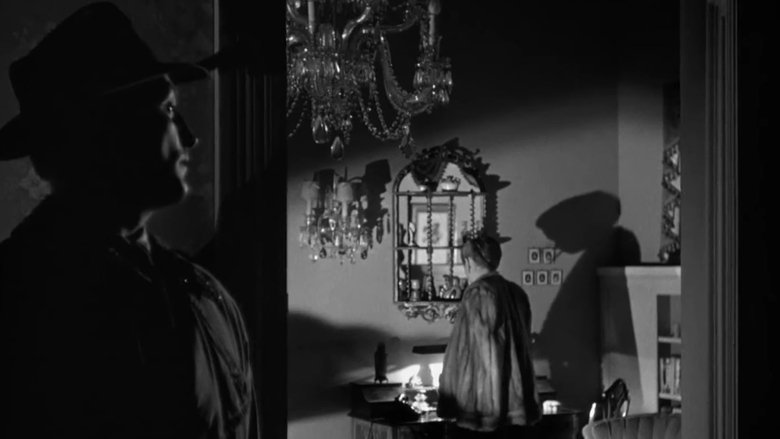
The tragic brilliance of Out of the Past lies in its relentless series of double-crosses. The major twist reveals that Kathie, who initially seduced Jeff into believing she was a victim, has returned to Whit and is actively conspiring to frame Jeff for the murders of Whit's tax attorney, Eels, and Jeff's former partner, Fisher. Kathie's sociopathy reaches its peak when she murders Whit herself, leaving Jeff with a horrifying ultimatum: run away with her and take the blame for the murders, or die.
The climax reveals Jeff's ultimate, fatalistic choice. Realizing that a life with Kathie is a fate worse than death and that he can never return to Ann's pure world, Jeff secretly calls the police to set up a roadblock. As they drive toward it, Kathie realizes the betrayal and shoots Jeff point-blank before being gunned down by the police. Jeff's death is a calculated suicide and an act of moral reclamation; he ensures Kathie can never ruin another life, paying for his past sins with his own. The film ends with The Kid lying to Ann, telling her Jeff was running away with Kathie, thereby breaking Ann's heart to save her future.
Alternative Interpretations
A major point of alternative interpretation surrounds the film's final scene, where The Kid nods to Ann, falsely confirming that Jeff intended to run away with Kathie. One interpretation is that this is an act of supreme mercy—a 'noble lie' that shatters Ann's devotion to Jeff, freeing her to marry the safe, dependable Jim and escape the shadow of the noir underworld. However, a darker, alternative reading suggests that The Kid's lie solidifies the film's cynical worldview: that truth is inherently destructive, and the idealized 'American Dream' (represented by Ann and Jim's future) can only survive if it is built on a foundation of protective falsehoods.
Another interpretive debate centers on Jeff's final actions. When he calls the police on himself and Kathie, some critics argue it is a heroic act of redemption, a sacrifice to ensure a murderer is stopped. Others view it as an act of pure, exhausted fatalism—an admission that his soul is already dead, and he is merely choosing the time and place of his physical execution, subconsciously inviting Kathie to pull the trigger.