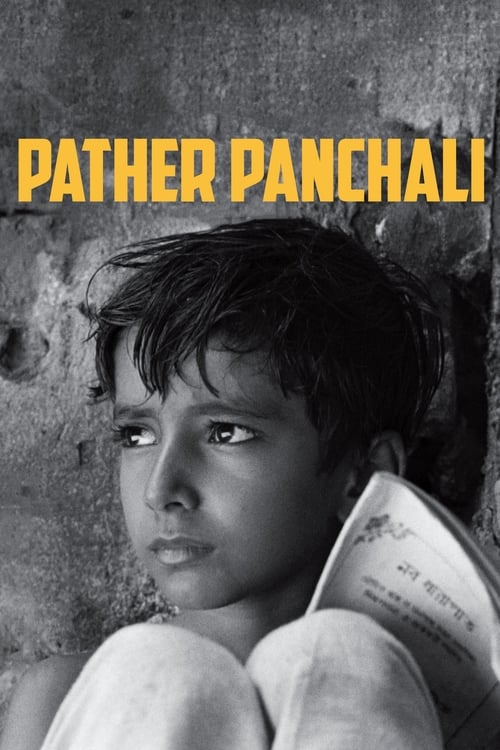
Pather Panchali
A neorealist, lyrical poem of rural Bengali life, evoking the bittersweet song of childhood wonder amidst the quiet erosion of poverty.
Pather Panchali
Pather Panchali

পথের পাঁচালী

26 August 1955 India 125 min ⭐ 7.8 (464)
Director: Satyajit Ray
Cast: Kanu Bannerjee, Karuna Banerjee, Chunibala Devi, Uma Das Gupta, Subir Banerjee
Drama History
Poverty and Survival Innocence vs. Experience Tradition vs. Modernity The Power and Indifference of Nature
Box Office: $536,364

Pather Panchali - Ending Explained

⚠️ Spoiler Analysis

"Pather Panchali" culminates in a series of tragedies that shatter the family's life in Nischindipur. The first major loss is the death of the elderly cousin, Indir Thakrun. After a bitter argument, Sarbajaya forces her out of the house. Indir dies alone in the wilderness, and her body is discovered by the children, giving them their first direct encounter with death.

The film's central tragedy is the death of Durga. During a powerful monsoon, Durga plays joyfully in the downpour but catches a severe fever. With limited resources and her father Harihar away seeking work, her condition worsens. She dies during the storm-wracked night. The hidden meaning that becomes clear only after this is the finality of her unfulfilled dreams, symbolized by her last wish to see the train again.

Harihar returns home days later, cheerful and oblivious, bringing gifts for his family, including a sari for Durga. When he learns of his daughter's death, he collapses in grief. This event is the final blow to the family's tenuous hold on their ancestral life. While packing to leave the village for good, Apu discovers a bead necklace that Durga had stolen but always denied taking. In a moment of profound, quiet understanding, Apu throws the necklace into a pond, concealing his sister's secret and letting go of the last remnant of their shared childhood. The film ends with the surviving family members—Harihar, Sarbajaya, and Apu—leaving Nischindipur on an ox-cart, their faces set towards an uncertain future.

Alternative Interpretations

While "Pather Panchali" is largely viewed through a humanist lens, some alternative interpretations exist. One perspective views the narrative as a subtle commentary on the decline of the Brahminical class in a changing India. Harihar's inability to provide for his family reflects the impracticality of his scholarly, priestly tradition in a world that is beginning to modernize.

Another interpretation focuses on the ending through a moral or karmic lens. One reading suggests that the family's suffering, particularly Durga's death, can be seen as a tragic consequence of Sarbajaya's harsh treatment of the elderly Indir or as a merciless punishment for Durga's own small transgressions, like stealing. However, most critics argue that Ray avoids such moralizing, instead presenting these events as part of the indifferent, often tragic, flow of life. The film's open-ended, lyrical nature allows for these varied interpretations, letting the viewer project their own sense of justice or meaning onto the family's fate.