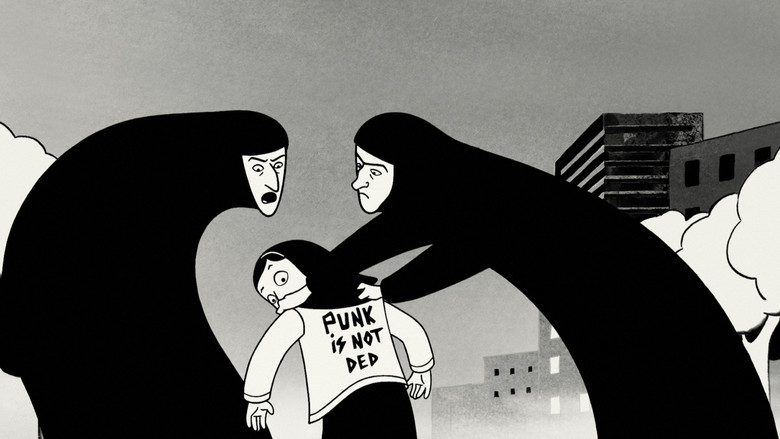
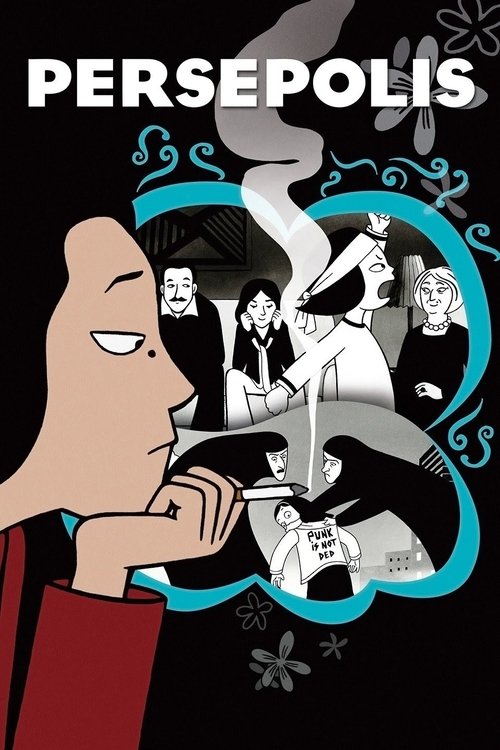
"The film Iran didn't want the world to see."
Director: Marjane Satrapi, Vincent Paronnaud
Cast: Chiara Mastroianni, Danielle Darrieux, Catherine Deneuve, Simon Abkarian, Gabrielle Lopes Benites
Persepolis — Movie Quotes
Memorable Quotes
Listen. I don't like to preach, but here's some advice. You'll meet a lot of jerks in life. If they hurt you, remember it's because they're stupid. Don't react to their cruelty. There's nothing worse than bitterness and revenge. Keep your dignity and be true to yourself.
Context
The grandmother gives Marjane this advice before she leaves for Vienna, and its wisdom resonates throughout Marjane's experiences abroad and upon her return to Iran. It's a foundational piece of her moral education.
Meaning
This quote encapsulates the core moral message of the film. It is the grandmother's guiding philosophy, which she imparts to Marjane. It emphasizes resilience, integrity, and the importance of rising above negativity, which becomes a crucial mantra for Marjane as she faces prejudice and hardship.
I wish he were alive and in jail rather than dead and a hero.
Context
In class, after Pardisse's father dies, the teacher and students praise him as a hero of the war. When Marjane tells Pardisse she should be proud, Pardisse's heartbreaking response undercuts the romanticized notion of dying for one's country.
Meaning
Spoken by Marjane's friend whose father, a fighter pilot, was killed in the Iran-Iraq war. This quote powerfully challenges the state-sanctioned narrative of heroic martyrdom. It reveals the devastating personal cost of war and patriotism, highlighting the simple, human desire to have a loved one back, regardless of their heroic status.
Fear lulls our minds to sleep.
Context
The grandmother says this to Marjane, encouraging her to be brave and not to let the fear pervading Iranian society control her thoughts and actions. It's part of her ongoing lesson to Marjane about living with courage and integrity.
Meaning
This concise and powerful line speaks to the way oppressive regimes maintain control. It suggests that fear is a tool used to stifle dissent, critical thinking, and action. It's a call to courage and awareness, urging one not to become complacent or paralyzed by fear.
One can forgive but one should never forget.
Context
This sentiment is woven throughout the narrative as Marjane learns about the suffering of political prisoners like her Uncle Anouche. It reflects her decision to bear witness to the events she lived through by creating "Persepolis".
Meaning
This quote, a recurring idea in Satrapi's work, speaks to the importance of historical memory. It suggests that while forgiveness is possible, forgetting the injustices of the past is a betrayal of those who suffered. It is the underlying principle of her memoir itself—to tell the story so that it is not forgotten.
For a revolution to succeed, the entire population must support it.
Context
Marjane's father explains this political theory to a young Marjane as she tries to understand the events unfolding around her. It frames the family's disappointment when the revolution doesn't lead to the free, democratic society they had hoped for.
Meaning
This quote reflects the initial intellectual optimism of the revolutionaries and the complex reality of political change. It underscores the disillusionment that follows when the revolution is co-opted by a single faction, the Islamic fundamentalists, without the consensus of the entire population, leading to a new form of tyranny.
Explore More About This Movie
Dive deeper into specific aspects of the movie with our detailed analysis pages