Persona
A stark, psycho-sexual drama that feels like a cinematic poem about the terrifying dissolution of identity, where two women's souls bleed into one another against a desolate island landscape.
Persona
Persona

"Ingmar Bergman's most personal and original film"

18 October 1966 Sweden 84 min ⭐ 8.1 (2,310)
Director: Ingmar Bergman
Cast: Bibi Andersson, Liv Ullmann, Margaretha Krook, Gunnar Björnstrand, Jörgen Lindström
Drama
The Fluidity and Duality of Identity Performance vs. Being The Artist as a Vampire Motherhood and Rejection

Persona - Ending Explained

⚠️ Spoiler Analysis

The central 'twist' of "Persona" is not a single event but a gradual process: the complete psychological merger of Alma and Elisabet. Initially, Alma is the caregiver and Elisabet the patient. This dynamic reverses and then dissolves entirely. In a key scene, Elisabet's husband, Mr. Vogler, visits the cottage and mistakes Alma for his wife. Alma initially resists but then plays along, and Elisabet silently encourages this union, even placing Alma's hand on her husband's face. This confirms that the transference is mutual and complex.

Alma eventually confronts Elisabet, recounting the painful story of Elisabet's rejection of her own son, a story Alma could not possibly know in such detail. Bergman shoots the monologue twice: once focused on Elisabet's pained reaction, and a second time on Alma's face as she speaks the words with a cold, detached tone. This repetition suggests that both women are now one entity, sharing the same traumatic memory. The distinction between them has become meaningless.

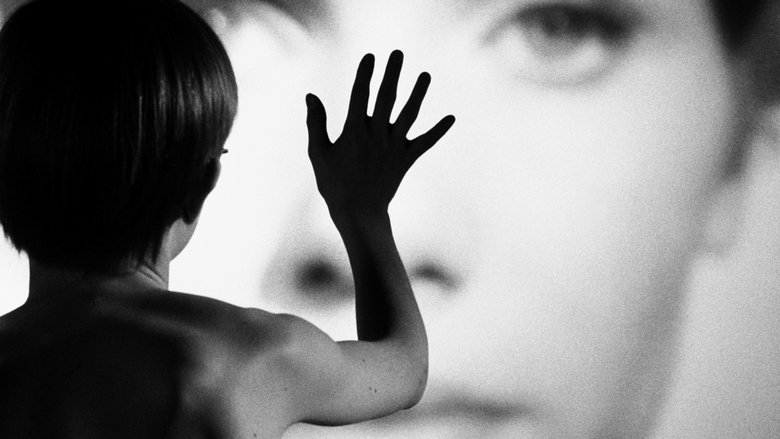
The ending is famously ambiguous. After Alma forces Elisabet to say the word "nothing," we see Alma packing and leaving the cottage alone, as if Elisabet was never there or has been fully absorbed. The final shots return to the boy in the morgue and the film projector shutting down, breaking the fourth wall and suggesting the entire narrative may have been a cinematic construct, a dream, or a psychological exploration within a single mind. There is no resolution; the audience is left to question whether the women were ever truly separate individuals at all.

Alternative Interpretations

"Persona" is famously open to a multitude of interpretations, a quality Ingmar Bergman encouraged by refusing to explain its meaning. As film historian Peter Cowie noted, "Everything one says about Persona may be contradicted; the opposite will also be true."

  • A Single Fractured Psyche: One of the most common interpretations is that Alma and Elisabet are not two separate women, but two facets of a single person's consciousness. Elisabet represents the inner, silent self, while Alma is the outward-facing, talkative persona. The film, in this reading, is an internal psychodrama about a woman confronting her own fractured identity.
  • A Vampire Story: Some critics view the film as a metaphorical vampire narrative. Elisabet, the silent artist, is seen as a psychological vampire who drains the life, vitality, and experiences of the naive Alma to nourish her own empty self and her art.
  • A Jungian Allegory: The film can be read through the lens of Carl Jung's psychology. Elisabet is the 'persona' (mask), while Alma's name is Latin for 'soul'. Their struggle represents the conflict between the external, socially constructed self and the authentic inner soul.
  • A Lesbian Love Story: The intense, claustrophobic intimacy between the two women, their physical closeness, and the emotional volatility have led some to interpret a powerful, albeit repressed or sublimated, lesbian attraction and relationship at the core of the film.
  • A Film About Filmmaking: The self-referential elements—the opening montage of a projector, the burning of the film strip—suggest "Persona" is a commentary on the nature of cinema itself. It explores the relationship between the artist (Bergman), the performance (the actresses), and the audience, questioning the reality that film presents.