Persona
"Ingmar Bergman's most personal and original film"
Overview
"Persona" centers on Elisabet Vogler, a celebrated stage actress who has inexplicably fallen mute mid-performance. She is placed under the care of a young, talkative nurse named Alma. The two retreat to a secluded seaside cottage, where the isolation and Elisabet's persistent silence compel Alma to fill the void with her own voice.
As Alma unburdens herself, revealing her deepest secrets, fears, and past traumas to the silent actress, a strange and intense psychological transference begins. The boundaries between the two women start to dissolve, their personalities seemingly merging. Alma finds herself struggling to distinguish her own identity from that of her patient, leading to a volatile and deeply unsettling exploration of the human psyche.
Core Meaning
The core meaning of "Persona" revolves around the fragility and artificiality of identity. Director Ingmar Bergman explores the concept of the 'persona'—the social mask that individuals present to the world, which can conceal a turbulent or empty inner self. The film questions whether a true, authentic self can ever be known or communicated, or if human existence is an endless performance of roles.
Elisabet's silence is a radical rejection of this performance, an attempt to stop lying by refusing to participate in the charade of social interaction. However, the film suggests that even silence is a role, and that life and the expectations of others inevitably seep in, forcing a reaction. Ultimately, "Persona" is a profound and unsettling meditation on the nature of the self, art, madness, and the inherent solitude of the human condition.
Thematic DNA
The Fluidity and Duality of Identity
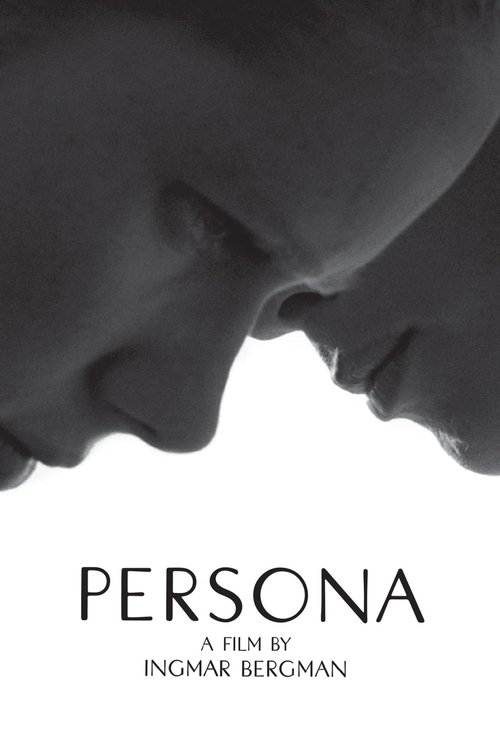
This is the central theme of the film, explored through the psychological merging of Alma and Elisabet. As Alma confesses her life to the silent Elisabet, their personalities begin to intertwine. Bergman visually represents this with the iconic shot of their faces merging into one, symbolizing the dissolution of individual selves. The film constantly questions who is the patient and who is the caregiver, suggesting that identity is not a fixed construct but a fluid and transferable one. Critics suggest the two women could be seen as two sides of a single personality—the soul (Alma) and the mask (Elisabet).
Performance vs. Being
The film delves into the existential conflict between 'seeming' and 'being'. Elisabet, an actress, chooses silence as a rebellion against the constant performance and falsehood she feels in her life and on stage. A key monologue from the doctor articulates this as "the hopeless dream of being, not seeming." Alma, initially secure in her role as a nurse, finds her own persona cracking under the pressure of the relationship, revealing the performative nature of her own identity and conventional life.
The Artist as a Vampire
A recurring interpretation is that the artist (Elisabet) is a parasitic figure who feeds on the experiences of others (Alma) for her art. Alma feels that Elisabet is coldly studying her deepest confessions and emotions. This theme is made explicit in a scene where Alma draws her own blood and Elisabet appears to drink it, symbolizing the artist's vampiric consumption of life to fuel her craft.
Motherhood and Rejection
The theme of motherhood is presented as a burdensome and terrifying role. Elisabet's breakdown is linked to her revulsion towards her unwanted son. Alma's most painful confession involves a past abortion. Both women grapple with the societal expectation of motherhood, which they perceive as a threat to their identity. Elisabet's silence can be interpreted as a rejection of this ultimate, inescapable role.
Character Analysis
Alma
Bibi Andersson
Motivation
Initially, her motivation is professional: to care for her patient and encourage her to speak. This quickly evolves into a deeply personal need for connection and validation. She is desperate to be seen and understood, pouring her soul into the silent vessel of Elisabet, hoping for a reflection of her own identity.
Character Arc
Alma begins as a cheerful, conventional, and seemingly stable young nurse, secure in her life and profession. Tasked with caring for Elisabet, the isolation and one-sided intimacy cause her to unravel. She projects her identity onto Elisabet, confesses her deepest secrets, and eventually loses her own sense of self, her personality dissolving into her patient's. Her journey is one of psychological disintegration, from a stable 'persona' to a fractured, uncertain being.
Elisabet Vogler
Liv Ullmann
Motivation
Her motivation for silence is a profound existential crisis: a weariness with the lies and performances of life. She wishes to stop participating in a world she finds inauthentic. In the cottage, her motivation appears to shift to a cold, artistic curiosity, as she begins to study Alma's raw emotional confessions.
Character Arc
Elisabet's arc is internal and ambiguous. She starts in a state of self-imposed muteness, a complete withdrawal from her roles as actress, wife, and mother. Throughout the film, she remains a passive, observant force, absorbing Alma's personality. It is unclear if she undergoes any change herself or if she is merely a catalyst for Alma's breakdown. She can be seen as moving from a state of silent rebellion to becoming a vampiric observer who consumes another's identity before potentially returning to her old life, unchanged.
The Doctor
Margaretha Krook
Motivation
Her motivation is to diagnose and treat Elisabet. She recognizes that the muteness is a willed act rather than a medical condition and prescribes the unconventional treatment of isolation with Alma, perhaps as a psychological experiment.
Character Arc
The Doctor appears at the beginning of the film to set up the premise and offer a clinical, analytical perspective on Elisabet's condition. Her role is brief but crucial. She doesn't have a personal arc but serves as a voice of reason and interpretation, explaining the philosophical underpinnings of Elisabet's silence and orchestrating the retreat to the island that sets the main drama in motion.
Symbols & Motifs
The Merged Face
This is the film's most iconic symbol, representing the complete breakdown of individual identity and the psychological fusion of Alma and Elisabet. It visually articulates the central theme that the boundaries of the self are permeable and that two personalities can bleed into one another, becoming indistinguishable.
In a climactic, dreamlike sequence, Bergman combines one half of Bibi Andersson's face with one half of Liv Ullmann's, creating a single, unsettling visage. This image appears at a point of intense psychological crisis, crystallizing the women's mutual transference of identity.
The Film Projector / Broken Film
The film begins and ends with images of a film projector igniting and extinguishing, and at a pivotal moment of violence, the celluloid appears to burn and break. This is a self-reflexive symbol, reminding the audience that they are watching a constructed work of art. It breaks the narrative illusion, suggesting that identity itself might be as fragile and artificial as a strip of film.
The film opens with a montage including the projector's arc lamp. Midway through, after Alma leaves a shard of glass for Elisabet to step on, the film appears to tear and burn on screen before restarting. The movie concludes with the projector powering down.
Silence
Elisabet's muteness is a complex symbol. It represents a withdrawal from a world perceived as false and a rejection of the lies inherent in speech and performance. It is an act of passive rebellion. However, it also becomes a void that forces Alma to project her own self into it, and a powerful tool of psychological manipulation and observation.
Elisabet's silence is the catalyst for the entire plot. It is her state from the beginning of the film, forcing Alma into a one-sided confessional relationship that drives the narrative.
The Boy in the Morgue
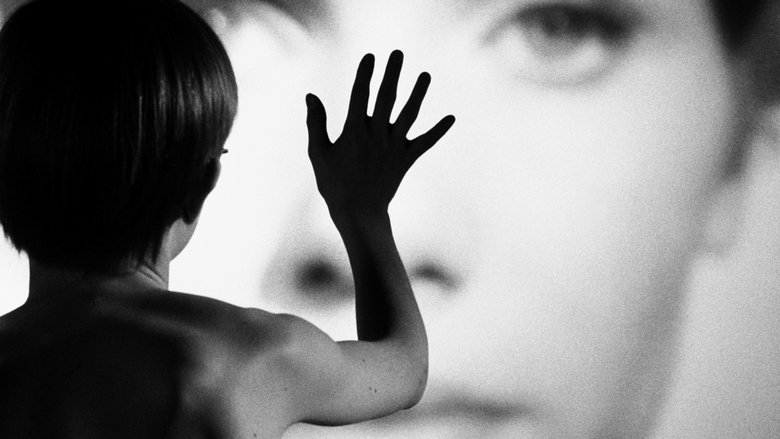
The recurring image of a young boy in a morgue reaching out to a blurry image of a woman's face is open to many interpretations. He is often seen as Elisabet's rejected son, trying to connect with the mother he never knew. He can also be seen as a representation of Ingmar Bergman himself, exploring the enigmatic nature of the feminine psyche or his relationship with his own mother. His presence frames the film as a dreamlike, psychological investigation.
The image of the boy appears in the jarring opening montage and reappears at the end. He reaches out towards a large, shifting image that morphs between Alma's and Elisabet's faces, linking him to the film's central identity crisis.
Memorable Quotes
The hopeless dream of being. Not seeming, but being. Conscious at every moment... At the same time, the chasm between what you are to others and to yourself.
— The Doctor
Context:
This is part of a monologue delivered by the doctor to Alma, in front of a silent Elisabet, in the hospital near the beginning of the film. She is explaining her understanding of why Elisabet has chosen to become mute, framing it as a profound existential choice.
Meaning:
This quote, delivered as the doctor analyzes Elisabet's condition, encapsulates the film's central philosophical theme. It speaks to the existential struggle for authenticity in a world that demands performance and the painful awareness of the gap between one's inner self and the external 'persona'.
But you can be immobile. You can fall silent. Then, at least, you don't lie.
— The Doctor
Context:
Continuing her monologue, the doctor expresses a level of admiration for Elisabet's decision, seeing it as a logical, if extreme, solution to the problem of inauthenticity she described earlier.
Meaning:
This line provides the core justification for Elisabet's silence. It presents her muteness not as an illness, but as a radical moral and existential stance—an attempt to achieve a state of purity by refusing to participate in the deceptions of language and social interaction.
No, I'm not like you. I don't feel the same. I'm not Elisabet Vogler. You are Elisabet Vogler.
— Alma
Context:
This quote is spoken during a highly charged confrontation late in the film. Alma repeats the lines with increasing intensity, as if trying to convince herself as much as Elisabet, while the camera focuses on the famous merged image of their two faces.
Meaning:
This desperate assertion from Alma signifies the climax of her identity crisis. After their personalities have almost completely merged, she tries to violently re-establish the boundary between herself and Elisabet, insisting on her own separate identity in a way that reveals just how fragile it has become.
Repeat after me. Nothing.
— Alma
Context:
Towards the end of the film, in a moment of psychological dominance, Alma coaxes the near-catatonic Elisabet to whisper the word "nothing." This marks a turning point before the film's ambiguous conclusion.
Meaning:
Here, Alma has seemingly gained control over Elisabet, forcing her to speak the only word she utters in the film. The word 'nothing' is deeply symbolic, possibly representing the void at the core of Elisabet's being, the result of her withdrawal from life, or the ultimate truth she has discovered.
Philosophical Questions
Can an individual ever achieve an authentic self, free from performance and social roles?
The film relentlessly explores this question through Elisabet's attempt to achieve authenticity through silence. The doctor's monologue about the "hopeless dream of being, not seeming" frames this as a central human struggle. However, the film suggests it may be impossible, as the doctor also notes that "reality is bloody-minded" and "life seeps in," forcing a reaction and thus a new performance. Elisabet's silence itself becomes a role she must play.
What is the nature of identity, and how is it constructed?
"Persona" posits that identity is not a stable, internal essence but a fluid construct, deeply influenced by and even transferable to others. The psychological merging of Alma and Elisabet suggests that who we are is defined in relation to others. When isolated, these definitions can collapse, revealing a terrifying void or the potential to become someone else entirely.
What is the moral responsibility of the artist?
Through the 'vampire' interpretation, the film raises questions about the artist's relationship to their subjects. Is it justifiable for an artist like Elisabet to observe and consume the raw, painful experiences of another person like Alma for the sake of her art? The film portrays this process as potentially cruel and destructive, leaving the 'subject' psychically drained and damaged.
Is communication through language ultimately a futile act of deception?
Elisabet's silence is predicated on the idea that speech is inherently a lie. Alma's endless talking, which initially seems honest and open, eventually leads to betrayal and psychological chaos. The film suggests that language may be incapable of conveying true, unmediated reality and may serve more to construct our false personas than to reveal our authentic selves.
Alternative Interpretations
"Persona" is famously open to a multitude of interpretations, a quality Ingmar Bergman encouraged by refusing to explain its meaning. As film historian Peter Cowie noted, "Everything one says about Persona may be contradicted; the opposite will also be true."
- A Single Fractured Psyche: One of the most common interpretations is that Alma and Elisabet are not two separate women, but two facets of a single person's consciousness. Elisabet represents the inner, silent self, while Alma is the outward-facing, talkative persona. The film, in this reading, is an internal psychodrama about a woman confronting her own fractured identity.
- A Vampire Story: Some critics view the film as a metaphorical vampire narrative. Elisabet, the silent artist, is seen as a psychological vampire who drains the life, vitality, and experiences of the naive Alma to nourish her own empty self and her art.
- A Jungian Allegory: The film can be read through the lens of Carl Jung's psychology. Elisabet is the 'persona' (mask), while Alma's name is Latin for 'soul'. Their struggle represents the conflict between the external, socially constructed self and the authentic inner soul.
- A Lesbian Love Story: The intense, claustrophobic intimacy between the two women, their physical closeness, and the emotional volatility have led some to interpret a powerful, albeit repressed or sublimated, lesbian attraction and relationship at the core of the film.
- A Film About Filmmaking: The self-referential elements—the opening montage of a projector, the burning of the film strip—suggest "Persona" is a commentary on the nature of cinema itself. It explores the relationship between the artist (Bergman), the performance (the actresses), and the audience, questioning the reality that film presents.
Cultural Impact
"Persona" is widely regarded as one of the greatest and most influential films ever made, a landmark of modernist cinema. Upon its 1966 release, it baffled and fascinated critics, who recognized its artistic brilliance even while struggling to decipher its meaning. Swedish press coined the term "Person(a)kult" to describe its enthusiastic admirers.
Its influence on cinema is vast and profound. The film's challenging narrative structure, exploration of psychological ambiguity, and stark visual style pushed the boundaries of cinematic language. Directors like David Lynch ("Mulholland Drive"), Robert Altman ("3 Women"), and countless others have drawn inspiration from its themes of identity transference and its iconic imagery, particularly the overlapping face shot. References to "Persona" can be found in films like "Fight Club" and "The Silence of the Lambs."
Philosophically, the film engaged directly with existentialist ideas popular in the 1960s, particularly the concepts of authenticity, the absurd, and the performance of self, echoing thinkers like Jean-Paul Sartre and Albert Camus. Its title and core themes are a direct reference to Carl Jung's concept of the 'persona' as a social mask.
Audience Reception
Audience reception for "Persona" is often polarized, though it is widely respected. Many viewers hail it as a masterpiece and one of the most profound films they have ever seen, praising its stunning cinematography, the powerhouse performances by Bibi Andersson and Liv Ullmann, and its intellectual depth. For many, its ambiguity is a source of fascination, a puzzle that invites endless discussion and re-watching.
However, a significant portion of the audience finds the film to be confusing, pretentious, and inaccessible. Common points of criticism from this perspective are that the plot is difficult to follow, the surreal elements are alienating, and the overall experience is cold and unsettling. It is frequently described as a film that is easier to admire for its artistry than to enjoy, and one that requires a certain mood and intellectual engagement from the viewer.
Interesting Facts
- Ingmar Bergman wrote the screenplay for "Persona" in 14 days while confined to a hospital for pneumonia and penicillin poisoning. He later said the film saved his life, proving he wasn't creatively finished.
- The idea for the film came to Bergman after he saw actresses Bibi Andersson and Liv Ullmann together and was struck by their uncanny resemblance.
- The sexually explicit monologue delivered by Alma (Bibi Andersson) about an orgy on the beach was almost cut, but Andersson insisted on shooting it and even rewrote parts of the dialogue she felt were too obviously written by a man.
- When first released, the film was edited in some countries due to its controversial subject matter and imagery.
- The famous merged-face shot was created in post-production. On set, to create a blurry, dreamlike atmosphere for a similar scene, the crew used a large amount of smoke.
- One of the film's working titles was "A Piece of Cinematography," hinting at its self-reflexive nature.
⚠️ Spoiler Analysis
Click to reveal detailed analysis with spoilers
Frequently Asked Questions
Explore More About This Movie
Dive deeper into specific aspects of the movie with our detailed analysis pages
Comments (0)
No comments yet. Be the first to share your thoughts!