"Ingmar Bergman's most personal and original film"
Persona - Symbolism & Philosophy
Symbols & Motifs
The Merged Face
This is the film's most iconic symbol, representing the complete breakdown of individual identity and the psychological fusion of Alma and Elisabet. It visually articulates the central theme that the boundaries of the self are permeable and that two personalities can bleed into one another, becoming indistinguishable.
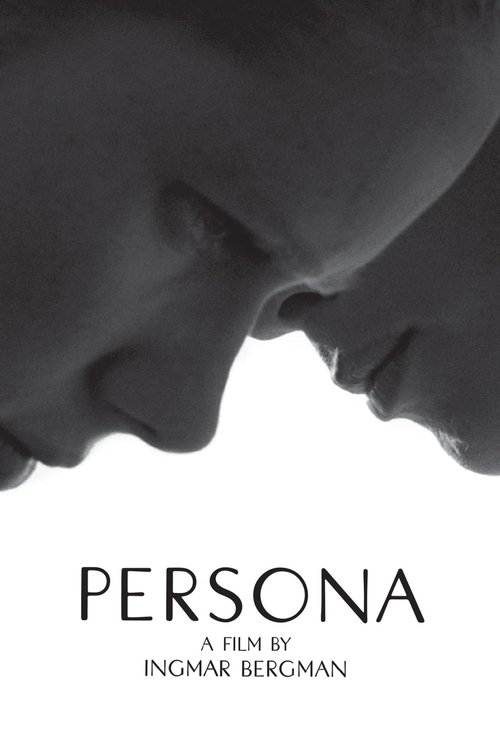
In a climactic, dreamlike sequence, Bergman combines one half of Bibi Andersson's face with one half of Liv Ullmann's, creating a single, unsettling visage. This image appears at a point of intense psychological crisis, crystallizing the women's mutual transference of identity.
The Film Projector / Broken Film
The film begins and ends with images of a film projector igniting and extinguishing, and at a pivotal moment of violence, the celluloid appears to burn and break. This is a self-reflexive symbol, reminding the audience that they are watching a constructed work of art. It breaks the narrative illusion, suggesting that identity itself might be as fragile and artificial as a strip of film.
The film opens with a montage including the projector's arc lamp. Midway through, after Alma leaves a shard of glass for Elisabet to step on, the film appears to tear and burn on screen before restarting. The movie concludes with the projector powering down.
Silence
Elisabet's muteness is a complex symbol. It represents a withdrawal from a world perceived as false and a rejection of the lies inherent in speech and performance. It is an act of passive rebellion. However, it also becomes a void that forces Alma to project her own self into it, and a powerful tool of psychological manipulation and observation.
Elisabet's silence is the catalyst for the entire plot. It is her state from the beginning of the film, forcing Alma into a one-sided confessional relationship that drives the narrative.
The Boy in the Morgue
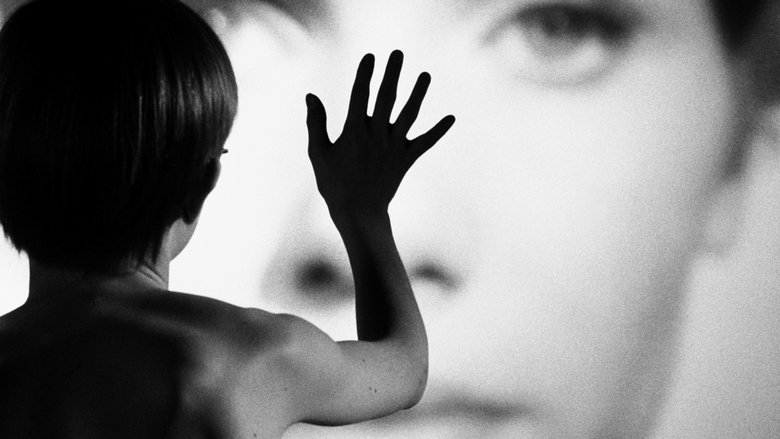
The recurring image of a young boy in a morgue reaching out to a blurry image of a woman's face is open to many interpretations. He is often seen as Elisabet's rejected son, trying to connect with the mother he never knew. He can also be seen as a representation of Ingmar Bergman himself, exploring the enigmatic nature of the feminine psyche or his relationship with his own mother. His presence frames the film as a dreamlike, psychological investigation.
The image of the boy appears in the jarring opening montage and reappears at the end. He reaches out towards a large, shifting image that morphs between Alma's and Elisabet's faces, linking him to the film's central identity crisis.
Philosophical Questions
Can an individual ever achieve an authentic self, free from performance and social roles?
The film relentlessly explores this question through Elisabet's attempt to achieve authenticity through silence. The doctor's monologue about the "hopeless dream of being, not seeming" frames this as a central human struggle. However, the film suggests it may be impossible, as the doctor also notes that "reality is bloody-minded" and "life seeps in," forcing a reaction and thus a new performance. Elisabet's silence itself becomes a role she must play.
What is the nature of identity, and how is it constructed?
"Persona" posits that identity is not a stable, internal essence but a fluid construct, deeply influenced by and even transferable to others. The psychological merging of Alma and Elisabet suggests that who we are is defined in relation to others. When isolated, these definitions can collapse, revealing a terrifying void or the potential to become someone else entirely.
What is the moral responsibility of the artist?
Through the 'vampire' interpretation, the film raises questions about the artist's relationship to their subjects. Is it justifiable for an artist like Elisabet to observe and consume the raw, painful experiences of another person like Alma for the sake of her art? The film portrays this process as potentially cruel and destructive, leaving the 'subject' psychically drained and damaged.
Is communication through language ultimately a futile act of deception?
Elisabet's silence is predicated on the idea that speech is inherently a lie. Alma's endless talking, which initially seems honest and open, eventually leads to betrayal and psychological chaos. The film suggests that language may be incapable of conveying true, unmediated reality and may serve more to construct our false personas than to reveal our authentic selves.
Core Meaning
The core meaning of "Persona" revolves around the fragility and artificiality of identity. Director Ingmar Bergman explores the concept of the 'persona'—the social mask that individuals present to the world, which can conceal a turbulent or empty inner self. The film questions whether a true, authentic self can ever be known or communicated, or if human existence is an endless performance of roles.
Elisabet's silence is a radical rejection of this performance, an attempt to stop lying by refusing to participate in the charade of social interaction. However, the film suggests that even silence is a role, and that life and the expectations of others inevitably seep in, forcing a reaction. Ultimately, "Persona" is a profound and unsettling meditation on the nature of the self, art, madness, and the inherent solitude of the human condition.