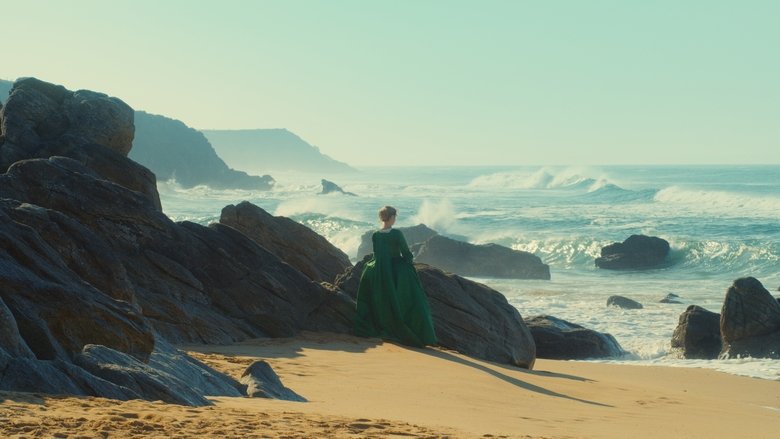

Portrait of a Lady on Fire
A hauntingly beautiful historical romance where forbidden love ignites between an artist and her subject, their fleeting passion forever captured in a portrait that defies time and convention.
Portrait of a Lady on Fire

Portrait de la jeune fille en feu

"Don't regret. Remember."

18 September 2019 France 121 min ⭐ 8.1 (2,777)
Director: Céline Sciamma
Cast: Noémie Merlant, Adèle Haenel, Luàna Bajrami, Valeria Golino, Christel Baras
Drama History Romance
The Female Gaze and Reciprocity Love, Memory, and Art Freedom and Confinement Female Solidarity and Sisterhood
Budget: $5,740,000
Box Office: $9,923,127

Portrait of a Lady on Fire - Ending Explained

⚠️ Spoiler Analysis

The narrative of Portrait of a Lady on Fire is bookended by scenes of Marianne in her later life as an art teacher. The main story is a flashback, a memory of her time with Héloïse. The first major turning point occurs when Marianne, unable to continue her deception, reveals to Héloïse that she is a painter. Héloïse criticizes the first portrait for lacking truth, leading Marianne to destroy it. In a crucial act of agency, Héloïse agrees to pose for a new portrait, creating the conditions for their love affair to blossom during the five days her mother is away.

The film's ending unfolds in three distinct moments years after their separation. First, Marianne sees a portrait of Héloïse at a salon. Héloïse is pictured with a daughter, but she is also holding a book with her finger marking page 28—the page where Marianne drew a self-portrait as a keepsake. This is a silent, profound acknowledgment across time that Héloïse remembers and cherishes their love. Second, Marianne exhibits her own painting, 'Portrait de la jeune fille en feu,' which depicts the moment at the bonfire, a clear dedication to her memory of Héloïse. The painting also subtly features Orpheus looking back at Eurydice, cementing her 'poet's choice.'

The final, devastating scene takes place at a concert. Marianne sees Héloïse across the hall, seated in a balcony box. Héloïse does not see Marianne. As the orchestra begins to play the Presto from Vivaldi's 'Summer'—the piece Marianne had partially played for her on a harpsichord—Héloïse is overcome with emotion. The camera holds on her face for an extended take as she cycles through joy, sorrow, and tears, completely consumed by the music and the memory it evokes. This final shot is seen entirely from Marianne's perspective, making the audience the final observer of Héloïse's private grief and enduring love. It confirms that their connection was not forgotten and its emotional power remains undiminished by time, a love that exists perfectly and painfully in memory.

Alternative Interpretations

The film's ending, while poignant, invites several layers of interpretation, primarily centered on the myth of Orpheus and Eurydice.

  • The Poet's Choice vs. The Lover's Choice: The dominant interpretation is that Marianne makes the 'poet's choice'—to preserve the perfect memory of Héloïse in her art, even if it means losing her in life. The ending is therefore not tragic but a testament to the enduring power of memory and art.
  • Eurydice's Agency: An alternative reading, supported by Héloïse's own reinterpretation of the myth, is that Héloïse (as Eurydice) is the one with the true agency. Her final call of "Retourne-toi" can be seen as her commanding Marianne to look, making their separation a shared, conscious decision rather than Marianne's solitary choice. In this view, Héloïse chooses to give Marianne the final, lasting image to preserve.
  • A Critique of Romantic Idealism: A more cynical interpretation could view the 'poet's choice' as a romantic justification for an inevitable, socially-enforced separation. Marianne chooses art because she has no other option. The ending, in this light, is a beautiful but ultimately sad reflection of the inescapable reality of their patriarchal world, where their love can only exist as a memory or a piece of art.