Portrait of a Lady on Fire
A hauntingly beautiful historical romance where forbidden love ignites between an artist and her subject, their fleeting passion forever captured in a portrait that defies time and convention.
Portrait of a Lady on Fire

Portrait of a Lady on Fire

Portrait de la jeune fille en feu

"Don't regret. Remember."

18 September 2019 France 121 min ⭐ 8.1 (2,777)
Director: Céline Sciamma
Cast: Noémie Merlant, Adèle Haenel, Luàna Bajrami, Valeria Golino, Christel Baras
Drama History Romance
The Female Gaze and Reciprocity Love, Memory, and Art Freedom and Confinement Female Solidarity and Sisterhood
Budget: $5,740,000
Box Office: $9,923,127

Overview

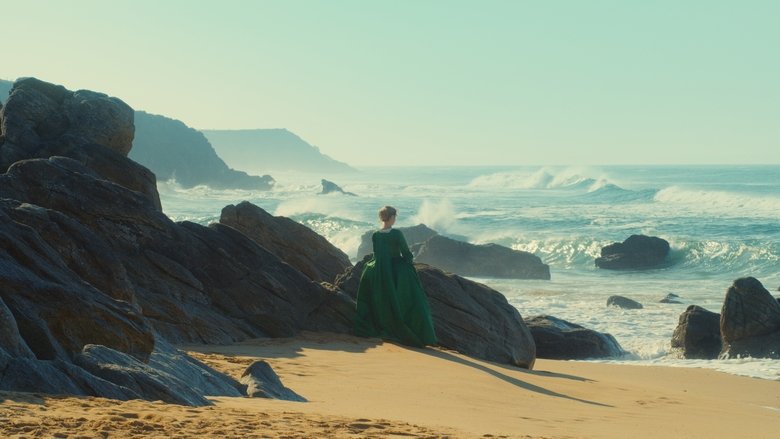
Set on an isolated island in Brittany, France at the end of the eighteenth century, Portrait of a Lady on Fire tells the story of Marianne, a young painter commissioned to create a wedding portrait of Héloïse, a reluctant bride-to-be who has just left the convent. Héloïse has previously refused to pose for a portrait as an act of defiance against her arranged marriage. Marianne is therefore instructed to act as her hired companion, observing Héloïse by day to paint her in secret by night.

As the two women spend their days walking the rugged coastline and their evenings in quiet contemplation, an intense and unspoken bond begins to form between them. What starts as a professional arrangement of stolen glances and secret observations soon blossoms into a passionate and egalitarian love affair. During a brief period of freedom when Héloïse's mother is away, Marianne, Héloïse, and the housemaid Sophie form a small, supportive community, navigating their desires and the constraints of their time. Their connection deepens through shared experiences, intellectual discussions, and the collaborative act of creating art, forcing them to confront the impending reality of their separation and the societal forces that dictate their fates.

Core Meaning

At its heart, Portrait of a Lady on Fire is a profound meditation on the female gaze, memory, and the power of art to immortalize a love that society forbids. Director Céline Sciamma crafts a narrative that intentionally subverts the traditional male gaze prevalent in art and cinema, instead presenting a love story built on equality, reciprocity, and mutual observation. The film explores how love and art are intertwined, with the act of creating the portrait becoming an intimate exchange that allows both women to truly see and be seen. It posits that a love story's value is not measured by its duration but by its transformative impact. The film argues that memory can be an act of preservation, a way to hold onto the essence of a person and a feeling long after they are gone, suggesting that some connections are so profound they continue to exist and shape us, even in absence.

Thematic DNA

The Female Gaze and Reciprocity 35%
Love, Memory, and Art 30%
Freedom and Confinement 20%
Female Solidarity and Sisterhood 15%

The Female Gaze and Reciprocity

The film is a deliberate manifesto for the 'female gaze,' rejecting the objectification often found in stories about male artists and their female muses. Marianne is not just looking at Héloïse to capture her likeness; their gazes are reciprocal. As Héloïse famously asks, "If you look at me, who do I look at?". Their relationship is one of equals, a collaboration between artist and muse who are both actively participating in the creation of the art and their relationship. This challenges the patriarchal norms of the 18th century and of art history, creating a space where women are the subjects and authors of their own stories and desires.

Love, Memory, and Art

The film intricately links the concepts of love, the act of remembering, and the creation of art. The entire story is framed as a memory, sparked by Marianne seeing the titular painting years later. The love between Marianne and Héloïse is fleeting, confined to a few short weeks, but art provides a way to make it permanent. The portraits and sketches become tangible representations of their connection, allowing them to possess an image of each other when they cannot have the person. The film suggests that choosing to remember, to hold onto the 'poet's choice' over the 'lover's choice,' is a powerful act that allows love to endure beyond physical separation.

Freedom and Confinement

The characters exist within a world of strict social constraints for women. Héloïse is confined by the prospect of an unwanted arranged marriage, a fate her sister chose to escape through death. Marianne, as a female artist, faces limitations on her professional ambitions, unable to paint male nudes and often exhibiting under her father's name. The isolated island becomes a temporary utopia where, in the absence of men, they experience a brief period of freedom to love, create, and live on their own terms. This interlude highlights the stark contrast with the patriarchal society that awaits them and ultimately seals their fate.

Female Solidarity and Sisterhood

Beyond the central romance, the film portrays a powerful sense of solidarity among its female characters. When Héloïse's mother is away, a temporary, egalitarian household is formed between Marianne, Héloïse, and the servant, Sophie. They bridge class divides to support each other, most notably when they assist Sophie with an unwanted pregnancy and an abortion. This experience is not depicted with shame or melodrama but as a shared, matter-of-fact part of women's lives. They even commemorate the event by painting it, an act of defiance that claims a typically hidden female experience as worthy of art.

Character Analysis

Marianne

Noémie Merlant

Archetype: The Artist/The Observer
Key Trait: Observant

Motivation

Initially, her motivation is professional and financial: to complete the commission and advance her career as a female painter in a male-dominated world. This quickly evolves into a deeply personal motivation: to understand, connect with, and ultimately love Héloïse. Her final motivation becomes artistic and mnemonic: to preserve the memory of their love through her art.

Character Arc

Marianne begins the film as a professional, confident in her skills and focused on the task at hand. She approaches painting Héloïse as a technical challenge. Through the process of truly seeing Héloïse, her professional gaze transforms into a lover's gaze. She moves from being an objective observer to an equal participant in a passionate relationship. This love fundamentally changes her art and her life; she learns that art is not just about rules and conventions but about capturing a 'presence' and a truth, a lesson that informs her work for years to come.

Héloïse

Adèle Haenel

Archetype: The Reluctant Muse/The Rebel
Key Trait: Defiant

Motivation

Her primary motivation is to resist the marriage and the loss of freedom it represents. As her relationship with Marianne develops, her motivation shifts to experiencing and preserving their love, even knowing it is temporary. She becomes motivated by a desire to be truly seen for who she is, not as the convention-bound subject of a wedding portrait.

Character Arc

Héloïse starts as a figure of defiance and anger, recently out of a convent and resisting her arranged marriage. Her refusal to be painted is an act of rebellion against her predetermined fate. As she builds trust with Marianne, her defensive exterior gives way to a vibrant, intelligent, and passionate woman. She evolves from being the passive object of a gaze to an active subject who returns the look, collaborates in her own representation, and experiences a brief, profound period of intellectual and emotional freedom. Though she ultimately accepts her societal role, she never loses the spark of that freedom, carrying the memory of her love with her.

Sophie

Luàna Bajrami

Archetype: The Confidante
Key Trait: Resilient

Motivation

Sophie's initial motivation is to serve the household. This is quickly superseded by her urgent need to deal with her unwanted pregnancy. She is also motivated by a simple desire for companionship and inclusion, which she finds with Marianne and Héloïse, who treat her as an equal rather than just a maid.

Character Arc

Sophie begins as a quiet servant, existing in the background of the aristocratic household. As the film progresses, particularly during the absence of the Countess, she becomes an equal participant in the trio's brief utopia. Her personal struggle with an unwanted pregnancy brings the three women together, breaking down class barriers. She becomes a friend and a collaborator, participating in their readings, games, and even the creation of a painting depicting her abortion, symbolizing a shared sisterhood.

Symbols & Motifs

The Myth of Orpheus and Eurydice

Meaning:

The myth symbolizes the film's central conflict between love and memory, looking and losing. Orpheus's choice to look back at Eurydice, thereby losing her forever, is debated by the characters. Marianne suggests he makes the 'poet's choice'—to preserve her image in his memory—rather than the 'lover's choice'. This reframes a tragic mistake as a deliberate artistic act. The film further subverts the myth by suggesting Eurydice might have told Orpheus to turn, giving her agency in her own fate.

Context:

The myth is read aloud by the three women and becomes a framework for understanding Marianne and Héloïse's doomed romance. Marianne sees herself as Orpheus, choosing to keep the memory of Héloïse. Héloïse's final appearance to Marianne in her wedding dress is a direct visual echo of Eurydice being sent back to the underworld. The lovers know their time is limited, and they must ultimately choose the memory of their love over a future that cannot be.

Fire

Meaning:

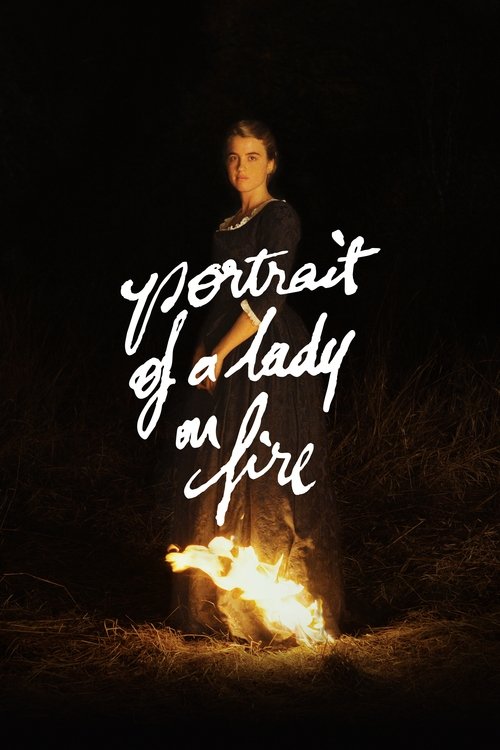
Fire represents passion, desire, and the intense, fleeting nature of Marianne and Héloïse's love. It is both creative and destructive, a source of warmth and a symbol of a love that burns brightly but cannot last. The titular 'lady on fire' moment solidifies this connection.

Context:

The symbol appears repeatedly. The first failed portrait is burned, its destruction making way for a truer depiction born of love. A bonfire scene is where the women's collective bond is celebrated and where Héloïse's dress briefly catches fire, a pivotal moment of exchanged glances that Marianne later captures in a painting. The hearth provides a constant source of light and warmth in the otherwise stark interiors, the setting for many of their most intimate moments.

The Portrait

Meaning:

The portrait is the central object that both unites and separates the lovers. Initially, it represents patriarchal control—an object to be sent to a suitor, sealing Héloïse's fate. However, as Marianne and Héloïse collaborate on the second, true portrait, it transforms into a symbol of their shared gaze, their intimacy, and a testament to a love story told on their own terms. It becomes an act of rebellion and preservation.

Context:

The entire plot revolves around the creation of Héloïse's portrait. The first, painted from stolen glances, is rejected by Héloïse as lifeless because it lacks 'presence'. The second, painted with her willing participation, captures her true essence and becomes a monument to their relationship. Years later, it is Marianne's painting, titled 'Portrait of a Lady on Fire,' that triggers her memories, framing the entire film.

Page 28

Meaning:

Page 28 is a secret, intimate symbol of their enduring connection and a testament to how they remember each other across time and distance. It represents a memory that is theirs alone, a hidden message affirming that their love has not been forgotten.

Context:

On one of their last nights together, as a keepsake for Héloïse who will have no image of her, Marianne draws a small, nude self-portrait on page 28 of Héloïse's book of Ovid's Metamorphoses. Years later, Marianne sees a portrait of Héloïse with her daughter. In the painting, Héloïse is holding a book, with her finger subtly marking page 28, a deliberate signal to Marianne that she remembers.

Memorable Quotes

Quand vous me regardez, qui je regarde?

— Héloïse

Context:

Héloïse says this to Marianne while she is posing for the second, collaborative portrait. It marks a pivotal shift in their relationship from one of secret observation to one of open, mutual engagement and equality.

Meaning:

English Translation: "If you look at me, who do I look at?". This line is central to the film's theme of the reciprocal gaze. It challenges the traditional power dynamic between the artist and the subject, asserting that the act of looking is a shared experience. Héloïse is not a passive object but an active participant who is observing her observer.

Il ne choisit pas l'amante, il choisit le poète.

— Marianne

Context:

This is said during the scene where Marianne, Héloïse, and Sophie are gathered by the fire, reading and debating the myth of Orpheus and Eurydice. It reveals Marianne's philosophical perspective on love, loss, and art.

Meaning:

English Translation: "He doesn't make the lover's choice, but the poet's.". This is Marianne's interpretation of the Orpheus myth. She reframes Orpheus's fateful look back not as a moment of weakness, but as a conscious decision to preserve the memory of Eurydice through his art (poetry). This foreshadows her own choice to immortalize her love for Héloïse in painting, accepting the loss in exchange for the eternal memory.

Ne regrettez pas. Souvenez-vous.

— Marianne

Context:

Marianne says this to Héloïse in their final moments together, as they are about to part forever. It is her final gift to Héloïse, a way to frame their impending separation not as a tragedy, but as the beginning of a lifelong memory.

Meaning:

English Translation: "Don't regret. Remember.". This line encapsulates the film's core philosophy. It advocates for embracing the past and cherishing memories, even painful ones, rather than wishing them away. It affirms the value of their brief but profound relationship, suggesting that the memory itself is a powerful and lasting treasure.

Vous pensez que tous les amants ont le sentiment d'inventer quelque chose?

— Héloïse

Context:

Héloïse asks this of Marianne after they have become lovers. It highlights the novelty and intensity of her feelings, having been sheltered in a convent for most of her life and now experiencing this profound connection for the first time.

Meaning:

English Translation: "Do all lovers feel like they're inventing something?". This quote captures the unique and revelatory nature of falling in love. It speaks to the feeling that the emotions and connection being experienced are entirely new and singular, as if the lovers are creating a language and a world all their own, separate from everything that has come before.

Philosophical Questions

Is a love that is remembered more perfect than one that is lived?

The film deeply explores this question through the Orpheus and Eurydice metaphor and its ending. By choosing memory over a continued (and impossible) life together, Marianne and Héloïse preserve their love at its most intense and ideal moment. The film seems to suggest that memory, aided by art, can purify a relationship of the compromises and pains of reality, allowing it to exist eternally in its most powerful form. It questions the conventional definition of a 'happy ending,' proposing that the value of love lies in its impact, not its longevity.

What does it mean to truly 'see' another person?

The film uses the act of portrait painting to examine the nature of perception. The first portrait fails because Marianne has only observed Héloïse's external features, following 'rules and conventions'. The second portrait succeeds because it is born from a relationship of mutual looking and understanding—a shared gaze. The film argues that truly seeing someone involves more than just physical observation; it requires empathy, intimacy, and a willingness to be seen in return. It is a process of collaboration and connection.

Can art be a form of liberation?

For the women in the film, art is both a tool of oppression (the wedding portrait) and a means of liberation. In the act of painting and being painted, Marianne and Héloïse find a private language and a space of freedom where they can define themselves and their relationship outside of societal expectations. Marianne's ability to live as an artist gives her a degree of independence unavailable to Héloïse. Furthermore, the act of painting Sophie's abortion is a radical act of claiming their own stories and making the invisible visible, transforming a hidden reality into a subject worthy of art.

Alternative Interpretations

The film's ending, while poignant, invites several layers of interpretation, primarily centered on the myth of Orpheus and Eurydice.

  • The Poet's Choice vs. The Lover's Choice: The dominant interpretation is that Marianne makes the 'poet's choice'—to preserve the perfect memory of Héloïse in her art, even if it means losing her in life. The ending is therefore not tragic but a testament to the enduring power of memory and art.
  • Eurydice's Agency: An alternative reading, supported by Héloïse's own reinterpretation of the myth, is that Héloïse (as Eurydice) is the one with the true agency. Her final call of "Retourne-toi" can be seen as her commanding Marianne to look, making their separation a shared, conscious decision rather than Marianne's solitary choice. In this view, Héloïse chooses to give Marianne the final, lasting image to preserve.
  • A Critique of Romantic Idealism: A more cynical interpretation could view the 'poet's choice' as a romantic justification for an inevitable, socially-enforced separation. Marianne chooses art because she has no other option. The ending, in this light, is a beautiful but ultimately sad reflection of the inescapable reality of their patriarchal world, where their love can only exist as a memory or a piece of art.

Cultural Impact

Portrait of a Lady on Fire was met with widespread critical acclaim upon its release and is considered a landmark film in queer cinema and feminist filmmaking. Its most significant cultural impact has been its popularization and exploration of the 'female gaze' as a cinematic concept, offering a powerful counter-narrative to centuries of art and film dominated by the male perspective. The film has been lauded for its authentic, non-exploitative depiction of lesbian love, focusing on emotional and intellectual intimacy rather than purely physical encounters.

By setting the story in the 18th century, Sciamma highlights the historical erasure of female artists and same-sex relationships, making a political statement about whose stories are told and remembered. The film's success, including winning Best Screenplay and the Queer Palm at the Cannes Film Festival, brought significant international attention to Céline Sciamma as a major voice in contemporary cinema. It has resonated deeply with audiences, particularly LGBTQ+ viewers, for its poignant, hopeful-yet-heartbreaking portrayal of a love that is defined not by a 'happy ending' but by its lasting, transformative power. The film's meticulous visual style and rich symbolism have also made it a subject of extensive academic and critical analysis.

Audience Reception

Audience reception for Portrait of a Lady on Fire has been overwhelmingly positive. Viewers frequently praise its stunning cinematography, with many describing every frame as a painting. The performances of Noémie Merlant and Adèle Haenel are consistently highlighted for their subtlety, depth, and palpable chemistry. The film's deliberate, slow-burn pacing is often cited as a strength, allowing for a deep immersion into the characters' burgeoning emotions and the atmosphere of the isolated setting.

The emotional impact of the story, particularly the final scene, is a major point of discussion among audiences, with many describing it as profoundly moving and heartbreakingly beautiful. The film's intelligent exploration of themes like the female gaze, memory, and forbidden love has resonated strongly, leading to its status as a beloved modern classic, especially within the LGBTQ+ community. Points of criticism are rare but occasionally mention the slow pace as being challenging for some viewers. However, the vast majority of audience reviews celebrate the film as a masterpiece of romantic and art-house cinema.

Interesting Facts

  • The paintings and sketches featured in the film were created by artist Hélène Delmaire. Her hands are also the ones seen in close-ups of Marianne painting.
  • The script was written specifically with actress Adèle Haenel (Héloïse) in mind. Director Céline Sciamma and Haenel had worked together before and were previously in a romantic relationship.
  • To capture a feeling of authentic discovery and initial distance, lead actors Noémie Merlant and Adèle Haenel did not meet until the first day of shooting.
  • The film was shot digitally in 8K resolution, a deliberate choice by the director and cinematographer Claire Mathon to give the period piece a contemporary, vivid feel, rather than the timeless quality of 35mm film.
  • Principal photography was completed in just 38 days.
  • The film has a very sparse musical score, a conscious decision by Céline Sciamma to make the diegetic music—when it does appear—feel more powerful and precious to the characters and the audience.
  • The English title is speculated to be an allusion to Henry James's novel 'The Portrait of a Lady.'
  • Director Céline Sciamma was influenced by Jane Campion's 1993 film 'The Piano,' and sees the opening of her film, where Marianne jumps into the water to save her canvases, as a spiritual continuation.

Easter Eggs

In their final moment together, as Marianne is leaving, Héloïse calls out "Retourne-toi" ("Turn around"). Throughout the film, they use the formal "vous" to address each other, but in this one instance, Héloïse uses the informal "toi."

This subtle shift in the French language is incredibly significant. The use of the informal 'toi' signifies a complete breakdown of formality and a raw, intimate plea. It echoes the Orpheus myth, with Eurydice (Héloïse) now giving Orpheus (Marianne) permission—or perhaps a command—to look back, reframing the myth's central act as one of shared decision rather than solitary choice.

In the final scene at the concert, Héloïse is seated in balcony number 28.

While not officially confirmed by the filmmakers as intentional, this detail is seen by many viewers as a subtle callback to Page 28, where Marianne drew her self-portrait. It reinforces the idea that the number is a permanent, if secret, marker of their connection, woven into the fabric of their separate lives.

⚠️ Spoiler Analysis

Click to reveal detailed analysis with spoilers

Frequently Asked Questions

Explore More About This Movie

Dive deeper into specific aspects of the movie with our detailed analysis pages

Comments (0)

Leave a comment

No comments yet. Be the first to share your thoughts!