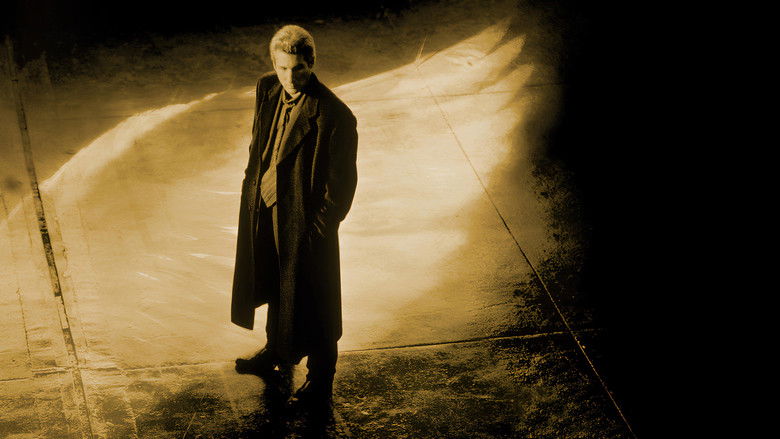
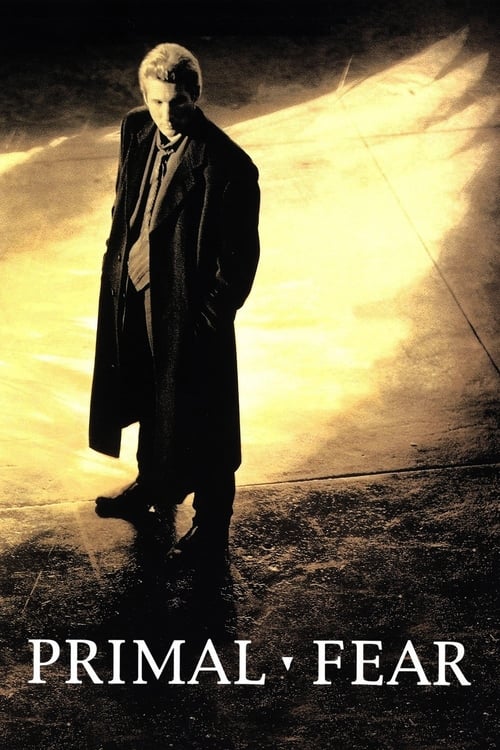
Primal Fear
A tense psychological courtroom thriller drenched in moral decay and suffocating deception. Beneath the polished veneer of justice lies a labyrinth of dark secrets, where every revelation acts as a fractured mirror reflecting humanity's terrifying duality.
Primal Fear
Primal Fear

"Sooner or later, a man who wears two faces forgets which one is real."

06 March 1996 United States of America 130 min ⭐ 7.7 (3,790)
Director: Gregory Hoblit
Cast: Richard Gere, Laura Linney, Edward Norton, John Mahoney, Alfre Woodard
Drama Crime Thriller Mystery
The Illusion of Justice Duality and the Fractured Self Arrogance and Hubris The Corruption of the Sacred
Budget: $30,000,000
Box Office: $102,616,183

Primal Fear - Ending Explained

⚠️ Spoiler Analysis

The entire narrative of Primal Fear relies on manipulating the audience's empathy for Aaron Stampler. The massive twist occurs in the final five minutes of the film. After Vail successfully orchestrates a courtroom outburst from the violent alter-ego 'Roy,' the judge dismisses the jury and accepts an insanity plea, saving Aaron from the death penalty. Feeling triumphant, Vail visits Aaron in his holding cell. As Vail leaves, Aaron casually tells him to 'tell Miss Venable I'm sorry... I hope her neck is okay.'

Vail freezes, realizing a devastating truth: 'Aaron' supposedly experiences blackouts when 'Roy' takes over. If Aaron was truly suffering from Dissociative Identity Disorder, he would have no memory of Roy attacking Janet Venable in the courtroom. When Vail confronts him, the stutter disappears, and Aaron drops the act entirely. He chillingly confesses: There never was an Aaron, counselor. The sweet, innocent, stuttering boy was a complete fabrication created by a sociopathic mastermind to manipulate Vail into securing an insanity plea. The ending fundamentally recontextualizes the entire film, turning Vail's heroic defense into the tragic enablement of a cold-blooded killer who played the entire justice system perfectly.

Alternative Interpretations

While the film's twist explicitly states that 'Aaron' never existed and 'Roy' was the true persona all along, some viewers and critics offer a psychological counter-reading. This alternative interpretation posits that Aaron may have initially been a genuinely innocent and frightened boy whose prolonged, horrific abuse at the hands of the Archbishop caused his psyche to permanently fracture as a survival mechanism. In this reading, the cold, calculating 'Roy' completely consumed and destroyed the original 'Aaron' long before the events of the film, meaning the final confession isn't just a sociopath bragging, but the tragic result of a victim who had to become a monster to survive.

Another interpretation focuses on Martin Vail's complicity. Some argue that Vail unconsciously guided Aaron/Roy into forming the Dissociative Identity Disorder defense. Because Vail desperately needed a narrative to save his client, he telegraphed to the manipulative Roy exactly what the psychiatric experts and the court needed to see to grant an insanity plea, making Vail the unwitting architect of his own defeat.