Primal - Symbolism & Philosophy
Symbols & Motifs
Cave Paintings
The cave paintings symbolize memory, legacy, and the attempt to process trauma. They are Spear's only way of recording his history and preserving the memory of his lost family.
Spear is first seen with a painting of his family in the first episode. In the final episode of Season 2, "Echoes of Eternity," he creates a massive mural depicting his entire journey with Fang. This act of storytelling allows Mira to understand his past and his loneliness, leading to the act that ensures his lineage continues, cementing his legacy beyond his own life.
The Moon
The moon often symbolizes unseen danger, horror, and the unleashing of primal fears. It presides over the world's most terrifying and supernatural threats.
In the episode "Terror Under the Blood Moon," a blood-red moon signals the arrival of a horde of monstrous, vampire-like bats. In "The Night Feeder," a mysterious, seemingly invisible creature hunts only under the darkness of night. The moon's presence (or absence) often dictates the tone of an episode, shifting it from a struggle for survival into the realm of pure horror.
Fire
Fire represents both destruction and creation, rage and finality. It is a force of immense power that brings about the ultimate end and, paradoxically, the continuation of a legacy.
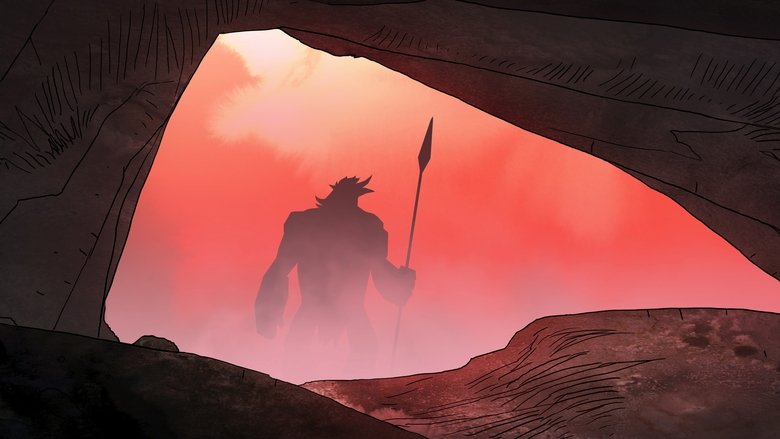
Throughout the series, fire is a weapon and a threat. Its ultimate symbolic weight comes in the series finale, where Spear battles a supernaturally empowered Viking Chieftain who has become a being of fire and lava. Spear sacrifices himself by embracing the flames to defeat his enemy, and his fatal burns lead directly to his final moments with Mira, resulting in the conception of their child. His destruction by fire leads to the creation of his future lineage.
Philosophical Questions
What is the true nature of civilization?
The series constantly contrasts the brutal, yet honest, violence of the natural world with the organized, calculated cruelty of human civilizations. While Spear and Fang kill to survive, the Vikings and Egyptians enslave, conquer, and destroy for power and ritual. The show asks whether 'civilization' truly elevates humanity or simply provides more sophisticated tools for expressing our most savage instincts. The episode "The Primal Theory" explicitly explores this, showing 'civilized' men quickly reverting to brutal violence when their structured world is threatened.
Can bonds formed from trauma overcome instinct?
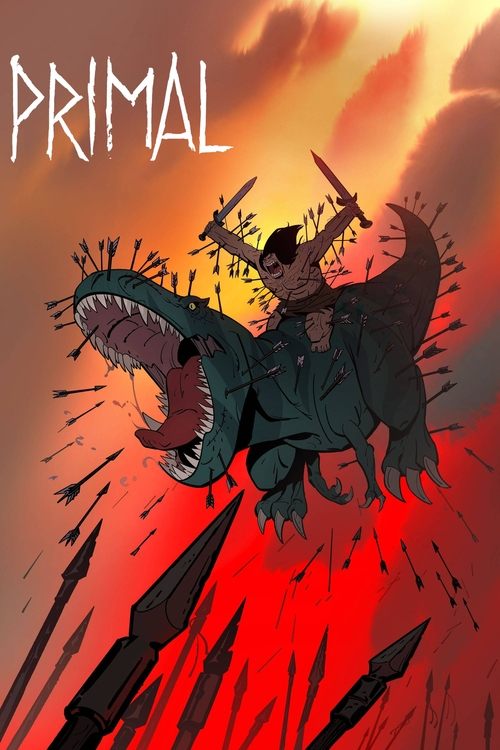
The central relationship between Spear, a hominid, and Fang, a Tyrannosaurus, is unnatural. They are predator and potential prey who should be enemies. However, their shared trauma of losing their families allows them to form a bond stronger than their base instincts. The series explores how empathy and shared experience can create a 'family' that defies the laws of nature, suggesting that emotional connection is a more powerful force than ingrained biological imperatives.
Does survival have a purpose beyond itself?
In Season 1, survival is the only goal. Spear and Fang live day to day, kill to eat, and fight to see the next sunrise. However, the introduction of Mira in Season 2 gives their survival a new purpose: the rescue and protection of another. Spear's final sacrifice solidifies this theme. He doesn't just die surviving; he dies protecting his found family and ensuring the continuation of his lineage. The series suggests that while survival is the most basic drive, its ultimate meaning is found in what—and who—we are surviving for.
Core Meaning
At its heart, "Primal" is a profound exploration of grief, companionship, and the nature of humanity in a world stripped of civilization's comforts. Created by Genndy Tartakovsky, the series uses its dialogue-free format to convey that connection and empathy can transcend language and even species. It posits that the instinct for survival is inextricably linked with the need for connection. The entire story arc demonstrates that even in the most brutal and violent of worlds, the bonds forged through shared loss and mutual dependency create a new form of family. Ultimately, the series questions what it means to be "civilized," often depicting the natural world's ferocity as more honest than the calculated cruelty of organized human societies, and suggests that our most fundamental drive is to protect our pack, no matter how it's formed.