Primal
A visceral, dialogue-free odyssey of brutal survival and unexpected tenderness, painted in strokes of raw emotion and savage beauty.
Primal

Primal

08 October 2019 — 16 September 2022 France 2 season 20 episode Returning Series ⭐ 8.6 (1,464)
Cast: Aaron LaPlante, Laëtitia Eïdo, Amina Koroma, Sebastian Vázquez, Jon Olson
Drama Animation Action & Adventure
Survival and Loss Companionship and Found Family Nature vs. Humanity The Cycle of Violence

Overview

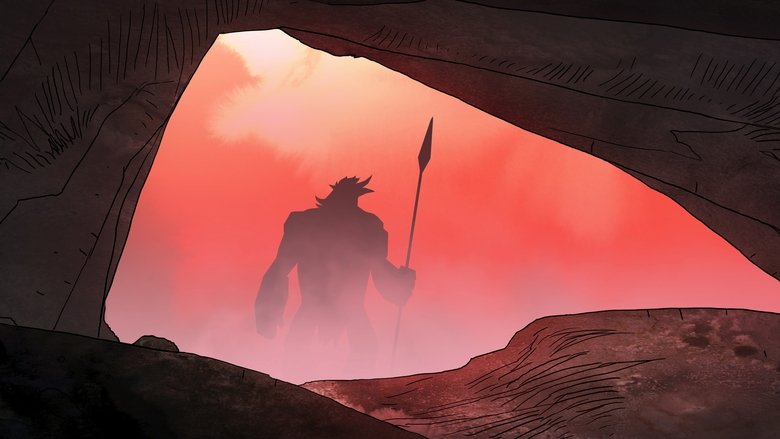
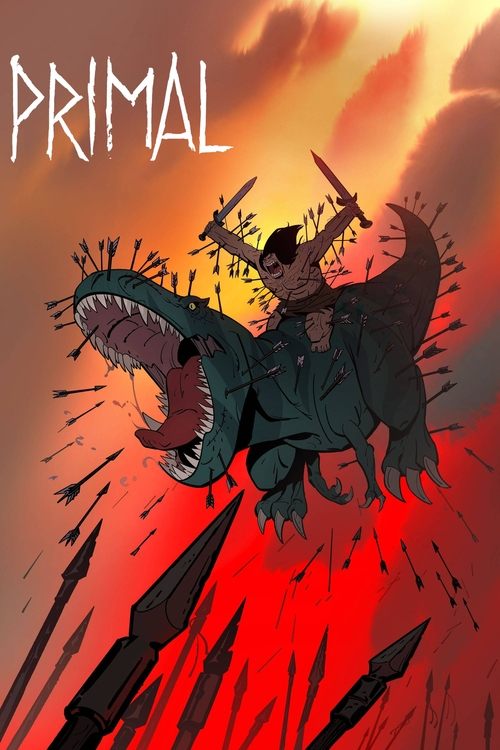
Set in a harsh, anachronistic prehistoric world, "Primal" follows the story of Spear, a Neanderthal whose family is killed by dinosaurs, and Fang, a Tyrannosaurus rex who suffers the same tragic loss. Bonded by shared grief and the need to survive, this unlikely pair forms a deep, symbiotic relationship. The first season chronicles their brutal day-to-day existence, facing off against monstrous creatures, unforgiving landscapes, and violent tribes in a world where death is always imminent. Their journey is one of pure survival, communicated entirely through action and emotion, without any dialogue.

The second season expands the world significantly. After encountering a mysterious and compassionate human woman named Mira, Spear and Fang's journey evolves from mere survival to a quest. They traverse vast oceans and discover more advanced, and often more cruel, human civilizations, including Viking-like warriors and Egyptian-style kingdoms. The scope of their conflict broadens from natural predators to the complexities and horrors of organized humanity, testing their bond in new and profound ways and culminating in a tragic, yet legacy-defining, confrontation that changes the course of their lives forever.
Core Meaning

At its heart, "Primal" is a profound exploration of grief, companionship, and the nature of humanity in a world stripped of civilization's comforts. Created by Genndy Tartakovsky, the series uses its dialogue-free format to convey that connection and empathy can transcend language and even species. It posits that the instinct for survival is inextricably linked with the need for connection. The entire story arc demonstrates that even in the most brutal and violent of worlds, the bonds forged through shared loss and mutual dependency create a new form of family. Ultimately, the series questions what it means to be "civilized," often depicting the natural world's ferocity as more honest than the calculated cruelty of organized human societies, and suggests that our most fundamental drive is to protect our pack, no matter how it's formed.

Thematic DNA

Survival and Loss 35%
Companionship and Found Family 30%
Nature vs. Humanity 25%
The Cycle of Violence 10%

Survival and Loss

The series is fundamentally built on the theme of survival in its rawest form. From the first episode, both Spear and Fang are driven by the instinct to live after losing their families. This theme evolves from a struggle against nature's predators—giant bats, monstrous spiders, zombie dinosaurs—to a conflict with organized human societies. The loss they share is the catalyst for their bond, a recurring trauma that fuels their protective instincts. Survival is not just a physical struggle but an emotional one, as they learn to navigate their grief by relying on each other.

Companionship and Found Family

The core of "Primal" is the unlikely friendship between a caveman and a dinosaur. Initially a partnership of convenience, their relationship blossoms into a deep, familial bond. They hunt together, protect each other, and communicate through shared experience and emotion rather than words. This theme is expanded in the second season with the introduction of Mira, transforming the duo into a trio. The series powerfully argues that family is not defined by blood or species, but by shared struggle and unwavering loyalty.

Nature vs. Humanity

The series presents a world where the dangers of the natural, prehistoric world are immense. However, as the story progresses, especially in Season 2, the greatest threat shifts from monstrous beasts to mankind. The cruelty of the Viking slavers and the Egyptian queen demonstrates a capacity for malice that transcends the instinctual violence of animals. The show suggests that while nature is brutal and indifferent, human civilizations can be systematically cruel, raising questions about whether progress leads to enlightenment or more sophisticated forms of savagery.

The Cycle of Violence

Violence in "Primal" is constant, visceral, and often a necessity for survival. Spear and Fang must kill to eat and to defend themselves. However, the series also explores the consequences and cyclical nature of this violence. Acts of aggression, even when justified, lead to retaliation. This is most potently realized in Season 2 with the relentless Viking Chieftain who seeks revenge for the death of his clan, leading to a devastating and tragic conclusion for Spear. The show portrays violence not as gratuitous, but as a destructive force with lasting repercussions.

Character Analysis

Spear

Aaron LaPlante

Archetype: The Grieving Warrior
Key Trait: Relentless Perseverance

Motivation

Initially driven by revenge and the basic will to live, Spear's motivation evolves into a fierce, protective loyalty to his found family: Fang, and later, Mira. He seeks not just to survive, but to create a space where his companions can be safe.

Character Arc

Spear begins as a man broken by the loss of his family, on the brink of suicide. His initial bond with Fang is purely for survival, driven by a shared need. Over Season 1, his grunting, purely instinctual nature softens as he develops a genuine affection and sense of responsibility for Fang. He transitions from a lone survivor to a protector. In Season 2, his world expands with Mira's introduction. He learns a new form of communication and care, and his motivations shift from just surviving to actively seeking a safe future for his new 'family.' His final act is one of ultimate sacrifice, giving his life to protect Mira and Fang's children, and in his last moments, he ensures his bloodline continues, completing his journey from a man with nothing to the founder of a new lineage.

Fang

Joel Valentine (Vocal Effects)

Archetype: The Beast Companion
Key Trait: Fierce Loyalty

Motivation

Fang's primary motivation is the protection of her young and, by extension, her bond-mate, Spear. She is driven by maternal instinct and a fierce survival drive, which extends to the entire 'pack' she forms with Spear and Mira.

Character Arc

Fang starts as a grieving mother, as fierce and instinct-driven as any Tyrannosaurus. Her partnership with Spear is initially tense and mistrustful. Throughout the first season, she learns to trust and coordinate with him, becoming a formidable partner. Her intelligence is consistently highlighted as she solves problems and communicates non-verbally with Spear. In Season 2, she becomes a mother again, and her protective instincts intensify. She also develops a bond with Mira. Fang's journey is one of moving past her initial trauma to become the co-leader of a unique, multi-species family. By the end, she is left to raise her offspring alongside Spear's daughter, carrying on their shared legacy.

Mira

Laëtitia Eïdo

Archetype: The Civilized Heart
Key Trait: Empathy

Motivation

Mira is motivated by a desire for freedom, community, and compassion. She wishes to return to her people but also develops a deep bond with Spear and Fang, wanting to protect them as they protect her. Her ultimate motivation is to preserve life and legacy.

Character Arc

Introduced at the end of Season 1, Mira is a kind and intelligent human from a more advanced, communal society. Having escaped slavery, she represents a world beyond the brutal survival Spear and Fang know. In Season 2, her presence transforms the narrative. She introduces concepts of advanced tool-making (like the bow), cooking, and a different form of communication. Her compassion challenges Spear's hardened exterior. After being recaptured, her rescue becomes the driving goal of the season. In the finale, she shows ultimate empathy by understanding Spear's legacy through his cave paintings and makes the decision to conceive a child with him as he is dying, ensuring his story does not end with his death. She becomes the bridge between Spear's primal world and a more civilized future, tasked with raising their daughter.

Symbols & Motifs

Cave Paintings

Meaning:

The cave paintings symbolize memory, legacy, and the attempt to process trauma. They are Spear's only way of recording his history and preserving the memory of his lost family.

Context:

Spear is first seen with a painting of his family in the first episode. In the final episode of Season 2, "Echoes of Eternity," he creates a massive mural depicting his entire journey with Fang. This act of storytelling allows Mira to understand his past and his loneliness, leading to the act that ensures his lineage continues, cementing his legacy beyond his own life.

The Moon

Meaning:

The moon often symbolizes unseen danger, horror, and the unleashing of primal fears. It presides over the world's most terrifying and supernatural threats.

Context:

In the episode "Terror Under the Blood Moon," a blood-red moon signals the arrival of a horde of monstrous, vampire-like bats. In "The Night Feeder," a mysterious, seemingly invisible creature hunts only under the darkness of night. The moon's presence (or absence) often dictates the tone of an episode, shifting it from a struggle for survival into the realm of pure horror.

Fire

Meaning:

Fire represents both destruction and creation, rage and finality. It is a force of immense power that brings about the ultimate end and, paradoxically, the continuation of a legacy.

Context:

Throughout the series, fire is a weapon and a threat. Its ultimate symbolic weight comes in the series finale, where Spear battles a supernaturally empowered Viking Chieftain who has become a being of fire and lava. Spear sacrifices himself by embracing the flames to defeat his enemy, and his fatal burns lead directly to his final moments with Mira, resulting in the conception of their child. His destruction by fire leads to the creation of his future lineage.

Episode Highlights

Spear and Fang

S1E1

This episode masterfully establishes the series' core premise and emotional weight without a single word of dialogue. It depicts the brutal deaths of both Spear's and Fang's families at the hands of the same pack of horned tyrannosaurs. United by their shared, devastating loss, they form a tense, reluctant alliance to exact revenge and survive.

Significance:

It sets the visceral, emotional, and dialogue-free tone of the entire series. The episode is foundational, establishing the central relationship and the brutal reality of their world, making it one of the most powerful series premieres in modern animation.

Rage of the Ape-Men

S1E5

Spear and Fang stumble upon what seems to be a peaceful oasis, only to be captured by brutal ape-men who force their captives into gladiatorial combat. After one of the apes ingests a mysterious black liquid, it transforms into a raging, super-strong monster, leading to one of the most violent and intense battles of the series.

Significance:

This episode pushes the boundaries of the show's violence and introduces a supernatural element that hints at a world stranger and more dangerous than previously imagined. It's a stark reminder that peace is fleeting and showcases the duo's incredible combat synergy.

Plague of Madness

S1E7

A peaceful Argentinosaurus is infected with a horrifying, rabies-like disease that turns it into an unstoppable, zombie-like killing machine. Spear and Fang are forced to flee from the relentlessly pursuing, decaying behemoth in a terrifying chase sequence that feels like a classic horror movie.

Significance:

This episode is a masterclass in tension and horror. It demonstrates that not all threats are predators seeking food; some are simply mindless forces of destruction. It highlights the sheer terror of the world and the duo's vulnerability against overwhelming odds.

Slave of the Scorpion

S1E10

The Season 1 finale introduces Mira, a bald, tattooed woman who has escaped from slavers. Spear develops a bond with her, witnessing a more gentle and civilized form of humanity. When she is recaptured by her enslavers, marked with a scorpion tattoo, Spear and Fang are given a new purpose: a quest to rescue her.

Significance:

This episode pivots the entire series. It moves beyond pure survival, introducing a narrative goal that propels the show into Season 2. Mira's introduction expands the world, hinting at organized human societies and setting up the next stage of the journey.

The Red Mist

S2E4

Continuing their search for Mira, Spear and Fang attack a fortified Viking village. What follows is an unrelenting, brutal battle in a red mist, where Spear and Fang slaughter the village's defenders. The violence is complicated when they accidentally kill the son of a formidable female warrior, who then fights them with bereaved fury before being killed herself.

Significance:

This episode explores the moral ambiguity and consequences of their violence. It's not a simple fight against monsters; it's the destruction of a community, creating a new enemy—the Viking Chieftain—who will seek revenge and ultimately cause Spear's demise.

Echoes of Eternity

S2E10

The series finale. The demonic Viking Chieftain finds Spear and Fang in Mira's village. In the ensuing battle, Spear sacrifices himself to defeat the fiery demon but suffers mortal burns. In his final moments, Mira lies with him to conceive a child. The epilogue shows Mira and Fang years later, with Fang's grown offspring and Spear and Mira's spear-wielding daughter, ensuring their legacy lives on.

Significance:

This episode brings Spear's journey to a tragic and poetic close. It fulfills his arc from a man who lost his family to one who creates a new one. It provides a definitive, though heartbreaking, ending to his story while establishing a future for the world of "Primal."

Philosophical Questions

What is the true nature of civilization?

The series constantly contrasts the brutal, yet honest, violence of the natural world with the organized, calculated cruelty of human civilizations. While Spear and Fang kill to survive, the Vikings and Egyptians enslave, conquer, and destroy for power and ritual. The show asks whether 'civilization' truly elevates humanity or simply provides more sophisticated tools for expressing our most savage instincts. The episode "The Primal Theory" explicitly explores this, showing 'civilized' men quickly reverting to brutal violence when their structured world is threatened.

Can bonds formed from trauma overcome instinct?

The central relationship between Spear, a hominid, and Fang, a Tyrannosaurus, is unnatural. They are predator and potential prey who should be enemies. However, their shared trauma of losing their families allows them to form a bond stronger than their base instincts. The series explores how empathy and shared experience can create a 'family' that defies the laws of nature, suggesting that emotional connection is a more powerful force than ingrained biological imperatives.

Does survival have a purpose beyond itself?

In Season 1, survival is the only goal. Spear and Fang live day to day, kill to eat, and fight to see the next sunrise. However, the introduction of Mira in Season 2 gives their survival a new purpose: the rescue and protection of another. Spear's final sacrifice solidifies this theme. He doesn't just die surviving; he dies protecting his found family and ensuring the continuation of his lineage. The series suggests that while survival is the most basic drive, its ultimate meaning is found in what—and who—we are surviving for.

Alternative Interpretations

While the narrative is direct, some fan theories and alternative interpretations have emerged, particularly concerning the episode "The Primal Theory" and the series finale.

The Post-Apocalyptic Future Theory: The standalone episode "The Primal Theory" (Season 2, Episode 5) depicts a group of 19th-century English aristocrats who, when their home is invaded by a madman, revert to their own primal instincts to survive. This led some fans to theorize that the main story of Spear and Fang is not set in the distant past, but in a far-future, post-apocalyptic world where humanity has regressed. Creator Genndy Tartakovsky has since debunked this, stating the episode was meant as a thematic exploration and a "reset" after a particularly savage prior episode, not a hint about the setting.

The Ending as a Metaphor for Evolution: Spear's death and the birth of his daughter can be interpreted metaphorically. Spear, a Neanderthal, represents a more primitive stage of humanity. His death at the hands of a supernaturally enhanced foe (a product of a more 'advanced' civilization's rituals) symbolizes the end of his era. His child with Mira, a more advanced Homo sapiens, represents the next step in human evolution—a being who carries Spear's primal strength but is raised in a more communal, civilized world. His story, therefore, isn't just about one man's life, but about the transition of humanity itself.

Cultural Impact

"Primal" was released to widespread critical acclaim, lauded as a masterpiece of visual storytelling and a testament to the power of animation as a medium for mature, complex narratives. Created by acclaimed animator Genndy Tartakovsky, known for "Dexter's Laboratory" and "Samurai Jack," the series was seen as a bold evolution of his signature style—minimalist dialogue, dynamic action, and a strong sense of mood. It won five Emmy Awards, cementing its status as a critical success.

The series has had a significant influence on the perception of adult animation in the West, demonstrating that cartoons can tackle deep, philosophical themes like grief, existentialism, and the nature of violence with sincerity and grace, without relying on comedy. Its dialogue-free format was a bold creative choice that challenged television norms, proving that a compelling, character-driven story can be told purely through visuals and sound design. Critics and audiences alike praised its brutal honesty and emotional depth. The first season holds a 100% rating on Rotten Tomatoes. The second season, while also highly praised, generated some division among viewers due to its shocking and tragic finale, which sparked intense online discussion about its meaning and necessity. Despite this, "Primal" is regarded as one of the most unique and artistically significant animated series of its era, leaving a legacy of pushing the boundaries of televised storytelling.

Audience Reception

Audience reception for "Primal" has been overwhelmingly positive, with viewers frequently praising its stunning animation, masterful visual storytelling, and emotional depth. The lack of dialogue was widely seen not as a limitation but as a strength, forcing a deeper engagement with the characters' actions and emotions. The first season was met with near-universal acclaim from audiences, who celebrated its brutal action sequences and the tender, developing bond between Spear and Fang. It holds a 97% audience score on Rotten Tomatoes.

The second season was also well-received but proved to be more divisive. While many praised the expanded world and deeper narrative, the finale, in which Spear dies, was controversial. Some viewers found the ending to be a fittingly tragic and poetic conclusion to his arc, while others felt it was unnecessarily bleak or unsatisfying after following his journey for two seasons. The sexual nature of the scene leading to his daughter's conception was also a point of intense discussion. Despite the divided opinions on its conclusion, the series as a whole is held in high regard by fans of animation and mature storytelling, often cited as one of Genndy Tartakovsky's greatest works.

Interesting Facts

  • The creator, Genndy Tartakovsky, first conceived of the show as a kid-friendly series about a boy and his pet T-Rex, but the idea never came together until after his experience making the more mature final season of "Samurai Jack."
  • The decision to make the series dialogue-free was inspired by the positive audience reaction to the silent, action-heavy sequences in "Samurai Jack."
  • Spear's fighting style was inspired by watching apes and monkeys fight, aiming for a raw, untrained brutality that contrasted with the skilled martial arts of Samurai Jack.
  • The artists and animators drew influence from pulp fantasy novels, particularly Robert E. Howard's "Conan the Barbarian," as well as classic fantasy art, to create the show's visceral, pulpy tone.
  • Tartakovsky was initially worried that the lack of dialogue would be a deterrent and that audiences would miss it, but found it actually allowed for more complex emotional storytelling.
  • The voice of Spear, Aaron LaPlante, provides all the grunts, screams, and non-verbal vocalizations for the character.
  • The first five episodes were compiled into a feature film titled "Primal: Tales of Savagery" for an awards-qualifying theatrical run.
  • Spear and Mira's daughter lets out a war cry in the final scene, which was voiced by Tartakovsky's own daughter, Lilah.

⚠️ Spoiler Analysis

Click to reveal detailed analysis with spoilers

Frequently Asked Questions

Explore More About This Movie

Dive deeper into specific aspects of the movie with our detailed analysis pages

Comments (0)

Leave a comment

No comments yet. Be the first to share your thoughts!