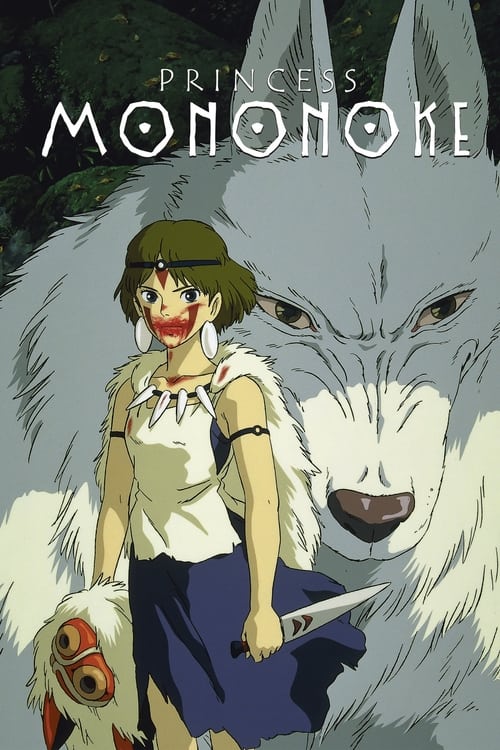
Princess Mononoke
An epic, elemental fantasy that bleeds with the fury of a wounded forest god, grappling with the beautiful, brutal heart of humanity's conflict with nature.
Princess Mononoke
Princess Mononoke

もののけ姫

"The fate of the world rests on the courage of one warrior."

12 July 1997 Japan 134 min ⭐ 8.3 (8,543)
Director: Hayao Miyazaki
Cast: Yoji Matsuda, Yuriko Ishida, Yuko Tanaka, Kaoru Kobayashi, Masahiko Nishimura
Animation Fantasy Adventure
Environmentalism vs. Industrialization The Ambiguity of Good and Evil Hatred, Revenge, and Forgiveness Feminism and Strong Female Characters
Budget: $23,500,000
Box Office: $176,506,186

Princess Mononoke - Ending Explained

⚠️ Spoiler Analysis

The climax of "Princess Mononoke" involves Lady Eboshi successfully decapitating the Forest Spirit as it transforms into its Night Walker form. This act, however, does not grant immortality as believed, but instead unleashes the spirit's destructive power. Its headless body begins to exude a black ooze that instantly kills any life it touches, threatening to consume both the forest and Irontown. The central conflict shifts from a war between humans and nature to a desperate race to return the spirit's head before the world is destroyed.

During the chaos, Moro uses the last of her strength to bite off Lady Eboshi's right arm before she dies. Ashitaka and San work together to retrieve the head from the monk Jigo and return it to the Night Walker just as the sun rises. Upon receiving its head, the spirit's destructive form collapses, and in its death, it unleashes a wave of life that heals the land and lifts Ashitaka's curse.

The ending is bittersweet and defies typical fantasy conventions. The Forest Spirit is gone, and many gods, including Moro and the boar god Okkoto, are dead. Lady Eboshi, humbled and having lost an arm, vows to build a better, more harmonious town. Crucially, Ashitaka and San do not end up together in a traditional romantic sense. San admits she loves Ashitaka but cannot forgive humans, choosing to remain in the forest. Ashitaka decides to help rebuild Irontown. They agree to visit each other, representing a fragile but hopeful truce and the possibility of a future where their two worlds can coexist. The final shot of a single Kodama appearing in the newly green forest signifies that nature will endure and that the cycle of life continues.

Alternative Interpretations

While the central theme of environmentalism is widely recognized, "Princess Mononoke" allows for several alternative or complementary interpretations. One perspective is that the film is a critique of modernity and the loss of traditional values. Set during the Muromachi period, a time of great social and technological change in Japan, the film reflects on the consequences of moving away from a life more in tune with nature, which is a core tenet of Shintoism. The introduction of firearms represents a disruptive technology that upsets the balance of power between humans and gods.

Another interpretation focuses on the social commentary within Irontown. Lady Eboshi's community is a microcosm of a new social order, a place where marginalized groups—women from brothels, lepers, and mercenaries—are given a chance to build a new life. From this viewpoint, the film can be seen as an exploration of societal progress and the creation of new forms of community, even if that progress comes into conflict with the natural world. Miyazaki himself was inspired by John Ford's Westerns in his depiction of Irontown as a gritty frontier town.

A more philosophical reading suggests the film is about the nature of hatred itself. Ashitaka's curse is not just a plot device but a symbol for how unresolved conflict and rage can physically and spiritually poison a person. The entire narrative can be seen as an allegory for the struggle to overcome the destructive cycle of hatred and revenge that plagues humanity, with Ashitaka embodying the difficult path of empathy and mediation.