The core meaning of "Pulp Fiction" revolves around the themes of chance, morality, and redemption in a world saturated with violence and pop culture. Director Quentin Tarantino explores the lives of criminals who are forced to confront profound moral questions in the midst of chaotic and often absurd situations. Jules's spiritual awakening after a 'miraculous' survival suggests that moments of grace and opportunities for redemption can appear in the most unlikely of circumstances. Ultimately, the film suggests that while life may be a series of random, violent events, the choices individuals make in those moments—to show mercy, to change their path, or to honor a code—define their character and offer a slim chance at salvation.
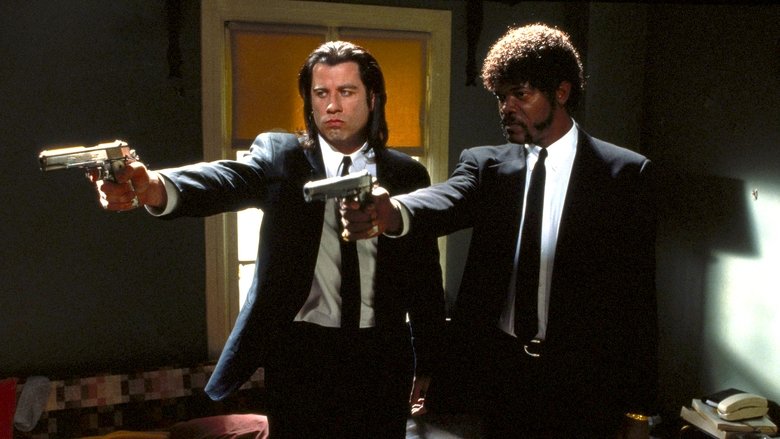
A frenetic ballet of coolly detached violence and philosophical banter, this comedic crime saga feels like a shot of adrenaline straight to the heart of 1990s cinema.
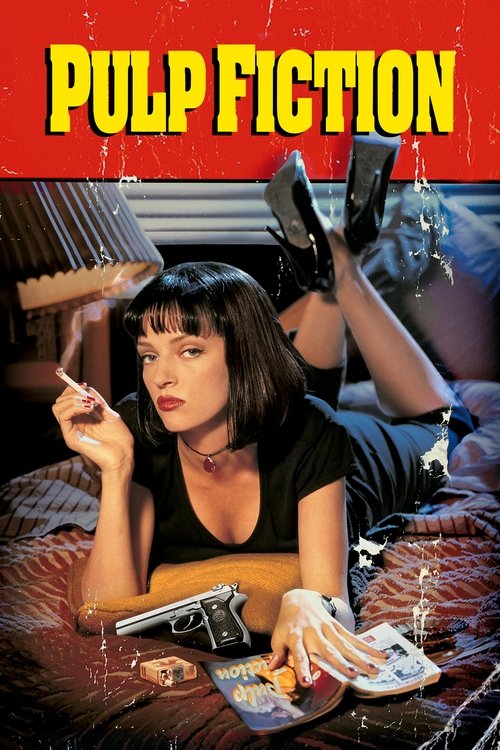
Pulp Fiction
"From the creator of 'True Romance' & 'Reservoir Dogs'"
10 September 1994
United States of America
154 min
8.5
(29,128)
Director: Quentin Tarantino
Cast: John Travolta, Samuel L. Jackson, Uma Thurman, Bruce Willis, Ving Rhames
Drama
Crime
Thriller
Comedy
Redemption and Transformation
Chance vs. Divine Intervention
Morality in a Criminal World
Pop Culture and Postmodernism
Budget:
$8,000,000
Box Office:
$213,928,762
Pulp Fiction — Symbolism & Philosophy
Symbols & Motifs
The Mysterious Briefcase
Meaning:
The briefcase is a classic MacGuffin—a plot device that motivates characters but whose contents are unimportant to the story itself. Its mysterious golden glow invites endless speculation. Popular theories suggest it contains Marsellus Wallace's soul (due to the "666" combination lock and the bandage on his head) or the diamonds from Reservoir Dogs. Co-writer Roger Avary stated it was originally written to contain diamonds, but Tarantino decided leaving it ambiguous was more interesting, allowing each viewer to imagine its contents.
Context:
Jules and Vincent are tasked with retrieving the briefcase for their boss, Marsellus Wallace, at the beginning of the film. Its contents are never revealed to the audience, but whoever looks inside is left in a state of awe. The glow was achieved on set by a simple orange light bulb inside the case. It serves as the catalyst for much of the film's initial action.
The Gold Watch
Meaning:
Butch's gold watch symbolizes his heritage, honor, and connection to his father. It represents a promise and a legacy passed down through generations of his family, who endured great hardship to protect it. It is his motivation for risking his life by returning to his apartment, driving his entire story arc forward.
Context:
In a flashback, a young Butch is given the watch by Captain Koons, a Vietnam War veteran who served with Butch's deceased father. Koons details the uncomfortable lengths to which both he and Butch's father went to hide and preserve the watch. As an adult, Butch's girlfriend Fabienne forgets to pack it when they are fleeing Marsellus, forcing him to confront his past and his enemies to retrieve it.
The Bathroom
Meaning:
The bathroom frequently serves as a space of vulnerability, consequence, and fateful encounters. It's a recurring motif where characters retreat, only to emerge into a dramatically changed, and often dangerous, situation. It highlights how mundane moments can intersect with life-altering violence.
Context:
Vincent Vega's trips to the bathroom have disastrous timing. When he is in the bathroom at Mia Wallace's house, she overdoses on his heroin. When he emerges from the bathroom during the diner robbery, the situation has escalated completely. Most significantly, when he is in the bathroom at Butch's apartment, he emerges to find Butch, who then kills him with his own gun.
Philosophical Questions
Do moments of grace or 'miracles' have the power to genuinely transform an individual's life?
The film explores this question through the divergent paths of Jules and Vincent. After they both survive what should have been a fatal shooting, Jules accepts it as a moment of divine intervention and a clear sign that he must change his life, leading him toward redemption. Vincent dismisses the same event as a "freak occurrence," a random bit of luck. He remains unchanged and his nihilistic path leads to his death. The film seems to suggest that the significance of such an event lies not in its objective reality as a miracle, but in one's willingness to perceive it as meaningful and act upon that perception.
What is the nature of honor and morality in a world devoid of conventional ethics?
"Pulp Fiction" presents a criminal underworld where traditional morality is absent, yet characters still adhere to personal codes of conduct. Jules and Vincent are killers but discuss the morality of giving a foot massage. Marsellus is a ruthless gangster, but when Butch saves his life from sadistic rapists, he reciprocates by forgiving Butch's debt and betrayal, demonstrating a code of honor. The film challenges the audience to find morality in these flawed characters, suggesting that virtues like loyalty, respect, and even mercy can exist outside the confines of the law.
Is human existence governed by random chance or a predetermined fate?
This is a central philosophical debate within the film. The non-linear narrative structure highlights the chaotic and unpredictable nature of life, where a series of coincidences can lead to profound consequences. Butch's accidental meeting with Marsellus, Vincent's ill-timed bathroom breaks, and the diner robbery all seem to be products of random chance. However, Jules's spiritual interpretation of his survival suggests a higher power at play. The film doesn't provide a definitive answer, leaving the audience to ponder whether the characters' lives are a meaningless series of events or guided by an unseen hand.
Core Meaning
Explore More About This Movie
Dive deeper into specific aspects of the movie with our detailed analysis pages