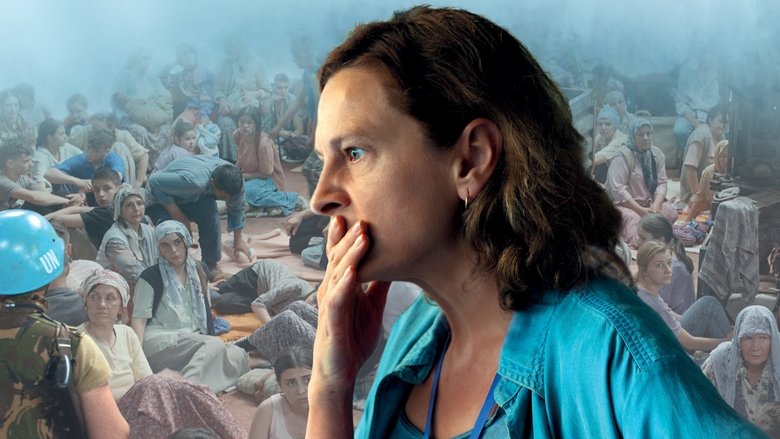
The film’s crushing climax reveals the inevitable and tragic failure of Aida's desperate efforts. Despite her frantic attempts to hide her husband and two sons within the UN compound or add them to the official UN personnel list, the Dutch peacekeepers ultimately surrender all the Bosniak refugees to Mladić’s forces. Aida is forced to watch her family be loaded onto buses destined for execution. Žbanić chillingly portrays the massacre indirectly: we see the men herded into an auditorium, hear the deafening gunfire from outside, and watch the perpetrators casually taking a coffee break.
The epilogue jumps several years forward, revealing the grim aftermath. Aida returns to Srebrenica to identify the exhumed remains of her husband and sons through scraps of their clothing. She then reclaims her stolen apartment from a Serbian family and resumes her job as a schoolteacher. The ending provides no cathartic justice, only the heavy, unresolved reality of surviving a genocide.