大红灯笼高高挂
"China, 1920. One Master, Four Wives."
Raise the Red Lantern - Symbolism & Philosophy
Symbols & Motifs
The Red Lanterns
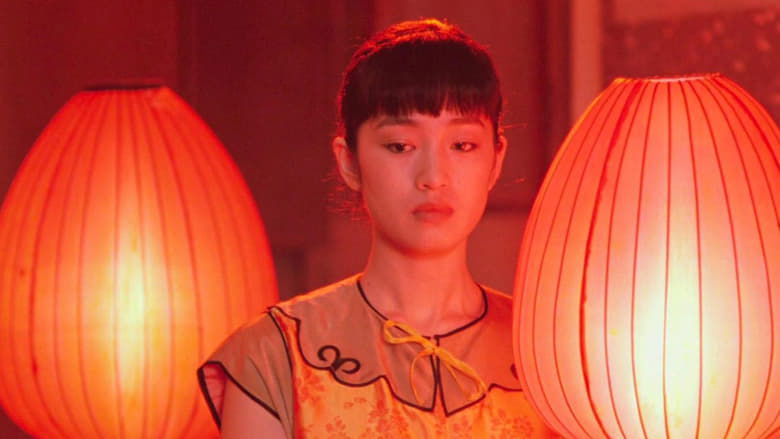
The red lanterns are the film's central and most powerful symbol. They represent the Master's favor, patriarchal power, and sexual control. To have one's lantern lit is to gain temporary status, privilege, and power within the household. However, they also symbolize the objectification of the women, as the lanterns are a public declaration of the Master's choice. Their vibrant red color contrasts sharply with the bleak, grey courtyard, symbolizing a fleeting, dangerous lust for life within a repressive environment.
The raising, lighting, and extinguishing of the lanterns is a nightly ritual that dictates the entire social dynamic of the compound. When Songlian fakes her pregnancy, she is granted perpetually lit lanterns, a symbol of ultimate favor. When her lie is exposed, the lanterns are covered in black canvas bags, symbolizing her fall from grace and public humiliation.
The Foot Massage
The pounding foot massage is a ritualistic reward bestowed upon the wife chosen by the Master for the night. It symbolizes power, status, and the pleasure that comes with the Master's favor. The sound of the mallets echoes through the compound, a clear and haunting announcement of who has won the nightly competition. It is also connected to female sexuality and servitude within the feudal system, a privilege granted to better "serve the master."
The foot massage is given to whichever wife has her lanterns lit. Songlian initially finds it strange but grows to crave the status it represents. Other characters, like the servant Yan'er, fantasize about receiving the massage, equating it with achieving a higher station in life.
The Sealed Room on the Roof
The locked, dusty room on the roof, known as the "house of death," symbolizes the ultimate punishment for transgression and defiance against the patriarchal order. It is a place of secrets and death, representing the brutal consequences for women who step outside the rigid rules of the compound, particularly regarding sexual fidelity. It is the physical embodiment of the system's ultimate, lethal power over the women's lives.
Songlian discovers the room early on and is warned that mistresses have been killed there for adultery. This foreshadows the fate of the Third Mistress, Meishan, who is dragged to the room and murdered after Songlian drunkenly reveals her affair with the doctor. Songlian's witnessing of this event is the final catalyst for her descent into madness.
The Seasons
The film's structure is marked by the changing seasons, which mirror Songlian's psychological journey. The narrative deliberately omits spring, a traditional symbol of hope and rebirth, to emphasize the bleak and cyclical nature of the women's fate.
The story begins in a lush Summer, reflecting Songlian's initial, albeit reluctant, arrival. Autumn signifies the cooling of her hopes and the rise of bitter conflicts. Winter brings the harshest realities—betrayal, death, and the freezing of Songlian's spirit. The film ends the following summer with the arrival of a new, Fifth Mistress, showing the oppressive cycle beginning anew.
Philosophical Questions
To what extent do oppressive systems turn their victims against one another?
The film masterfully explores this question by confining the four wives to a closed system where the only path to power is through the Master's favor. Instead of finding solidarity in their shared subjugation, they become fierce rivals. The film demonstrates that the system itself is the true antagonist; it is designed to foster jealousy and distrust, ensuring the victims remain divided and unable to challenge the central authority. Songlian's transformation from a defiant newcomer to a cruel participant in the household's power games is a tragic illustration of this process.
Can individuality survive within a society built on rigid ritual and conformity?
"Raise the Red Lantern" argues that it cannot. Songlian arrives with a university education and a modern sense of self, but the compound's relentless, dehumanizing rituals systematically dismantle her identity. The rules and traditions are not just customs but tools designed to enforce conformity and erase personal will. The film posits that when every aspect of life is performative and dictated by an external power, the inner self withers. Songlian's eventual madness is the ultimate symbol of a defeated individuality, the only possible outcome for someone who can neither conform nor escape.
What is the nature of power when its source is faceless and absolute?
By deliberately obscuring the Master's face and character, the film explores power as an abstract, atmospheric force. Power in the Chen compound is not wielded through direct, personal interaction but through established rules, rituals, and the mere presence of an unquestionable authority. This makes the power structure seem both arbitrary and inescapable. It suggests that the most potent form of control is one that is systemic and impersonal, where individuals are not oppressed by a person they can confront, but by an entire, unchangeable system they are forced to inhabit.
Core Meaning
The core meaning of "Raise the Red Lantern" is a powerful critique of patriarchal and feudal systems that dehumanize individuals, particularly women. Director Zhang Yimou uses the insular world of the Chen family compound as a microcosm of a society where rigid rituals and traditions are tools of oppression. The film explores how such an oppressive structure strips individuals of their identity, forcing them into a cruel competition where they victimize one another to survive. Beyond its feminist critique, the film is widely interpreted as a political allegory for authoritarianism, where an unseen, absolute power (the Master) manipulates his subjects (the wives) and maintains control by fostering division and enforcing arbitrary rules, leading to the annihilation of the human spirit.