Raise the Red Lantern
A visually sumptuous historical drama of suffocating tradition, where vibrant crimson lanterns illuminate a descent into psychological despair.
Raise the Red Lantern

Raise the Red Lantern

大红灯笼高高挂

"China, 1920. One Master, Four Wives."

18 December 1991 China 125 min ⭐ 7.9 (758)
Director: Zhang Yimou
Cast: Gong Li, Ma Jingwu, He Saifei, Cao Cuifen, Kong Lin
Drama
Patriarchy and Female Subjugation The Corrupting Power of Ritual and Tradition Jealousy and Internalized Oppression Loss of Individuality
Budget: $1,000,000
Box Office: $16,600,000

Overview

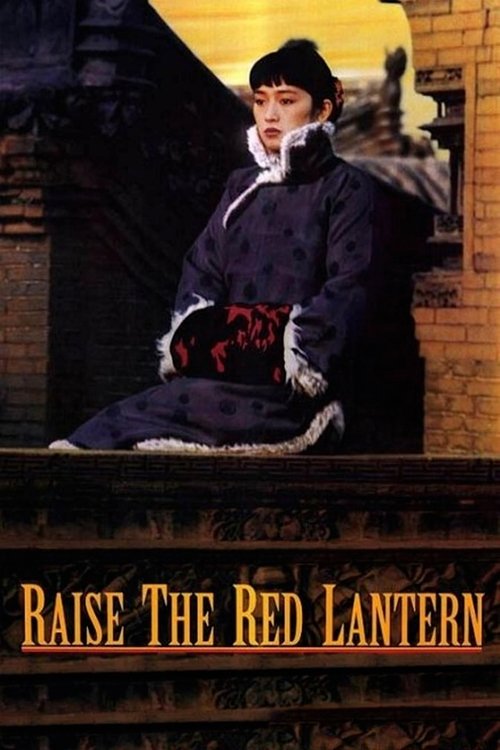
Set in 1920s China, "Raise the Red Lantern" tells the story of Songlian, a 19-year-old university student who, after her father's death leaves her family bankrupt, is forced to become the fourth wife of the wealthy Master Chen. Upon arriving at the grand, labyrinthine family compound, she is initiated into a world governed by rigid, centuries-old traditions. The central ritual involves the master deciding each evening which of his four wives he will visit; that wife's courtyard has red lanterns lit, granting her privileges like a foot massage and her choice of meals.

Initially defiant and accustomed to her modern education, Songlian is quickly drawn into the bitter and clandestine rivalries among the wives. She must navigate the apparent kindness of the Second Mistress, Zhuoyun, the open jealousy of the Third Mistress, Meishan, a former opera singer, and the detached authority of the First Wife, Yuru. As the seasons change from a vibrant summer to a harsh winter, Songlian learns that survival in this gilded cage depends on manipulation and winning the master's fleeting favor, a game that inexorably erodes her spirit and individuality.

Core Meaning

The core meaning of "Raise the Red Lantern" is a powerful critique of patriarchal and feudal systems that dehumanize individuals, particularly women. Director Zhang Yimou uses the insular world of the Chen family compound as a microcosm of a society where rigid rituals and traditions are tools of oppression. The film explores how such an oppressive structure strips individuals of their identity, forcing them into a cruel competition where they victimize one another to survive. Beyond its feminist critique, the film is widely interpreted as a political allegory for authoritarianism, where an unseen, absolute power (the Master) manipulates his subjects (the wives) and maintains control by fostering division and enforcing arbitrary rules, leading to the annihilation of the human spirit.

Thematic DNA

Patriarchy and Female Subjugation 35%
The Corrupting Power of Ritual and Tradition 30%
Jealousy and Internalized Oppression 25%
Loss of Individuality 10%

Patriarchy and Female Subjugation

The film is a stark depiction of a patriarchal society where women are treated as property. Their entire existence is defined by their relationship to the Master, and their worth is measured by their ability to please him and, ideally, produce a male heir. Characters refer to themselves as the Master's "robes," something he can put on or take off at will, highlighting their complete lack of agency and commodification. The rigid compound and its rules serve as a physical and psychological prison, enforcing the subjugation of the women within.

The Corrupting Power of Ritual and Tradition

Life in the Chen household is governed by elaborate, unchanging rituals, from the nightly raising of the lanterns to the ceremonial foot massages. These traditions, presented as venerable customs, are actually mechanisms of control that institutionalize jealousy and rivalry. Winning the lantern-lighting ceremony becomes the sole focus of the wives' lives, a seemingly small honor that dictates their status and power. The film shows how these performative gestures supplant genuine human connection, forcing the women to internalize an oppressive system and participate in their own subjugation.

Jealousy and Internalized Oppression

The patriarchal system pits the wives against each other in a zero-sum game for the Master's attention. Instead of forming bonds of solidarity, they engage in deceit, manipulation, and betrayal. The Second Mistress's hidden maliciousness, the Third Mistress's open hostility, and Songlian's own eventual descent into cruelty demonstrate how the oppressed can become oppressors of one another. Their rivalry is the engine of the plot and the direct result of a system that denies them any other avenue for power or self-expression.

Loss of Individuality

Songlian begins the film as an educated, independent-minded young woman, but the oppressive environment systematically erases her identity. She is referred to not by her name, but as the "Fourth Mistress." Her defiance is gradually replaced by a desperate need to conform and compete according to the house rules. Her final descent into madness, where she wanders the compound in her old schoolgirl clothes, symbolizes the ultimate destruction of her individual self by a system that cannot tolerate it.

Character Analysis

Songlian (Fourth Mistress)

Gong Li

Archetype: Tragic Heroine
Key Trait: Defiant Spirit (Ultimately Crushed)

Motivation

Her initial motivation is simply to survive in a hostile environment. This evolves into a desire for power and recognition as a defense mechanism against her dehumanization. She craves the status and privileges that come with the Master's favor as the only available measure of self-worth.

Character Arc

Songlian begins as an educated and proud young woman, forced by circumstance into a life she resists. Initially, she tries to remain aloof from the household's petty politics. However, the oppressive system and the constant psychological warfare gradually corrupt her. She learns to play the game, becoming manipulative and cruel, culminating in her faking a pregnancy to gain power. After her actions indirectly lead to the deaths of two other women, the immense guilt and the horror of the system's brutality drive her into madness, leaving her a broken shell of her former self.

Zhuoyun (Second Mistress)

Cao Cuifen

Archetype: The Schemer / The False Friend
Key Trait: Deceptive

Motivation

Her primary motivation is to maintain and improve her standing with the Master by any means necessary. She seeks to eliminate any rival who threatens her position, particularly those who are younger and more attractive. Her kindness is a weapon she uses to disarm her opponents before she strikes.

Character Arc

Zhuoyun presents herself as a kind, welcoming ally to Songlian, a "Buddha's face with a scorpion's heart." Her arc is one of revelation; she is slowly exposed as the most duplicitous and manipulative of the wives. She operates with hidden malice, orchestrating curses and betrayals while maintaining a facade of friendship. She remains in her position at the end, having successfully eliminated her rivals, demonstrating that quiet ruthlessness is a successful survival strategy in the compound.

Meishan (Third Mistress)

He Saifei

Archetype: The Jaded Rival / The Rebel
Key Trait: Rebellious

Motivation

Meishan is motivated by a desperate desire for genuine emotion and freedom in a stifling world. Having known a life of performance and adoration, she cannot tolerate her diminished status and seeks solace in a forbidden romance. Her provocations and outbursts are a way of asserting her individuality against the crushing conformity of the household.

Character Arc

A former opera singer, Meishan is openly rebellious and temperamental, having once been the Master's favorite. She initially acts as Songlian's direct antagonist but later forms a fragile alliance with her based on their shared misery. Her arc is one of tragic defiance. She seeks freedom and passion through a secret affair with the family doctor. When her affair is revealed, she is brutally murdered by the system, serving as a grim warning to others about the price of transgression.

Master Chen

Ma Jingwu

Archetype: The Oppressor / The System
Key Trait: Faceless Authority

Motivation

His motivation is the maintenance of his power and the continuation of his family's traditions. He operates not out of passion but out of a sense of entitlement and a desire to enforce the rigid order from which he benefits. The wives are instruments for his pleasure and the continuation of his lineage.

Character Arc

The Master is not a character with a developmental arc but rather a symbolic presence. His face is almost never shown clearly, and his personality is largely absent. He functions as the impersonal, omnipotent force of the patriarchy. He is the invisible hand that sets the rules and moves the pieces, an embodiment of the feudal system itself rather than an individual man. His presence is constant and oppressive, even when he is physically absent.

Symbols & Motifs

The Red Lanterns

Meaning:

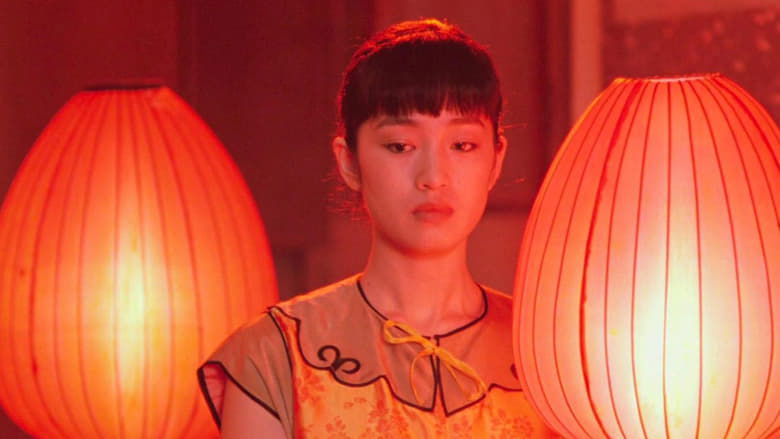
The red lanterns are the film's central and most powerful symbol. They represent the Master's favor, patriarchal power, and sexual control. To have one's lantern lit is to gain temporary status, privilege, and power within the household. However, they also symbolize the objectification of the women, as the lanterns are a public declaration of the Master's choice. Their vibrant red color contrasts sharply with the bleak, grey courtyard, symbolizing a fleeting, dangerous lust for life within a repressive environment.

Context:

The raising, lighting, and extinguishing of the lanterns is a nightly ritual that dictates the entire social dynamic of the compound. When Songlian fakes her pregnancy, she is granted perpetually lit lanterns, a symbol of ultimate favor. When her lie is exposed, the lanterns are covered in black canvas bags, symbolizing her fall from grace and public humiliation.

The Foot Massage

Meaning:

The pounding foot massage is a ritualistic reward bestowed upon the wife chosen by the Master for the night. It symbolizes power, status, and the pleasure that comes with the Master's favor. The sound of the mallets echoes through the compound, a clear and haunting announcement of who has won the nightly competition. It is also connected to female sexuality and servitude within the feudal system, a privilege granted to better "serve the master."

Context:

The foot massage is given to whichever wife has her lanterns lit. Songlian initially finds it strange but grows to crave the status it represents. Other characters, like the servant Yan'er, fantasize about receiving the massage, equating it with achieving a higher station in life.

The Sealed Room on the Roof

Meaning:

The locked, dusty room on the roof, known as the "house of death," symbolizes the ultimate punishment for transgression and defiance against the patriarchal order. It is a place of secrets and death, representing the brutal consequences for women who step outside the rigid rules of the compound, particularly regarding sexual fidelity. It is the physical embodiment of the system's ultimate, lethal power over the women's lives.

Context:

Songlian discovers the room early on and is warned that mistresses have been killed there for adultery. This foreshadows the fate of the Third Mistress, Meishan, who is dragged to the room and murdered after Songlian drunkenly reveals her affair with the doctor. Songlian's witnessing of this event is the final catalyst for her descent into madness.

The Seasons

Meaning:

The film's structure is marked by the changing seasons, which mirror Songlian's psychological journey. The narrative deliberately omits spring, a traditional symbol of hope and rebirth, to emphasize the bleak and cyclical nature of the women's fate.

Context:

The story begins in a lush Summer, reflecting Songlian's initial, albeit reluctant, arrival. Autumn signifies the cooling of her hopes and the rise of bitter conflicts. Winter brings the harshest realities—betrayal, death, and the freezing of Songlian's spirit. The film ends the following summer with the arrival of a new, Fifth Mistress, showing the oppressive cycle beginning anew.

Philosophical Questions

To what extent do oppressive systems turn their victims against one another?

The film masterfully explores this question by confining the four wives to a closed system where the only path to power is through the Master's favor. Instead of finding solidarity in their shared subjugation, they become fierce rivals. The film demonstrates that the system itself is the true antagonist; it is designed to foster jealousy and distrust, ensuring the victims remain divided and unable to challenge the central authority. Songlian's transformation from a defiant newcomer to a cruel participant in the household's power games is a tragic illustration of this process.

Can individuality survive within a society built on rigid ritual and conformity?

"Raise the Red Lantern" argues that it cannot. Songlian arrives with a university education and a modern sense of self, but the compound's relentless, dehumanizing rituals systematically dismantle her identity. The rules and traditions are not just customs but tools designed to enforce conformity and erase personal will. The film posits that when every aspect of life is performative and dictated by an external power, the inner self withers. Songlian's eventual madness is the ultimate symbol of a defeated individuality, the only possible outcome for someone who can neither conform nor escape.

What is the nature of power when its source is faceless and absolute?

By deliberately obscuring the Master's face and character, the film explores power as an abstract, atmospheric force. Power in the Chen compound is not wielded through direct, personal interaction but through established rules, rituals, and the mere presence of an unquestionable authority. This makes the power structure seem both arbitrary and inescapable. It suggests that the most potent form of control is one that is systemic and impersonal, where individuals are not oppressed by a person they can confront, but by an entire, unchangeable system they are forced to inhabit.

Alternative Interpretations

While the dominant interpretation views the film as a political allegory for authoritarian China, where the Master represents the unseen, manipulative state and the wives represent different social classes or factions pitted against each other, other readings exist.

A purely feminist interpretation focuses solely on the critique of traditional Confucian patriarchy and its devastating impact on women, seeing the story not as an allegory for contemporary politics but as a historical tragedy about gendered oppression. From this perspective, the Master isn't the Communist Party but simply the embodiment of a timeless, oppressive patriarchal power.

Another reading suggests the film is a more universal parable about human nature and power dynamics. In this view, the Chen compound is a microcosm of any hierarchical social structure—a corporation, a political party, or a social clique—where individuals compete for favor from those in power, often sacrificing their morality in the process. This interpretation sees the film's message as a timeless commentary on humanity's propensity for submission and cruelty within rigid power structures, applicable to any culture or time period.

Cultural Impact

"Raise the Red Lantern" was a landmark film for the Fifth Generation of Chinese filmmakers, achieving widespread international critical acclaim and bringing a new level of global attention to mainland Chinese cinema. Released in 1991, shortly after the 1989 Tiananmen Square events, the film was widely interpreted as a potent political allegory. The oppressive, rule-bound household was seen as a metaphor for China's authoritarian government, and the tragic infighting among the wives as a critique of how such systems turn citizens against one another.

Its stunning, highly aestheticized cinematography by Zhao Fei, particularly its use of color and symmetrical, claustrophobic framing, had a significant influence on world cinema's perception of Chinese film. The film's success solidified the director-muse collaboration between Zhang Yimou and actress Gong Li, making them two of the most recognizable figures in international film. Despite being initially banned in China for its subversive undertones, its international success eventually led to its release there. It remains a key text in studies of Chinese cinema, feminism, and political allegory in film.

Audience Reception

Audiences and critics alike lauded "Raise the Red Lantern" for its breathtaking visual beauty, meticulous cinematography, and powerful performances, especially by Gong Li. The film's rich color palette and symbolic imagery were universally praised, with Roger Ebert giving it four out of four stars and calling it a film that "exists solely for the eyes" yet contains a "cruel reality" beneath its beauty. Many viewers were captivated by the engrossing, tragic story and its potent allegorical layers, recognizing it as a profound critique of both historical patriarchy and modern authoritarianism.

The main points of criticism, particularly from some domestic Chinese audiences at the time, were that the film catered to Western perceptions of an "exotic" and backward China. Some found its pace to be deliberately slow and its tone relentlessly bleak. However, the overwhelming international consensus was that the film is a masterpiece of world cinema, a haunting and visually stunning tragedy.

Interesting Facts

  • The film is based on the 1990 novella "Wives and Concubines" (妻妾成群) by author Su Tong.
  • Director Zhang Yimou significantly amplified the role of the red lanterns for the film adaptation; they are not as prominent in the original novel. This change was made to enhance the story's visual symbolism.
  • The film was shot on location at the historic Qiao Family Compound in Shanxi Province, a genuine, centuries-old walled mansion that enhances the film's authentic and claustrophobic atmosphere.
  • "Raise the Red Lantern" was initially banned in the People's Republic of China, likely due to its critical allegory of authoritarian power structures.
  • The film was nominated for the Academy Award for Best Foreign Language Film at the 64th Academy Awards, solidifying Zhang Yimou's and Gong Li's reputations on the international stage.
  • The rituals depicted in the film, such as the lantern lighting and foot massages, were largely invented by the filmmakers to serve as allegorical representations of social power, rather than being precise historical recreations.
  • The director, Zhang Yimou, deliberately chose never to show the Master's face clearly to emphasize that he represents an oppressive system rather than a specific individual.

⚠️ Spoiler Analysis

Click to reveal detailed analysis with spoilers

Frequently Asked Questions

Explore More About This Movie

Dive deeper into specific aspects of the movie with our detailed analysis pages

Comments (0)

Leave a comment

No comments yet. Be the first to share your thoughts!