羅生門
"The husband, the wife… or the bandit?"
Rashomon - Symbolism & Philosophy
Symbols & Motifs
The Rashomon Gate
The ruined Rashomon gate symbolizes the decay of civilization, morality, and truth. It is a liminal space between the civilized world and the untamed wilderness, a Purgatory-like setting where the characters are trapped by a storm that mirrors their internal turmoil and confusion. Its dilapidated state reflects the broken state of the human soul and the crumbling of societal structures.
The film's framing story takes place entirely under the gate, where the woodcutter, priest, and commoner seek shelter from a torrential downpour while they discuss the murder. The gate is a constant visual reminder of the moral and existential crisis at the heart of the film.
The Rain
The relentless rain symbolizes the overwhelming moral ambiguity and confusion that engulfs the characters. It can be interpreted as a cleansing force or as a representation of the deluge of lies and conflicting narratives that obscure the truth. The storm breaking at the end of the film coincides with the restoration of the priest's faith in humanity.
The rain is a pervasive element in the scenes at the Rashomon gate, creating a bleak and oppressive atmosphere. The sound of the rain is almost constant, underscoring the characters' despair and the seemingly endless nature of their predicament.
The Sun
The use of sunlight in the film is complex and open to interpretation. Kurosawa famously shot directly into the sun, a taboo at the time, to create a sense of harsh, unflinching reality that paradoxically makes the truth harder to see. Some interpretations suggest the sun symbolizes evil or passion, while others see it as representing reason and goodness. The dappled light in the forest creates a visual metaphor for the fragmented and partial truths presented in the testimonies.
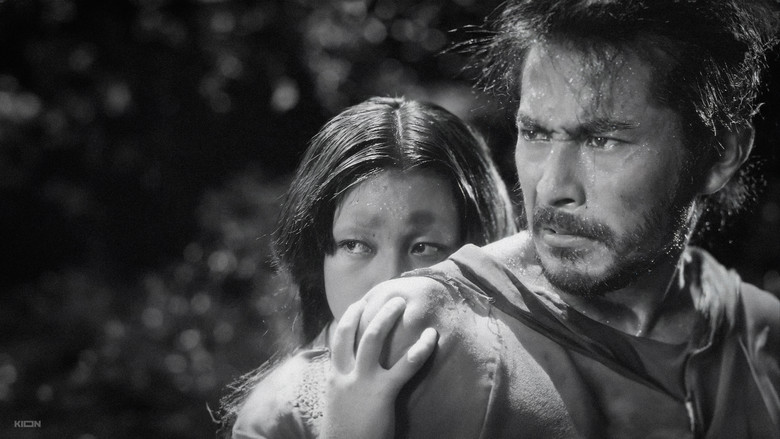
The scenes in the forest are often characterized by strong, direct sunlight filtering through the trees, creating a disorienting and visually stunning effect. This play of light and shadow mirrors the moral ambiguity of the events that unfold in the grove.
The Forest
The forest represents a labyrinth of human passion and deceit, a place where civilization's rules do not apply. It is a mysterious and timeless setting where the primal instincts of the characters are unleashed. Kurosawa intended for the forest to be a physical manifestation of the characters' internal confusion and moral entanglement.
The central crime of the rape and murder takes place within the dense, disorienting forest. The camera's hypnotic movements through the trees draw the viewer deeper into this world of moral ambiguity.
The Dagger
The ornate dagger is a key piece of physical evidence that is treated differently in each testimony. It represents the elusive nature of the truth and the unreliability of the narrators. The fact that the woodcutter steals the dagger also reveals his own moral failings and his complicity in the web of lies.
The dagger is present in all four accounts of the murder, but its role and significance change with each telling. In some versions, it is the murder weapon; in others, it is a symbol of honor or betrayal.
The Abandoned Baby
The abandoned baby at the end of the film represents innocence and the potential for a new beginning. It serves as a final moral test for the characters, and the woodcutter's decision to care for the child signifies a restoration of faith in humanity and the possibility of redemption.
After the cynical commoner steals the baby's kimono, the woodcutter, despite his own poverty and family, chooses to take the infant in. This act of selflessness provides a hopeful counterpoint to the film's otherwise cynical exploration of human nature.
Philosophical Questions
What is the nature of truth?
The film's central philosophical question revolves around the nature of truth. By presenting four contradictory yet plausible accounts of the same event, "Rashomon" challenges the notion of a single, objective reality. It suggests that truth is not something that can be definitively known, but is instead a subjective experience, shaped by individual perception, memory, ego, and self-interest. The film forces the audience to question their own ability to discern truth from falsehood and to consider the possibility that multiple, conflicting truths can coexist.
Why do people lie?
"Rashomon" explores the various motivations behind human deception. The film suggests that people lie not only to deceive others but also to deceive themselves. The characters' lies are driven by a need to preserve their honor, to conform to societal expectations, and to maintain a positive self-image. The film posits that self-deception is a fundamental aspect of the human condition, a way of coping with our own flaws and failures. It asks whether it is possible for anyone to be completely honest, even with themselves.
Can faith in humanity be sustained in a corrupt world?
Through the character of the priest, the film examines the fragility of faith in a world rife with selfishness and deceit. The priest's journey from unwavering belief to near-total despair mirrors the audience's own potential reaction to the grim portrayal of human nature. The film asks whether it is naive to believe in the inherent goodness of people when confronted with such overwhelming evidence of their capacity for evil. The ending, however, offers a tentative answer, suggesting that faith is not something that is given, but something that must be actively chosen and nurtured through selfless acts.
Core Meaning
The core meaning of "Rashomon" is an exploration of the subjective and elusive nature of truth. Director Akira Kurosawa suggests that objective truth may be unknowable, as human perception is invariably colored by self-interest, ego, shame, and the desire to present oneself in the best possible light. The film posits that individuals construct their own versions of reality to maintain their self-esteem and cope with traumatic events. As Kurosawa himself stated, the film is about the inability of human beings to be honest with themselves about themselves; they cannot speak of themselves without embellishing. Ultimately, the film questions the very foundation of justice and morality when truth itself is malleable. However, the film's ending, with the woodcutter's selfless act of taking in an abandoned baby, offers a glimmer of hope, suggesting that despite the inherent flaws and dishonesty of humanity, redemption and faith in mankind are still possible.