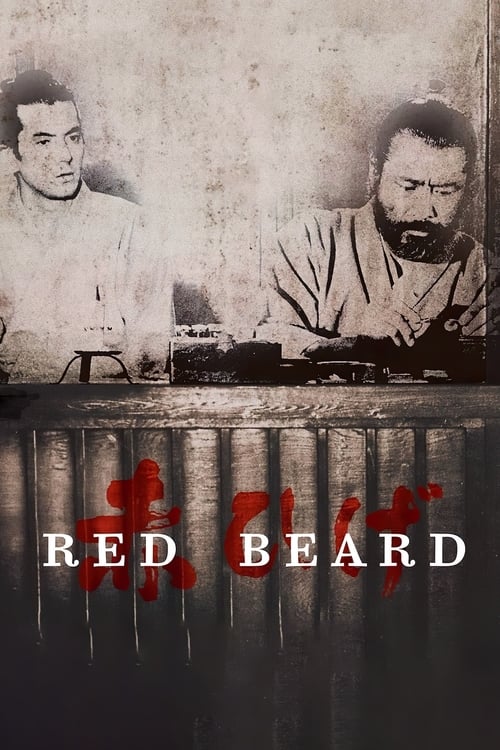
赤ひげ
"What is the key to life - power, prestige or peace?"
Red Beard - Symbolism & Philosophy
Symbols & Motifs
The Clinic
The clinic symbolizes a microcosm of a harsh and unforgiving world, a place where the consequences of poverty and social injustice are laid bare. However, it also represents a sanctuary of humanism and compassion, a beacon of hope where the destitute can find care and dignity. It is a place of transformation, not only for the patients but for the doctors as well.
The entire film is set within or in relation to the clinic. Its dilapidated state reflects the societal neglect of the poor, while the dedicated staff embodies the film's core message of selfless service.
The Mantis (The Madwoman)
The character known as "The Mantis" symbolizes the destructive cycle of abuse and trauma. A victim of horrific abuse herself, she has become a perpetrator of violence, representing a soul twisted by suffering. She serves as a stark warning of what can happen when innocence is corrupted, and her case highlights the limitations of purely physical medicine in healing deep psychological wounds. She also represents a challenge to Yasumoto's initial arrogance and lack of understanding.
Confined to a special house within the clinic, she attacks Yasumoto early in the film, a pivotal moment that begins to shatter his self-assurance. Her backstory reveals the societal evils that Red Beard and his team are fighting against.
Otoyo, the Young Girl
Otoyo symbolizes innocence crushed by a cruel world, a direct victim of the poverty and exploitation the film critiques. Her journey from a traumatized, silent girl rescued from a brothel to a caring individual who shows compassion to others represents the possibility of healing and redemption through kindness and patience. Her recovery parallels Yasumoto's own moral and spiritual development.
Red Beard rescues Otoyo and assigns her to Yasumoto as his first real patient. The process of caring for her is a crucial part of Yasumoto's transformation. In a key scene, after her own recovery, she in turn cares for a sick Yasumoto, demonstrating the cyclical nature of compassion.
The Well
The well into which the women of the clinic shout a dying boy's name symbolizes a connection to ancient, communal traditions and a desperate hope in the face of death. It represents a form of spiritual or emotional healing that complements the scientific approach of the doctors, suggesting that faith and community support are also vital in the struggle for life.
Towards the end of the film, when a young boy, Chobo, is dying from poison, the women of the clinic gather around a well and repeatedly shout his name, a folk belief that it can call a soul back from the brink of death. This powerful and emotional scene highlights the community's collective will to save one of their own.
Philosophical Questions
What is the true nature of healing?
The film relentlessly explores this question, contrasting Yasumoto's initial belief in the detached, scientific application of Western medicine with Red Beard's holistic, humanistic approach. It asks whether a doctor's role is simply to cure disease or to alleviate human suffering in all its forms—physical, emotional, and spiritual. Red Beard's philosophy, that one must look into the hearts of patients as well as their bodies, suggests that true healing requires empathy, patience, and an understanding of the social and personal misfortunes that lie at the root of illness.
Can an individual's compassion make a difference in the face of systemic social injustice?
"Red Beard" presents a world rife with poverty and cruelty, where systemic problems seem insurmountable. The clinic itself is underfunded and constantly struggling. However, the film champions a form of existential humanism, arguing that while one person may not be able to eliminate poverty, individual acts of kindness and selfless dedication can create a powerful "chain of good". Red Beard's unwavering commitment, which inspires Yasumoto and is passed on to Otoyo, suggests that the moral choice to act compassionately is a profound and meaningful response to a seemingly indifferent world.
What is the path to a meaningful life?
The film contrasts two paths: Yasumoto's initial desire for prestige, wealth, and power versus Red Beard's life of austere self-sacrifice. Through Yasumoto's transformation, Kurosawa argues that a truly meaningful existence is not found in personal gain but in service to others. The film suggests that by confronting suffering directly, rather than averting one's eyes, an individual can shed their own ego and find a deeper, more profound sense of purpose.
Core Meaning
The core meaning of "Red Beard" is a profound exploration of humanism and existentialism, championed through the transformative power of compassion. Director Akira Kurosawa conveys the message that true healing extends beyond medical science to encompass empathy, patience, and the selfless dedication to alleviating human suffering. The film posits that confronting the harsh realities of poverty and ignorance is essential for spiritual and moral growth. Through the master-disciple relationship between Dr. Niide and Dr. Yasumoto, Kurosawa argues that a meaningful life is found not in personal ambition and status, but in serving others and recognizing the inherent dignity in every individual, no matter how destitute. The film is a powerful statement on social injustice, suggesting that many illnesses are a direct result of societal failings.